What happened
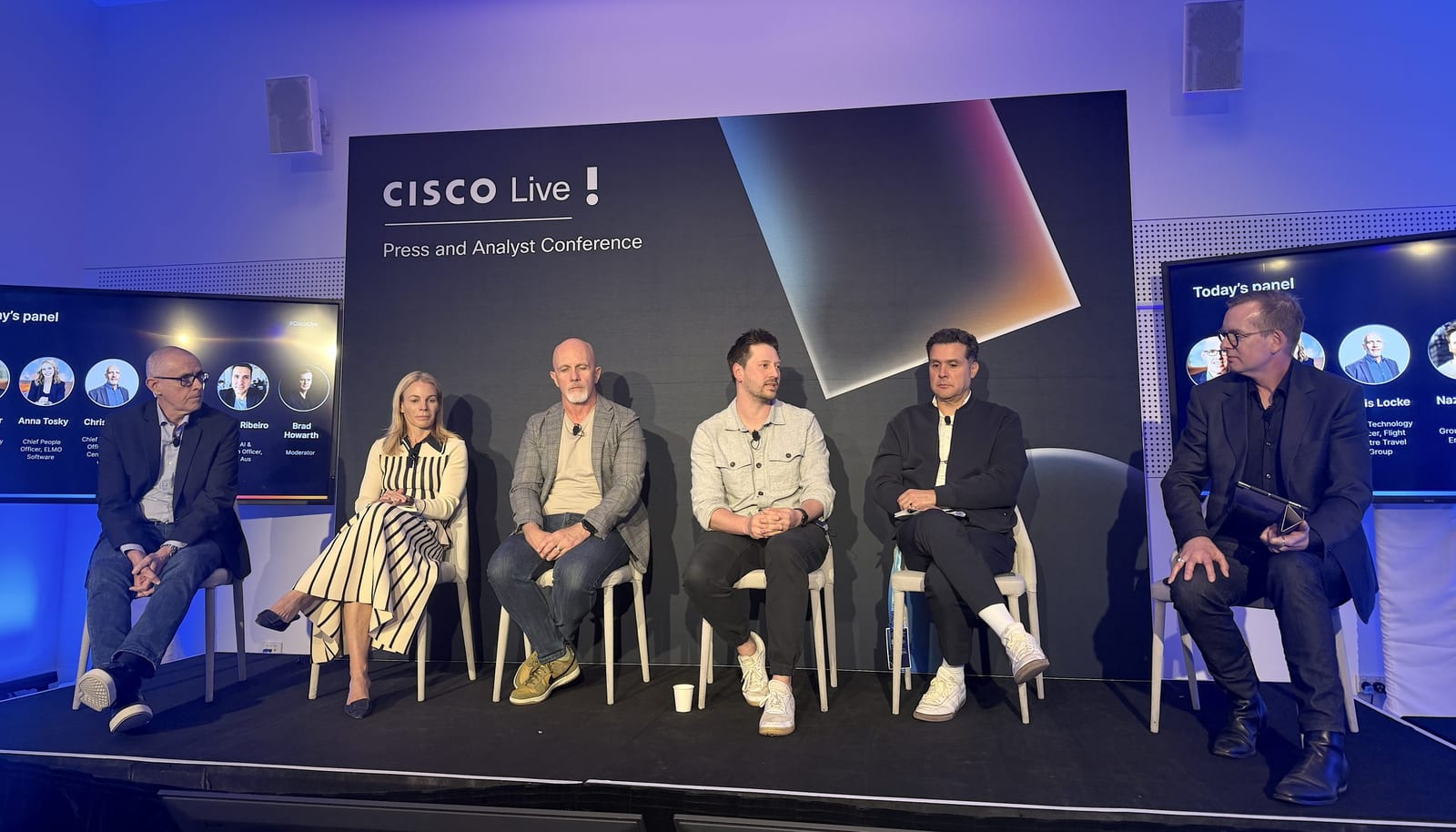
Cisco released "Permission to Scale: The Critical Role of Trust in Successful AI Adoption" at Cisco Live APJC in Melbourne, drawing on data from 25 Australian organizations to argue trust is now the constraint on enterprise AI.
Why it matters
The report recommends IT leaders stop treating log-ins as a proxy for trust and instead track how often people challenge or override AI outputs, since usage shows clicking while override rates show thinking.
WHO IT HITSEnterprise IT leaders and CIOs/CTOs deploying AI platforms are the main audience, since the report warns that skipping the culture pillar leaves well-built tools underused by employees and customers.
Summaries like this, every morning.
The report arrives at a moment when the enterprise AI conversation has spent years centered on capability — which model is smartest, which GPU is fastest — a framing the body says made sense when technology was the constraint. Cisco's argument is that this is no longer the case: AI can now do far more than most organizations will allow, and the gap is trust. The Australian sample is presented as a deliberately hard test case, since the cited University of Melbourne and KPMG research puts Australian trust in AI at 36%, the lowest among 47 countries surveyed, with only 30% believing its benefits outweigh its risks. Cisco ANZ CTO Carl Solder frames the upside of solving it there: the resulting playbook "travels well beyond Australia," per Stefan Leitl of Cisco Australia and New Zealand.
The panel discussion points to culture as the pillar organizations most often skip. Solder described a customer that invested in infrastructure, governance, data and IT skills but not culture, and met "a big pushback from their employees and customers" on the toolsets it had bought. Flight Centre CTO Chris Locke offered the counter-example of the company's 77-year-old founder using Anthropic's Claude daily, while TBWA Australia chief AI officer Lucio Ribeiro described trust as built on ownership, competence, consistency and transparency. Funlab's Naz Wilson said early "AI Super Squad" sessions mainly clarified which tools were safe, because many employees simply did not know what they were allowed to do.
The body also flags the opposite risk — over-trust. Elmo Software's Anna Tosky called out "AI slop" reports sent without review, and argued the fix starts with redesigning the process rather than throwing agents at it. On agents that act rather than draft, fewer than half of respondents are very or extremely confident their foundations are ready, and Cisco's 2026 Relentless Defense report found only 36% of Australian organizations apply consistent controls to AI agents and nonhuman identities. Cisco's commercial interest is explicit: Solder argues trust must be enforced at the network and security layers, and the company is betting its networking, security and Splunk portfolio becomes the trust layer for agentic AI.
Pick your industry and the AI tools you use, and get news related to your work every day.
Free · 30 seconds with Google · unsubscribe anytimeWhat is AIToday? →
Ask AI anything about this article. The AI reads this article, earlier AIToday articles, and Wikipedia, and cites its sources. Q&As are published on this page for other readers too.
Western Digital's cloud revenue rose 54% year over year to $3.9 billion, 88% of total sales, and its board rai…

Verizon's Data Breach Investigation Report found nearly a third of safety breaches start with vulnerability ex…

Morgan Stanley kept its hyperscaler capex forecasts at $1.6 trillion for 2027 and $1.8 trillion for 2028, even…

JPMorgan added Meta to its Analyst Focus List, replacing Alphabet, and forecast Meta's Family of Apps ad reven…

IBM plans to bring Anthropic's Claude Mythos cyber reasoning into IBM Concert Protect, combining AI code scann…
Cisco Systems enters this week's earnings report with a narrative fair value of $110.56 against a last close o…