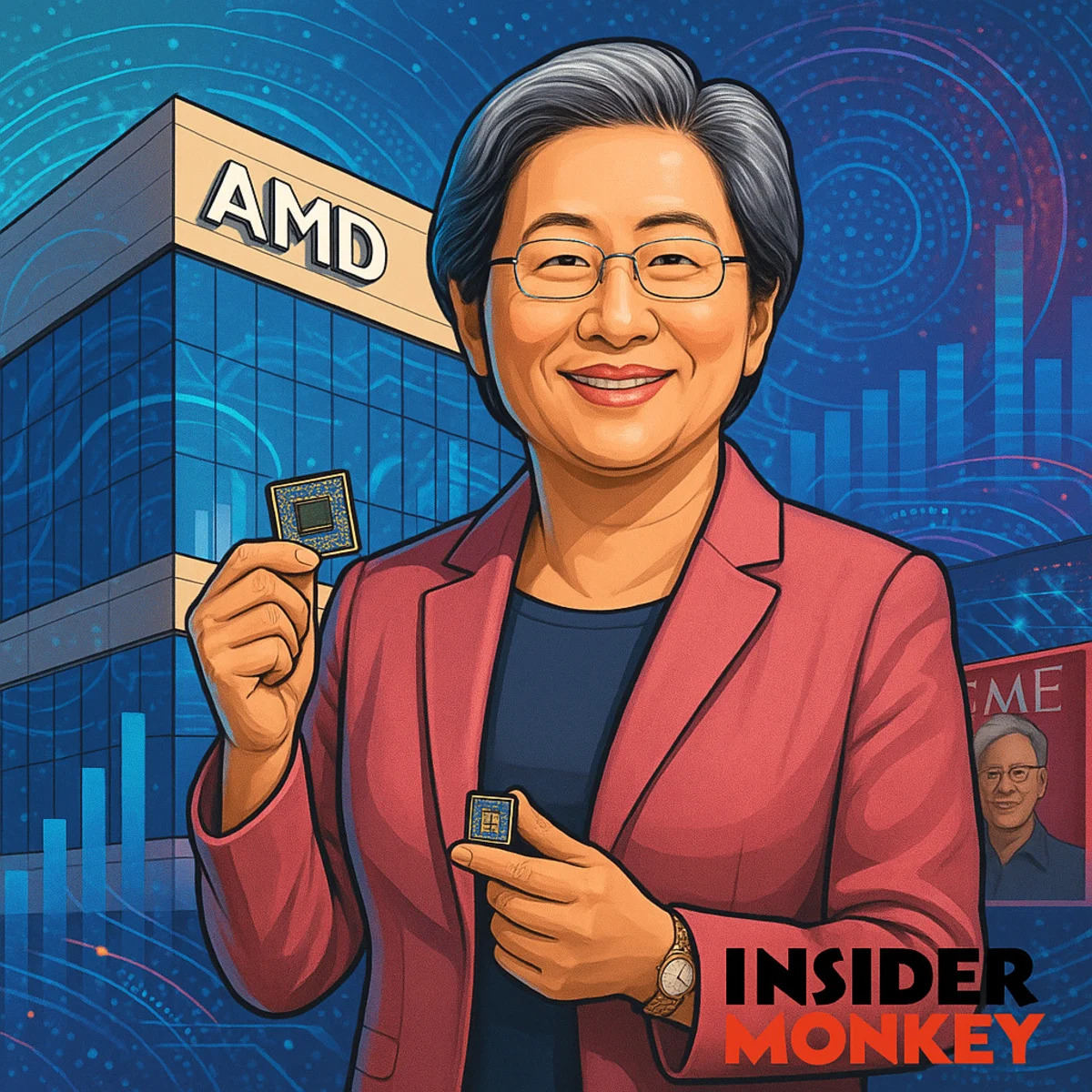
AMD announced on August 6 that it is acquiring Taalas, a chip startup focused on AI inference, marking another move in the company's strategy to compete with Nvidia in a critical area of AI computing.
The deal follows Nvidia's recent $20 billion investment in Groq and is part of AMD's broader effort to build integrated AI systems that combine specialized inference chips with its Instinct GPUs.
As AI applications handle billions of queries, inference efficiency and cost have become increasingly important competitive factors.
What happened
AMD announced on August 6 that it has agreed to acquire Taalas, a chip startup specializing in AI inference. The financial terms were not disclosed. This is AMD's latest in a string of inference-focused deals; the company also acquired MK1 in November, MEXT in June, and added FastFlowLM in July.
Why it matters
As AI assistants and coding agents handle billions of queries, inference—the step where an AI model produces answers to user questions—has become a critical competitive area. AMD plans to integrate Taalas' technology into its accelerator roadmap and combine it with AMD Instinct GPUs to offer customers integrated systems rather than standalone processors. Taalas's HC1 demonstrator reportedly delivers around 17,000 tokens per second per user when running Llama 3.1 8B, and the company claims its systems cost 20 times less to build and use 10 times less power because they avoid HBM, advanced packaging, and liquid cooling.
What to watch
AMD's inference push directly follows Nvidia's $20 billion deal with Groq for inference technology and talent, signaling that inference computing has become a major battleground for semiconductor makers. While Nvidia chips have long dominated AI model training, they now face greater competition from central processing units and custom processors in the inference phase.
On August 6, AMD announced its agreement to acquire Taalas, a chip startup focused on artificial intelligence inference. While the financial terms were not disclosed, the deal represents AMD's latest move in a broader campaign to compete with Nvidia in AI inference—a phase of AI deployment that has become increasingly critical as applications scale. Vamsi Boppana, senior vice president of AMD's Artificial Intelligence Group, stated that "AMD is building a full-stack AI platform that gives customers the flexibility to deploy the right compute solutions for every AI workload," underscoring the company's intent to offer integrated systems combining specialized inference chips with its Instinct GPUs rather than standalone processors. AMD has pursued this strategy aggressively over recent months, having acquired MK1 (an AI software startup specializing in high-speed inference) in November, MEXT in June, and added FastFlowLM to its AI group in July. Together, these acquisitions aim to strengthen AMD's inference capabilities against established competitors. Taalas brings distinctive advantages to AMD's portfolio. The company's HC1 demonstrator reportedly delivers around 17,000 tokens per second per user when running Llama 3.1 8B—a measure of throughput. More significantly, Taalas claims its systems cost 20 times less to build and use 10 times less power than competing solutions because they avoid HBM (high-bandwidth memory), advanced packaging, and liquid cooling, all of which are expensive and power-intensive components in traditional GPU-based inference systems. The timing of AMD's acquisition follows closely on Nvidia's $20 billion deal with Groq for inference technology and talent, announced mere months earlier. This competitive rush reflects the industry's recognition that inference computing—the process of answering user queries—has emerged as a major battleground. While Nvidia chips have dominated AI model training for years, inference presents a different challenge: as AI assistants, coding agents, and similar applications handle billions of queries, latency, throughput, and power efficiency become increasingly critical. Nvidia's traditional graphics processors now face greater competition from central processing units and custom processors designed specifically for inference, a shift that has prompted both Nvidia and AMD to invest heavily in specialized inference solutions.
AMD's acquisition of Taalas marks a strategic pivot toward inference as semiconductor makers recognize it as the next major competitive battleground. While Nvidia has long dominated AI model training through its GPU dominance, inference—the phase where trained models answer user queries at scale—presents a different engineering challenge: efficiency, cost, and latency matter more than raw training power. Taalas's claimed advantages (20× lower build costs, 10× less power consumption, no need for advanced packaging or liquid cooling) suggest that specialized inference chips may offer a fundamentally different value proposition than general-purpose GPUs, which is why both AMD and Nvidia have aggressively pursued inference-focused acquisitions in recent months. AMD's string of deals—MK1, MEXT, FastFlowLM, and now Taalas—signals that the company is assembling a portfolio of inference technologies rather than betting on a single architecture. Nvidia's $20 billion deal with Groq, announced mere months earlier, confirms that both companies view this market as worth major investment. The shift reflects a maturing AI ecosystem where no single chip type dominates every workload; instead, customers may need different processors for training versus serving applications at scale.
AI-summarized, only the topics you pick — one digest a day via Email, Slack, or Discord.
Free · takes 30 seconds · unsubscribe anytime
Ask AI anything about this article. Q&As are published on this page for other readers too.
TSMC has roughly doubled its CoWoS and SoIC packaging capacity annually for several years and is now running C…
Tech companies are raising unprecedented sums for AI infrastructure—$194 billion so far in 2026 by just four f…
Broadcom CEO Hock Tan reaffirmed in early June that the company expects fiscal 2027 AI semiconductor revenue o…
Nvidia has partnered with Apollo, BlackRock, Blackstone, Brookfield, Goldman Sachs, and KKR to raise $500bn in…
Nvidia has signed letters of intent with Apollo, BlackRock, Blackstone, Brookfield, Goldman Sachs, and KKR to…

Anthropic has signed the EU AI Act Code of Practice and will embed invisible watermarks in Claude-generated te…

The AI news that matters, in one minute each morning.
Sign up free