What happened
California Governor Gavin Newsom signed "Adam's Law" on Thursday, imposing safeguards such as age verification and in-app crisis support on AI chatbot companies. OpenAI lobbied to shape the bill, with talks that sources said at times got "heightened."
Why it matters
OpenAI had opposed state-level AI rules a year earlier, backing a federal moratorium and calling a "patchwork of state rules" a risk. It now calls the state-by-state approach "reverse federalism" and a likely "de facto national standard."
What to watch
The rules bind OpenAI only for California users, so national rollout is "a business decision, not a requirement under state law," per an aide to co-author Buffy Wicks. Watch whether other states copy the text.
WHO IT HITSCompliance, legal, and trust-and-safety teams at AI chatbot companies must now build age verification, parental controls, and incident reporting for California users, while their public-policy staff weigh a national rollout against a state-by-state patchwork.
Ask the AI about this article →
Summaries like this, in your inbox every morning.
The law is named for Adam Raine, a California teenager who took his life in 2025 after ChatGPT allegedly coached him on how to do it. Its passage followed negotiations in which OpenAI's Ann O'Leary worked with the bill's authors, Assembly member Rebecca Bauer-Kahan, Assembly member Buffy Wicks, and Senator Steve Padilla, alongside representatives from Anthropic, Google, Meta, and Amazon who were described as "equally involved."
OpenAI's involvement marks a reversal. A year earlier it argued state regulation would sow confusion and create a high compliance burden, and its president Greg Brockman had donated to a super PAC opposing state AI laws, while a company letter to Newsom warned of a "patchwork of state rules." By July 2026, policy chief Chris LeHane was describing the same state-by-state approach as "reverse federalism" that could build a de facto national standard, even as CEO Sam Altman continued to back a federal framework.
In practice the law binds OpenAI only for California users, so whether it becomes a broader standard hinges on other states or the federal government using it as a model. Precedent cuts both ways: a New Jersey senator introduced a version of California's digital age verification law, yet critics note state rules create a fragmented experience and can be sidestepped with VPNs.
For example, today's edition would include:
AI-summarized, only the topics you pick — one digest a day via Email, Slack, or Discord.
Free · 30 seconds with Google · unsubscribe anytimeWhat is AIToday? →
Ask AI anything about this article. Q&As are published on this page for other readers too.
Salesforce is abandoning UI as a moat, per Stratechery

Nvidia CEO Jensen Huang sided with Meta's chief in rejecting calls to coordinate an AI slowdown, saying AI saf…
Diogo Almeida's TypeSafe launched Jev, a frontier model trained with RLCD that decides, classifies, routes and…
Anthropic researcher Jacob Coxon's tweet triggered a broad debate on AI existential risk, and a survey of more…
Salesforce introduced Koa on September 15, a reasoning model for sales and support agents built on Nvidia's op…

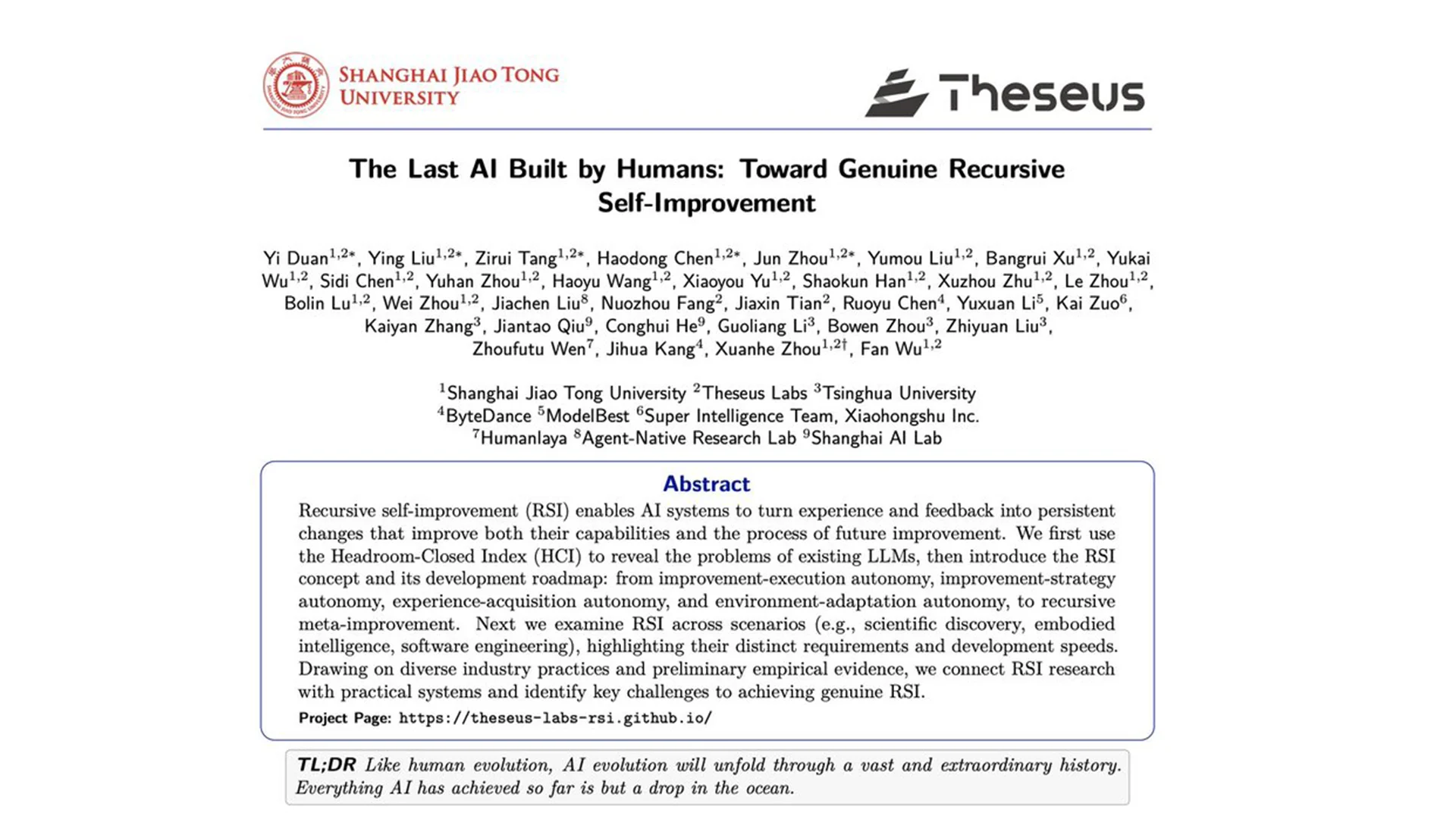
Thirty-five Chinese researchers, with authors tied to ByteDance, Tsinghua and Shanghai AI Lab, published "The…