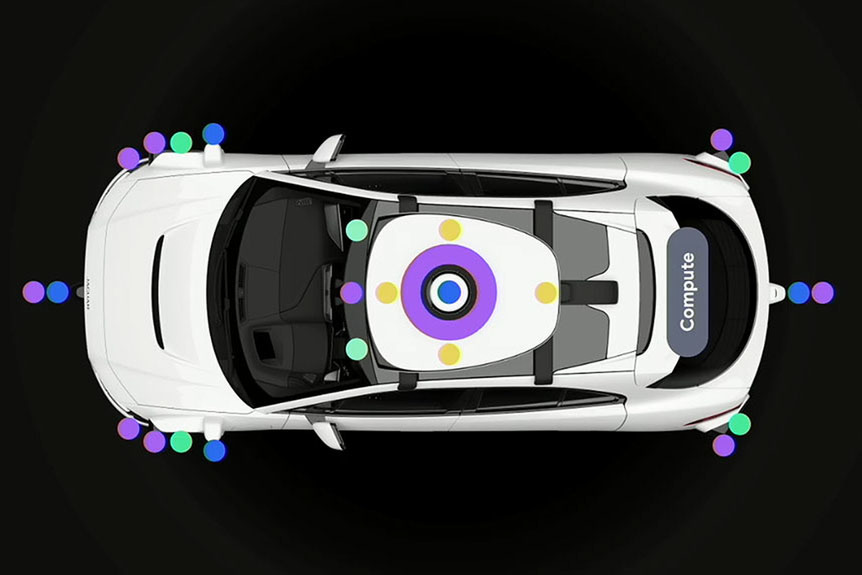
What happened
In a Hot Chips keynote, Waymo Compute Lead Daniel Rosenband argued that camera-only autonomy, the route Tesla favors, gets early results but stalls before reaching 99.99%, so Waymo pairs cameras with LiDAR, radar and ultrasonic sensors.
Why it matters
Waymo judged that cheaper camera-only setups lose their accuracy gains well before the final margin, which points to multi-modal sensing as the path to fully driverless rides at scale.
Summaries like this, every morning.
Waymo's keynote at Hot Chips was framed less around a product launch than around the reasoning behind its Sensor Fusion Processor. Daniel Rosenband used a 2017 example in which a red balloon floating in front of a traffic light was misread as a red signal, and noted that even Gemini cannot reliably tell the two apart. That sets the bar for autonomous driving: matching or exceeding human perception remains an unmet capability, and by 2017 the required capability was already estimated at 50 times what it had been in 2012.
The talk also put Waymo's operating record in context. The company says it has reached its sixth vehicle generation and, by 2020, had driven over 200 million miles (320 million km), completed more than 20 million paid rides, and covered 15 cities. Rosenband's caution is that this represents only the first 1% of the problem; a product is defined by the long tail of remaining cases, where each additional "9" must be earned rather than accumulated through more of the same driving.
That view explains Waymo's sensor choice. Camera-only systems are the lowest-cost route, but Rosenband argued their gains flatten before the final steps, while adding LiDAR, radar and ultrasonic sensors brings extra parts, wiring, weight and failure risk. Waymo has evidently judged the accuracy payoff worth those costs. The company has separately said it will launch a fully driverless ride-hailing service in Japan in 2027 with Nihon Kotsu and GO.
Pick your industry and the AI tools you use, and get news related to your work every day.
Free · 30 seconds with Google · unsubscribe anytimeWhat is AIToday? →
Ask AI anything about this article. The AI reads this article, earlier AIToday articles, and Wikipedia, and cites its sources. Q&As are published on this page for other readers too.
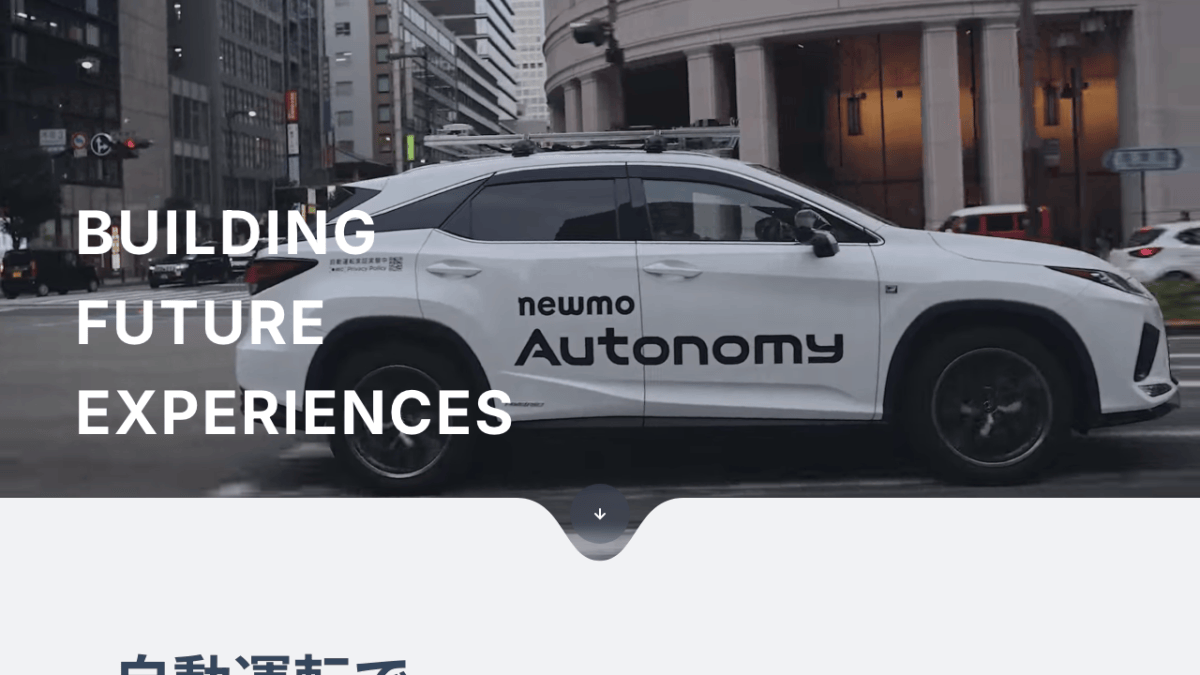
newmo said it raised 208億円 in a Series B led by KDDI through a third-party allotment, with new investors inclu…
KII invested again in newmo via a third-party allotment, part of a 20.8 billion yen total raise that newmo wil…
At KDDI SUMMIT 2026, held October 27–28 in Tokyo, KDDI announced its Alliance Park Project linking Osaka Sakai…
At the February 2024 World Government Summit, NVIDIA CEO Jensen Huang said every country must control producti…
Nvidia announced Sunday that its Board of Directors launched an independent investigation into CEO Jensen Huan…
A Nikkei Computer explainer defines sovereign AI (ソブリンAI) as AI that a country or company develops and runs on…