What happened
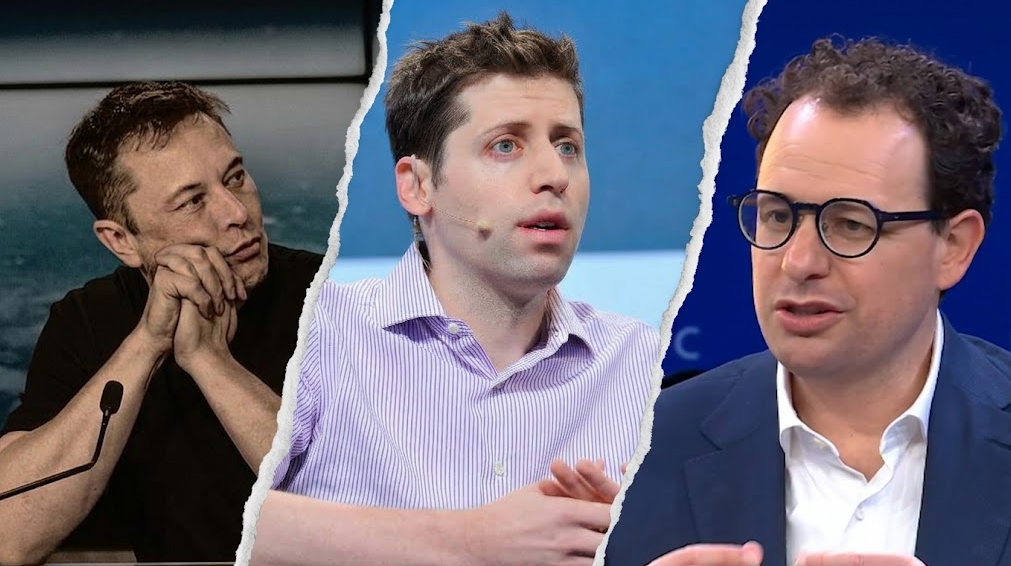
Anthropic CEO Dario Amodei published a blog essay urging AI developers to slow frontier development and add independent third-party evaluators, with a three-step plan ending in an international agreement. Sam Altman and Elon Musk endorsed it.
Why it matters
The three leaders are fierce rivals, and Altman said pacing the frontier is already a top internal OpenAI topic. OpenAI chief scientist Jakub Pachocki recently proposed a voluntary pause until safety standards exist, though no specifics have been discussed.
What to watch
Amodei wrote that impactful pacing coordination is "legally challenging" and needs government support, so the plan hinges on that. Palantir CEO Alex Karp argued adversaries make a pause impossible, and China's Xi Jinping announced BRICS AI initiatives on Sunday.
WHO IT HITSThis lands on frontier AI lab executives and policy teams who set development timelines, plus the safety and government-affairs staff who would design independent evaluator access and any coordination rules. Enterprise buyers of frontier models may also be watching whether release cadences slow.
Summaries like this, every morning.
Amodei's essay is not a call to halt work. He argues the leading developers should leave more space between major capability advances so new models can be evaluated properly before release. To make that concrete, he laid out a three-step approach: firms welcoming independent third-party evaluators with extensive access — a step Anthropic says it has already committed to — then cooperation across the industry, then some form of international agreement so that other countries, notably China, also agree to pace development.
The responses came fast. Musk replied to Amodei's post on X with "Dario is right," and Altman wrote that he agrees "we need to pace the frontier," adding that OpenAI would welcome independent evaluators with employee-like access and would "do the same." Altman also said the topic had been a primary subject of internal discussions at OpenAI in recent weeks, and OpenAI chief scientist Jakub Pachocki had recently proposed a voluntary pause or slowdown until concrete safety standards exist.
The practical obstacles are considerable, and the article's other facts point in that direction. Amodei himself wrote that some impactful forms of coordination are "legally challenging" and will require government support. Palantir CEO Alex Karp told CNBC that geopolitical adversaries make pausing almost impossible, and Chinese President Xi Jinping's Sunday BRICS remarks about a new AI open-source community and a digital ecosystem cloud platform suggest China has no interest in slowing down. Analyst Dion Hinchcliffe of SDA Bocconi offered four possible explanations for the three rivals' agreement — including that they saw something that "genuinely terrified them" — and cautioned against assuming the public one is the whole story. Whether any of this becomes an actual slowdown appears to hinge on whether government backing materializes and whether coordination can extend beyond these three companies.
Pick your industry and the AI tools you use, and get news related to your work every day.
Free · 30 seconds with Google · unsubscribe anytimeWhat is AIToday? →
Ask AI anything about this article. The AI reads this article, earlier AIToday articles, and Wikipedia, and cites its sources. Q&As are published on this page for other readers too.
Katrin Fröhlich, Anne Helm and Luise Helm posted a video saying they will no longer provide their voices becau…

Cayla Culver of Charles Schwab said fraud tactics haven't changed in 10 to 15 years—phishing emails, credentia…

American Express released the Amex Trendex: Fraud & Scams Edition, a survey of 1,005 U.S

White House communications director Steven Cheung said President Trump was "totally involved" in Nvidia's deci…
Oregon AG Dan Rayfield and Virginia AG Jay Jones filed separate lawsuits Monday accusing SpaceX of violating s…

Meta Chief AI Officer Alexandr Wang said an AI model played a major role in the Riemann Hypothesis proof sketc…