What happened
At Dreamforce, Salesforce announced Koa, its first reasoning model, built on Nvidia's open-weight Nemotron and post-trained with synthetic data for sales, marketing and customer-support tasks.
Why it matters
Salesforce says reasoning work had always gone to frontier models like Claude or ChatGPT through Agentforce's AI gateway, and Koa is offered as an open-weight, lower-token alternative to those closed models.
What to watch
Koa's appeal hinges on whether enterprise buyers trade frontier-model capability for token savings and data control. Salesforce still partners with Anthropic via ClaudeForce, so it is not exiting those models.
WHO IT HITSEnterprise IT and AI platform teams running customer-service and sales agents on Salesforce's Agentforce now have an in-house reasoning option they can route through the AI gateway instead of paying frontier-model providers.
Ask the AI about this article →
Summaries like this, in your inbox every morning.
Salesforce introduced Koa at its Dreamforce conference as its first reasoning model, built on Nvidia's open-weight Nemotron. The company says it had long wanted to train its own enterprise-grade frontier model but lacked a suitable pre-trained base. Jayesh Govindarajan, EVP of Salesforce AI, pointed to Nemotron as the first sovereign American pre-trained model that was state of the art and had clear data provenance, contrasting it with Alibaba's Qwen, whose training data he said Salesforce cannot know.
To build Koa, Salesforce and Nvidia avoided actual customer data, instead crafting synthetic data that simulated a customer service environment, from irate callers to a sales professional closing a deal. Koa is meant to be better and cheaper in tokens burned at the work tasks Salesforce customers want an agent to do, compared with sending those same tasks to Claude or ChatGPT. Nvidia's Kari Ann Briski described Nemotron's inference architecture as token efficient, framing sovereign AI, time to first token and efficient reasoning as the combination that matters.
The move sits alongside Salesforce's continued reliance on the frontier labs: the company also announced ClaudeForce, a partnership with Anthropic that lets companies use Claude as their AI interface while data stays in Salesforce's system of records. The test for Koa is likely to be whether enterprises accept a task-specific, open-weight reasoning model in place of the frontier models they have routed work to until now, and whether the token savings and data control outweigh any capability gap.
For example, today's edition would include:
AI-summarized, only the topics you pick — one digest a day via Email, Slack, or Discord.
Free · 30 seconds with Google · unsubscribe anytimeWhat is AIToday? →
Ask AI anything about this article. Q&As are published on this page for other readers too.
TheCUBE Research principal analyst Scott Hebner says Certinia is moving its Veda platform beyond agentic orche…
Yole says semiconductor industry revenue is on track to nearly quadruple by 2031 while shipping barely more si…

AMD rose roughly 3.0% to $508 Tuesday morning, recovering part of Monday's more-than-4% drop, as chip stocks b…
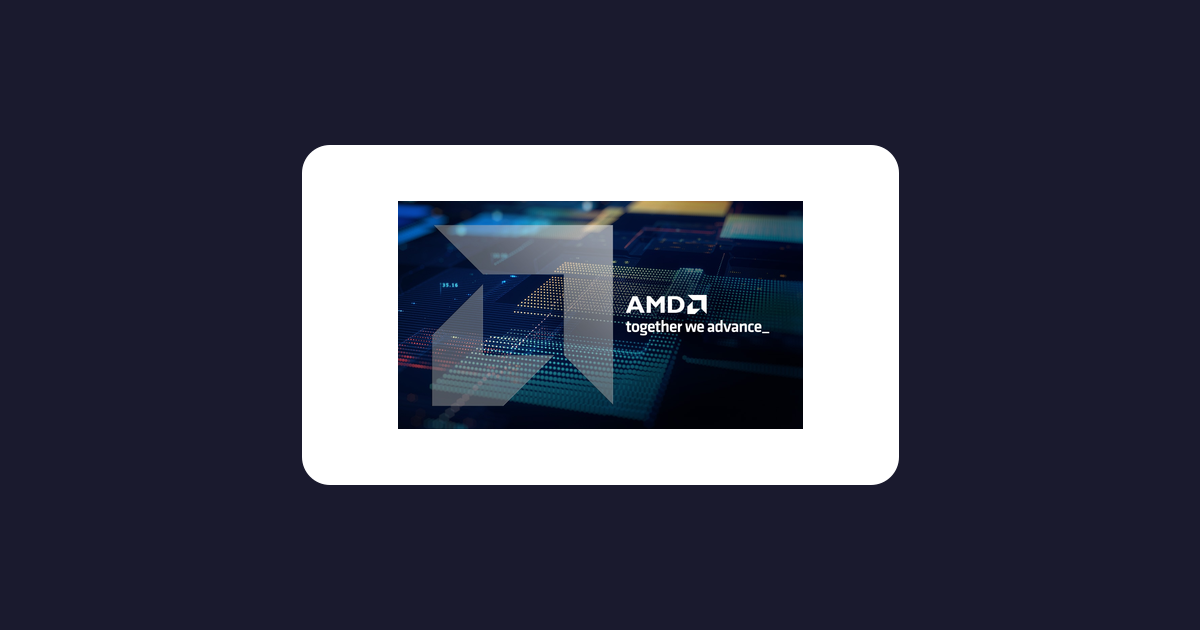
Emergence AI ran eight simulations using frontier models including Claude, Gemini, Qwen, DeepSeek and Mistral
New York-based tech-media startup Avail launched creatorAPI on Tuesday, a tool that creates dozens of AI-edite…

A Semafor review of analyst estimates finds Amazon, Alphabet, Meta, and Microsoft are expected to spend $66 bi…