What happened
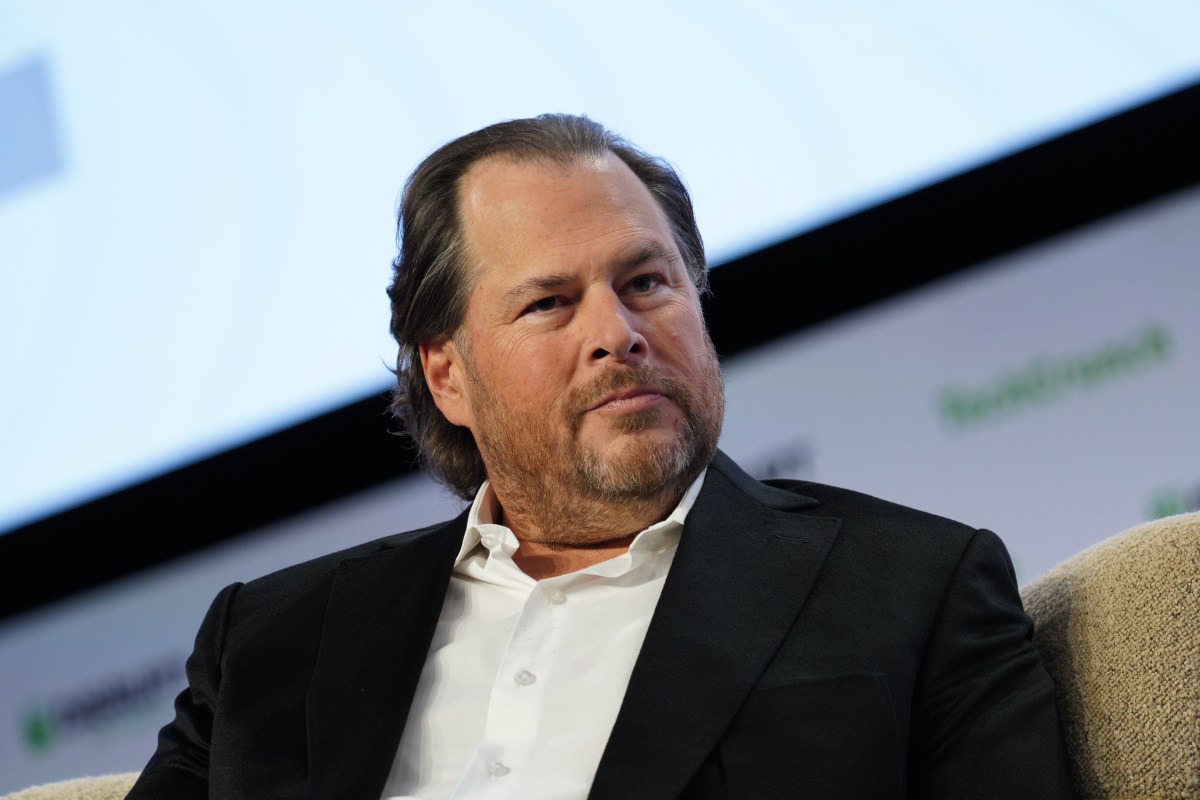
Salesforce announced Koa, its first reasoning model, at its Dreamforce conference. It is built on Nvidia's open-weight Nemotron and post-trained by both companies for sales, marketing, and customer-support work.
Why it matters
Koa is an open-weight alternative to closed frontier models, so tasks that previously routed to Claude or ChatGPT through Agentforce's gateway can now run on a model Salesforce says uses fewer tokens for the same work.
What to watch
Salesforce says it did not use any actual customer data to train Koa, instead crafting synthetic data that mimicked customer patterns. The test is whether that approach delivers on its efficiency and security claims.
WHO IT HITSEnterprise teams building agents on Salesforce's Agentforce platform may get a way to handle reasoning-heavy tasks without routing them to external frontier models. Teams with strict data-residency or security requirements are likely to watch Koa's token efficiency and data-provenance claims closely.
Ask the AI about this article →
Summaries like this, in your inbox every morning.
At its Dreamforce conference, Salesforce introduced Koa as its first reasoning model, built on Nvidia's open-weight Nemotron and post-trained with Nvidia specifically for sales, marketing, and customer-support tasks. Until now, Salesforce relied on frontier model providers for reasoning, routing prompts to models like Claude or ChatGPT through Agentforce's AI gateway when an agent needed to work through a multi-step task. Koa is meant to handle those same tasks inside Salesforce's own stack.
Jayesh Govindarajan, EVP of Salesforce AI, said the company had always wanted to train its own enterprise-grade frontier model but lacked a suitable pre-trained base. In his words, until Nemotron there was no sovereign American pre-trained model that was available, state of the art, and had clear data provenance. He pointed to uncertainty about what Alibaba's Qwen trains on. Nvidia's Kari Ann Briski framed the combination as sovereign AI, time to first token, and efficient reasoning, for what she called the tokenomics.
The pitch to enterprise buyers rests on several claims: an open-weight option instead of closed frontier models, training on synthetic data rather than actual customer data, fewer tokens for the same work, and automatic routing through an AI gateway. Salesforce isn't abandoning Anthropic or OpenAI; it also announced Claudeforce, a partnership letting companies use Claude as their AI interface while data stays in Salesforce's system of records. Whether Koa's token savings and data-provenance guarantees hold up in practice is likely to decide how readily enterprises move reasoning work off frontier providers.
For example, today's edition would include:
AI-summarized, only the topics you pick — one digest a day via Email, Slack, or Discord.
Free · 30 seconds with Google · unsubscribe anytimeWhat is AIToday? →
Ask AI anything about this article. Q&As are published on this page for other readers too.
Chevron jumped about 2.1% to $216.58 Tuesday afternoon as Brent crude climbed to $109.20 per barrel amid Saudi…
The AI Doc: Or How I Became an Apocaloptimist is now on Netflix, Amazon Prime, YouTube, and other major stream…
Walmart CEO John Furner is turning the retailer's 5,200 U.S

Coca-Cola President and CFO John Murphy told Yahoo Finance that AI is not 'the path forward' for the company's…

Perplexity released Portable Computer for Windows in partnership with Nvidia, via its existing Windows app
Meta introduced Meta One, a global subscription with 50+ features across Instagram, Facebook, WhatsApp, and Me…