What happened
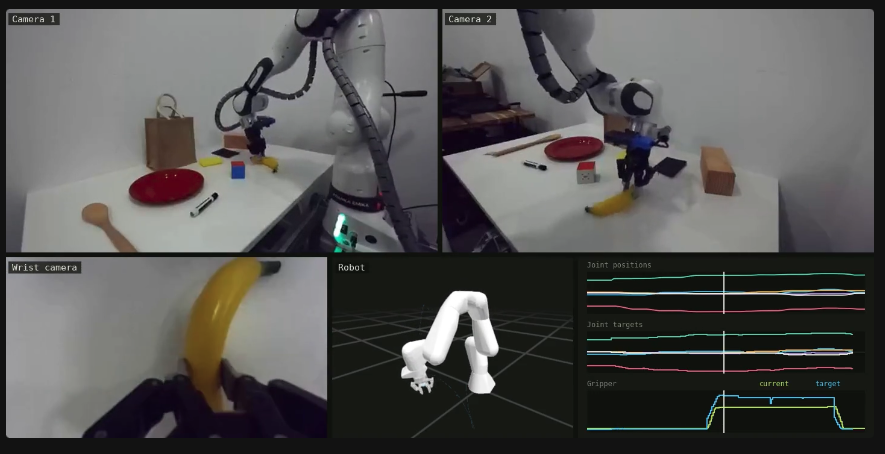
mimic's FLUX-mimic-x, a preview released November 16, finished tasks in a median 11 seconds versus 27 seconds for a human teleoperator, scoring 71.2 percent reliability at 3.08 successful tasks per minute.
Why it matters
The model's speed came without matching human reliability, suggesting video-trained robot models may trade some consistency for throughput in everyday manipulation work.
What to watch
Positronic Robotics and Nebius will run a physical AI competition from October to December 2026.
WHO IT HITSRobot developers and operators evaluating video-based models for tasks like opening drawers and moving household objects may see faster cycle times but must weigh lower reliability against human teleoperation.
Summaries like this, every morning.
The PhAIL leaderboard results place FLUX-mimic-x at the top of a field that includes Nvidia's Cosmos3 Nano and GR00T, OpenAI's GPT-6 Astra, and Physical Intelligence's π₀.₅. The pattern behind that ranking is notable: all four of the highest-scoring dedicated robot models use video-based approaches rather than conventional vision-language models. Dmitry Matov of Positronic Robotics attributes the speed and reliability to pretraining on video, writing that a video model learns how objects move before it sees a single robot action.
Runway's Praxis-1, released November 11 under the Apache 2.0 license, adds a different capability to the comparison. Its weights are available for researchers and developers to train further, and its recovery behavior—retrying a failed grasp and completing the task in 66 percent of those episodes—points to a practical concern beyond raw speed. Faster task completion may matter less in commercial settings if a robot cannot handle slips and misses without abandoning the task.
The human operator's 94.7 percent reliability against FLUX-mimic-x's 71.2 percent suggests that video-action models still trail teleoperation on consistency, even as they lead on throughput. Positronic Robotics' planned competition with Nebius, scheduled for October to December 2026, may offer a broader read on how these approaches perform outside individual test episodes.
Pick your industry and the AI tools you use, and get news related to your work every day.
Free · 30 seconds with Google · unsubscribe anytimeWhat is AIToday? →
Ask AI anything about this article. The AI reads this article, earlier AIToday articles, and Wikipedia, and cites its sources. Q&As are published on this page for other readers too.
Cloudera unveiled a Digital Sovereignty solution combining Cloudera Anywhere Cloud, Open Data Lakehouse, Unifi…

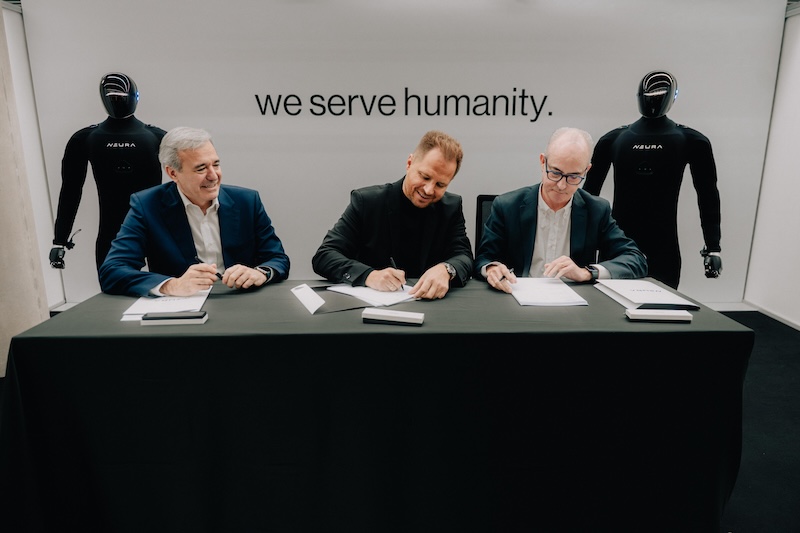
Neura Robotics, the Government of Aragón and Costa Group signed a memorandum of understanding to build Neura G…
Muse, an AI agent, had three local LLMs and Claude Haiku read Chapter 1 of "I Am a Cat" (11,612 characters) an…

On Artificial Analysis' v5.0.1 index, Gemini 4 Neon scored 61, ahead of Claude Opus 5.5 (59), GPT-6 Astra (57)…
The Digital Agency said a public call for Japanese-made large language models for ガバメントAI 源内 in 令和9年度(2027年度)…

NVIDIA said on November 27 that its RTX Spark compact desktop is on sale from ASUS, Dell and MSI, with a 20-co…