What happened
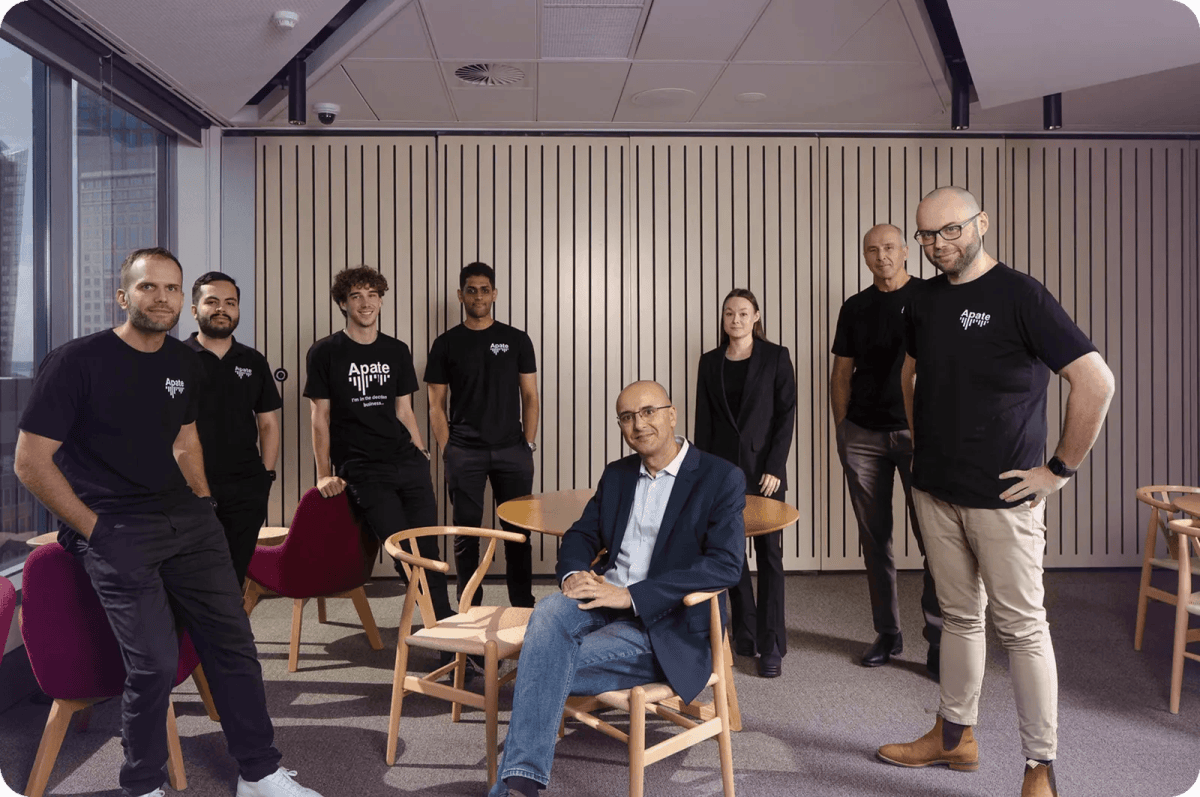
Apate.ai runs thousands of undercover AI agents that answer scam calls, reply to shady messages, follow phishing links and join social groups posing as victims, drawing on Macquarie University research and having raised $8.15 million in seed funding from Lobby Capital, OIF Ventures, Investible, Concept Ventures and Baobab Ventures.
Why it matters
The agents extract scammer bank accounts, crypto wallets, phone numbers and malicious websites and feed that intelligence to customers such as banks, telecom companies and government agencies, letting them act before victims are harmed.
WHO IT HITSFraud and security teams at banks, telecom companies, government agencies and utilities gain pre-victim intelligence on active scam operations, while Apate's 20-person team expands into the U.K. and U.S.
Summaries like this, in your inbox every morning.
Apate was founded in 2024 on research done at Macquarie University in Sydney, and its origin traces to a real scam call. Founder and CEO Dali Kaafar kept a scammer on the line for 44 minutes at a family picnic, then wondered whether the task could be automated. That question led to research using machine learning and natural language processing to uncover scam call content and improve detection. Scam-baiting has long been a hobby, but Apate is commercializing it: the company says its agents talk to tens of thousands of scammers every day, and it trains both frontier models and its own fine-tuned models on those conversations. The backdrop is that AI has empowered scammers, with the FBI reporting more than 22,000 complaints of AI-related crimes in 2025 and about $893 million in losses, over $632 million of which came from investment scams. Apate raised $8.15 million in seed funding in August and has raised just under $10 million in total.
Pick your industry and the AI tools you use, and get news related to your work every day.
Free · 30 seconds with Google · unsubscribe anytimeWhat is AIToday? →
Ask AI anything about this article. The AI reads this article, earlier AIToday articles, and Wikipedia, and cites its sources. Q&As are published on this page for other readers too.
Between September 28 and October 8, 2026, agents on Tencent Cloud made over 2,600 scraping attempts on Amap, p…

AWS said its chips business and AI business each passed a $25 billion annual revenue run rate in Q2 2026, both…

A Market Hang panel including Gerber Kawasaki CEO Ross Gerber, Yahoo Finance's Julie Hyman, Business Insider's…
On Semafor’s Future Proof, Reflection AI co-founder and CTO Ioannis Antonoglou said companies have to throw ou…

Koch Disruptive Technologies, the venture arm of Koch, Inc., is making a strategic investment in Emanate, the…

Prosecutors allege Abdulrahman Alfozan used prompts from his wife's ChatGPT account, sent Sept