What happened
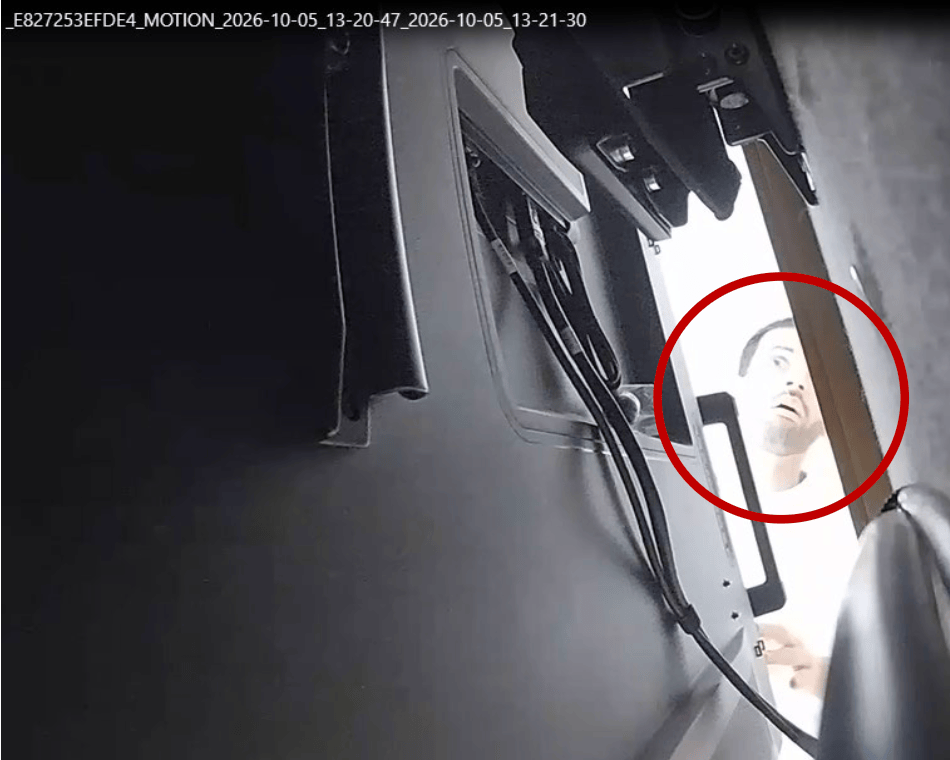
Prosecutors allege Abdulrahman Alfozan used prompts from his wife's ChatGPT account, sent Sept. 24–30, to build a recording device found Sept. 30 behind a TV in an OpenAI conference room.
Why it matters
If the allegations hold, an insider used OpenAI's own AI tools and office access to target a room reserved for leadership and confidential briefings — a direct test of internal security at an AI lab, and he now faces federal charges and a possible detention hearing.
WHO IT HITSThis lands hardest on AI labs and other companies handling sensitive IP, whose insider-threat and physical security teams may face new scrutiny over how employees use internal AI tools to probe office layouts and meeting schedules. It also matters for executives and their assistants, who are typically the only staff able to reserve the high-level conference rooms.
Summaries like this, in your inbox every morning.
The case centers on a chain of digital traces. Prosecutors say the prompts were sent between Sept. 24 and Sept. 30 from a ChatGPT account linked to Alfozan's wife, and that the complaint does not list which chatbot was used — though close sources familiar with the incident confirmed to Fortune it was OpenAI's own ChatGPT. His wife has not been charged.
About six weeks earlier, court documents say Alfozan used a productivity agent internal to OpenAI to find meeting rooms with capacity for six or more people and to identify which rooms would host high-powered meetings. According to the FBI agent's affidavit, he chose the specific conference room because meetings there would frequently involve confidential technical, commercial and strategic information, and the room is typically used for internal leadership meetings and external briefings with government officials and business counterparts. Alfozan did not have access to that room.
The rest of the case runs on cameras and logs. OpenAI had no camera in the room when the device went in, and CCTV placed Alfozan near the room on 10 different days in September; on Sept. 28, the day the firmware was compiled, he was there from 2:18 p.m. to 6:30 p.m. Staff found the device on Sept. 30, prompting cooperation between OpenAI and the FBI, and by Oct. 5 a camera had been placed in the room. Prosecutors noted that Alfozan, his wife and a third family member had booked one-way tickets from San Francisco to Saudi Arabia via Istanbul for Oct. 12, and he was arrested Oct. 9.
Pick your industry and the AI tools you use, and get news related to your work every day.
Free · 30 seconds with Google · unsubscribe anytimeWhat is AIToday? →
Ask AI anything about this article. The AI reads this article, earlier AIToday articles, and Wikipedia, and cites its sources. Q&As are published on this page for other readers too.
Between September 28 and October 8, 2026, agents on Tencent Cloud made over 2,600 scraping attempts on Amap, p…

Microsoft researchers published in Nature a machine learning method called Probabilistic Bias Correction (PBC)…

Google is introducing an opt-in 'enhanced protection' setting in Google Messages that uses cloud-based Gemini…
Square launched the Square Kiosk, a pill-shaped ordering device with a 21.5-inch touchscreen and an AI voice l…

OpenAI filed a document on Wednesday accusing an unnamed former employee of taking more than 100 files on its…

Apate.ai runs thousands of undercover AI agents that answer scam calls, reply to shady messages, follow phishi…