
Arrakis, a London- and Paris-based startup, has raised $38 million(約61億円) to deploy AI in industrial sectors like manufacturing and logistics—markets the founder says have been overlooked compared to office-focused AI products. Rather than selling large transformation consulting projects, the company starts small with specific operational improvements (such as improving cash-flow visibility from monthly to daily for shipping companies) and charges fees tied to performance targets, a model the founder believes resonates with risk-averse industrial executives.
Summaries like this, in your inbox every morning.
Sign up free →What happened
Arrakis, a seven-month-old startup based in London and Paris, emerged from stealth with $38 million(約61億円) in Series A funding led by Blossom Capital, alongside participation from Accel, GFC, MainObject, and Rerail. The company, which builds an AI "operating system" for industrial sectors including aerospace, energy, logistics, and manufacturing, is valued at $140 million(約220億円) post-money.
Why it matters
CEO Rafael Quintanilla argues that most AI investment has targeted office workers (the 30% behind desks), but the larger economic opportunity lies in automating industrial operations serving the other 70%. Arrakis positions itself differently from competitors like Palantir, Prometheus, and consulting firms by charging performance-based fees and focusing on incremental, hands-on improvements rather than sweeping transformation projects that executives have grown fatigued by.
What to watch
Arrakis currently has five customers and plans to triple its headcount from roughly 15 employees, opening new offices in New York and the Middle East. The company is model-agnostic by design, typically beginning with proprietary models from OpenAI or Anthropic before shifting customers to open-source alternatives wrapped in what Quintanilla claims delivers a two-to-four-fold quality improvement while cutting token costs by roughly 70%.
Arrakis, a startup founded seven months before this announcement and based in London and Paris, is emerging from stealth with $38 million(約61億円) in Series A venture funding. The round was led by Blossom Capital and included participation from Accel, GFC, MainObject, and Rerail; Accel had previously led a $7.5 million(約12億円) seed round. Individual backers include Datadog CEO Olivier Pomel and OpenAI's head of business products, Olivier Godement. The company is valued at $140 million(約220億円) post-money, according to cofounder and CEO Rafael Quintanilla.
Quintanilla is a former vice president at Accel who spent roughly a year traveling across the U.S., Europe, and the Middle East to develop the venture capital firm's thesis on defense and industrial resilience. He observed a stark disconnect: while Accel was investing in AI companies like Anthropic and Lovable, the broader economy's industrial sectors—aerospace, energy, logistics, manufacturing—remained largely untouched by AI investment. He saw that most AI has targeted knowledge workers using software, whereas the majority of economic value lies in sectors producing and moving physical goods. As he framed it: "Most AI investment to date has targeted the 30% of workers behind a desk. The real ROI lies in the 70% running industrial operations." This conviction led him to leave Accel and found Arrakis, building what the company describes as an AI "operating system" for industrial customers.
Arrakis is hardly alone in the space. Consulting giants Accenture and Boston Consulting Group are racing into industrial AI, as is Palantir. Jeff Bezos-backed Prometheus, now valued in the tens of billions, is automating the engineering of physical products, and frontier AI labs are circling the sector. Yet Quintanilla argues Arrakis carves out a distinct niche. Prometheus, he says, would help a company like Airbus with "the core engineering of building an aircraft," whereas Arrakis "want[s] to take care of everything around it"—the operations and processes surrounding core engineering. On Palantir, he acknowledged respect but noted the company is a 20-year-old with legacy technology "not built to be AI-native" and carries a hefty price tag; notably, his team includes former Palantir employees, including a former head of Palantir's procurement and supply-chain team. Consulting firms, even as AI reshapes their models, retain an inherent incentive to charge for consultant hours or outsourced labor. Arrakis, by contrast, wants to "solve problems for companies with software and human as key enablers," not humans as the primary cost center.
The company's approach differs sharply from the consulting industry's traditional "process transformation" pitch. Quintanilla expressed skepticism of sweeping transformation projects, describing them as "very sexy on paper" for pumping stock price in the short term but noting CEOs are fatigued by vendors unwilling to commit to short timelines. Instead, Arrakis starts small. For one New York-listed shipping company (unnamed due to non-disclosure agreements), the goal was to improve cash-flow visibility from monthly to daily. Arrakis engineers rebuilt the spreadsheet operators already used, having AI populate data while the system "learns and starts to codify the knowledge of those operators" as they make corrections. The playbook, Quintanilla said, "always starts with HQ, prove the value, move to field operations as soon as you get the pull to get there." The company typically charges about half its fees for hitting a particular performance target.
Landing conservative European industrial firms presents its own challenge. Quintanilla revealed what he called "an open secret": his best traction has come from family-controlled businesses, which "think long term, they can push for top-down initiatives to be executed, and I can build non-transactional relationship[s] with those people." Arrakis is model-agnostic by design—a stance Quintanilla said resonates with executives worried about vendor lock-in and high token costs. One Swiss C-suite executive told him: "When we started this, everyone told us we had to be on Copilot. Then we went to OpenAI. Now it's Anthropic. My head is going like this…I basically want someone who is able to route me to the best provider." The company typically starts building using proprietary models from OpenAI or Anthropic, then shifts customers to open-source alternatives—such as Mistral or, if customers permit, Chinese vendors—wrapped in a "fat harness" that Quintanilla claims delivers a two-to-four-fold quality improvement while cutting token costs by roughly 70%.
Arrakis currently operates with five customers and roughly 15 employees. The company plans to triple its headcount and open new outposts in New York and the Middle East.
Arrakis's emergence reflects a deliberate contrarian bet on where AI's economic payoff actually lies. Founder Rafael Quintanilla developed this thesis while working as a vice president at Accel, traveling across the U.S., Europe, and the Middle East to study industrial sectors. He concluded that venture capital and frontier AI labs have overwhelmingly chased software tools for knowledge workers—a relatively small slice of the economy—while overlooking the vastly larger opportunity in automating operations that involve physical production and logistics. This insight led him to leave Accel and start Arrakis.
The startup is entering a crowded space: consulting giants Accenture and Boston Consulting Group are racing into industrial AI, Palantir is focused on the sector, and Prometheus (valued in the tens of billions and backed by Jeff Bezos) is automating engineering. Yet Quintanilla claims Arrakis occupies distinct ground. Rather than building specialized engineering tools or pushing large transformation engagements, Arrakis adopts a "start small and expand" playbook—improving specific operational metrics (cash-flow visibility, for example) with AI-powered versions of tools operators already use, then spreading within the organization as value becomes tangible. The company also ties much of its fees to achieving performance targets, a pricing model Quintanilla positions as more aligned with conservative industrial firms than traditional consulting's hourly-billing or outsourced-labor models. His observation that family-controlled businesses have proven easiest to land suggests that long-term, relationship-based deal structures appeal more to certain buyer types than transactional vendor arrangements.
AI-summarized, only the topics you pick — one digest a day via Email, Slack, or Discord.
Free · takes 30 seconds · unsubscribe anytime
No comments yet. Be the first to share your thoughts!
Log in to join the discussion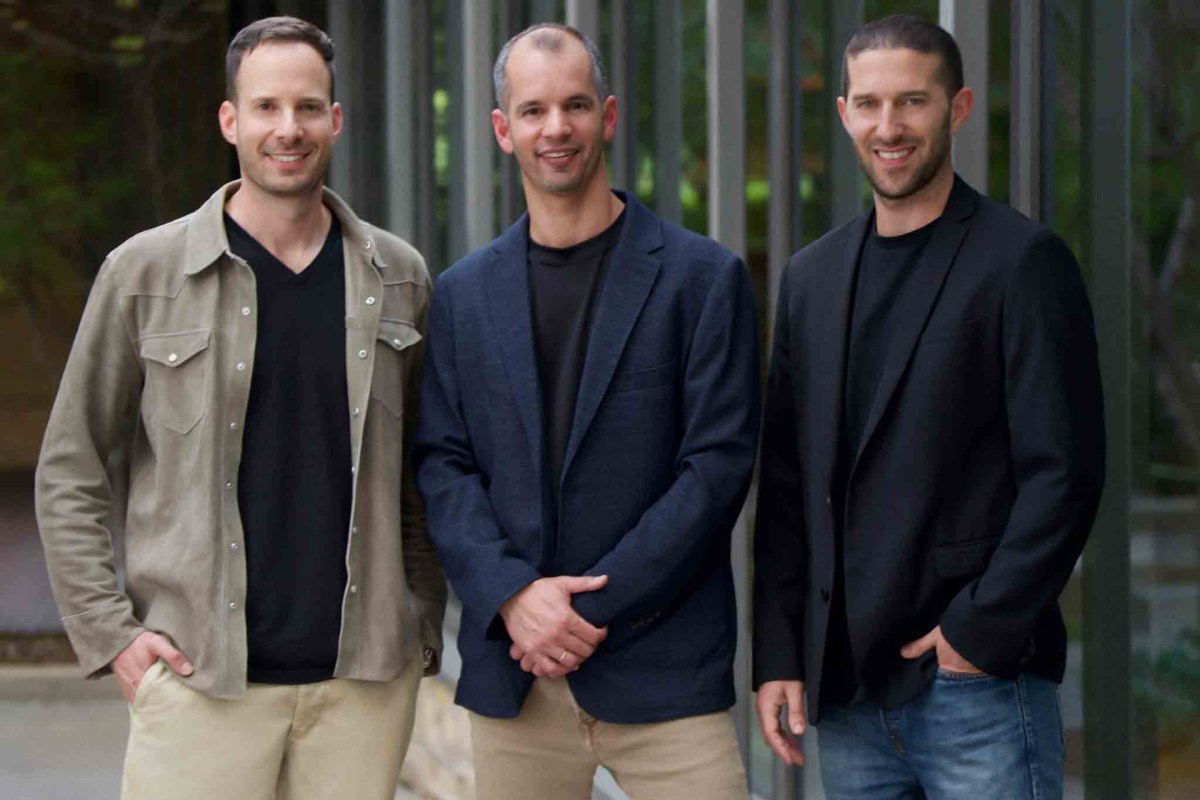



Get curated AI news from 200+ sources delivered daily to your inbox. Free to use.
Get Started FreeFree · takes 30 seconds · unsubscribe anytime
1 minute a day. The AI essentials.
200+ sources · Email / LINE / Slack
