What happened
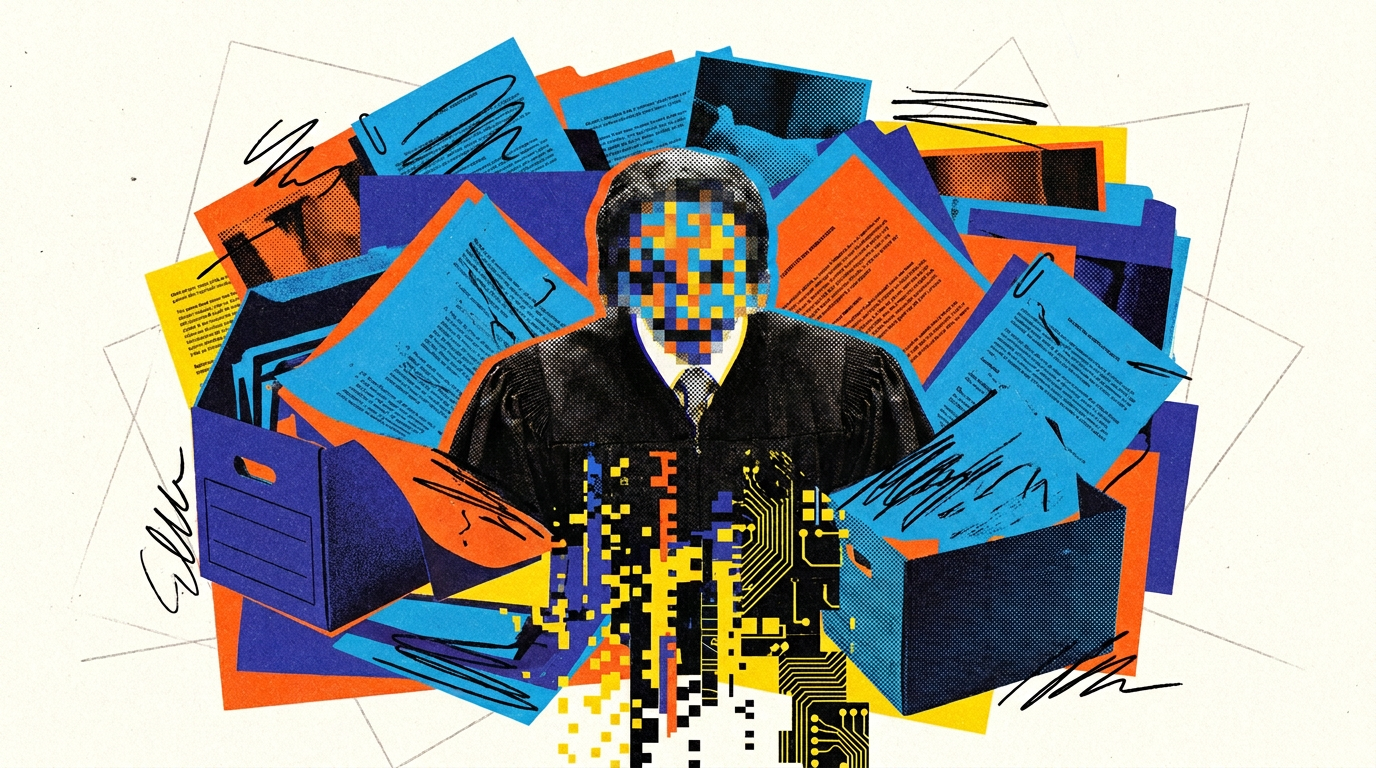
Interim relief applications at Britain's employment courts have surged a hundredfold, with claims rising 39 percent in the year through March 2026 and the backlog jumping 55 percent to 64,000 unresolved cases. Workers are using ChatGPT or Grok to draft legal claims for free instead of paying lawyers, and many AI-generated filings run hundreds of pages packed with fabricated laws and unrealistic demands.
Why it matters
Labour's new Employment Rights Act adds about 25 new grounds for claims and removes compensation caps, which could worsen the flood. Workers with genuine grievances now face longer waits for justice, while employers must spend more to respond to claims whether they are legitimate or fabricated — creating what The Economist describes as a 'tragedy of the commons, AI edition.'
What to watch
The US faces a parallel crisis, with one federal judge calling AI-generated lawsuits an 'existential threat to the federal courts.' However, a study from Pakistan found that judges equipped with AI tools and training processed more cases, faster, suggesting AI may eventually help resolve rather than worsen court backlogs.
Summaries like this, in your inbox every morning.
The surge in AI-generated employment lawsuits in Britain reflects a structural mismatch between digital capability and institutional capacity. Workers now have free access to generative AI tools that can produce hundreds-of-page legal documents, lowering the friction and cost of filing claims to nearly zero. This would ordinarily be a democratizing force — enabling workers who could not afford solicitors to access the courts — but the quality crisis undermines that benefit. Filings packed with fabricated laws and unrealistic demands consume court resources at a scale the tribunal system was not built to handle, and the memo from tribunal presidents Clarke and Walker signals that the judiciary itself views the situation as unsustainable.
The timing amplifies the crisis. Labour's Employment Rights Act is adding about 25 new grounds for claims and removing compensation caps, which The Economist characterizes as a "tragedy of the commons, AI edition." The policy is designed to strengthen worker protections, but its interaction with AI-powered filing has an unintended consequence: legitimate claims get delayed while employers and courts waste resources on frivolous filings. The US faces an analogous threat, with at least one federal judge framing AI-generated lawsuits as an "existential threat to the federal courts." However, a Pakistan study offers a counterpoint: judges with AI tools and training processed more cases, faster, suggesting that AI-assisted case management — rather than AI-assisted claim filing — may eventually ease rather than worsen court congestion.
For example, today's edition would include:
AI-summarized, only the topics you pick: one digest a day via Email, LINE, or Slack.
Free · 30 seconds with Google · unsubscribe anytimeWhat is AIToday? →
Ask AI anything about this article. The AI reads this article, earlier AIToday articles, and Wikipedia, and cites its sources. Q&As are published on this page for other readers too.
AWS made Amazon CloudWatch Omni generally available last week, with 17 built-in evaluators that score coherenc…

Google said Gemini Omni 1.1 Flash is now directly available in Google Vids, letting users extend scenes while…
In a September 2025 paper titled "Why Language Models Hallucinate," OpenAI researchers said low-frequency fact…

The developer moved from IDE-centric work in WebStorm and PHPStorm to terminal-centric work with Claude Code…

In a preliminary code-review trial (internal log EXP-001-R2), Claude and Codex each independently found one va…
A developer moved Codex work to Pi Coding Agent, running gpt-6-sol at high thinking

