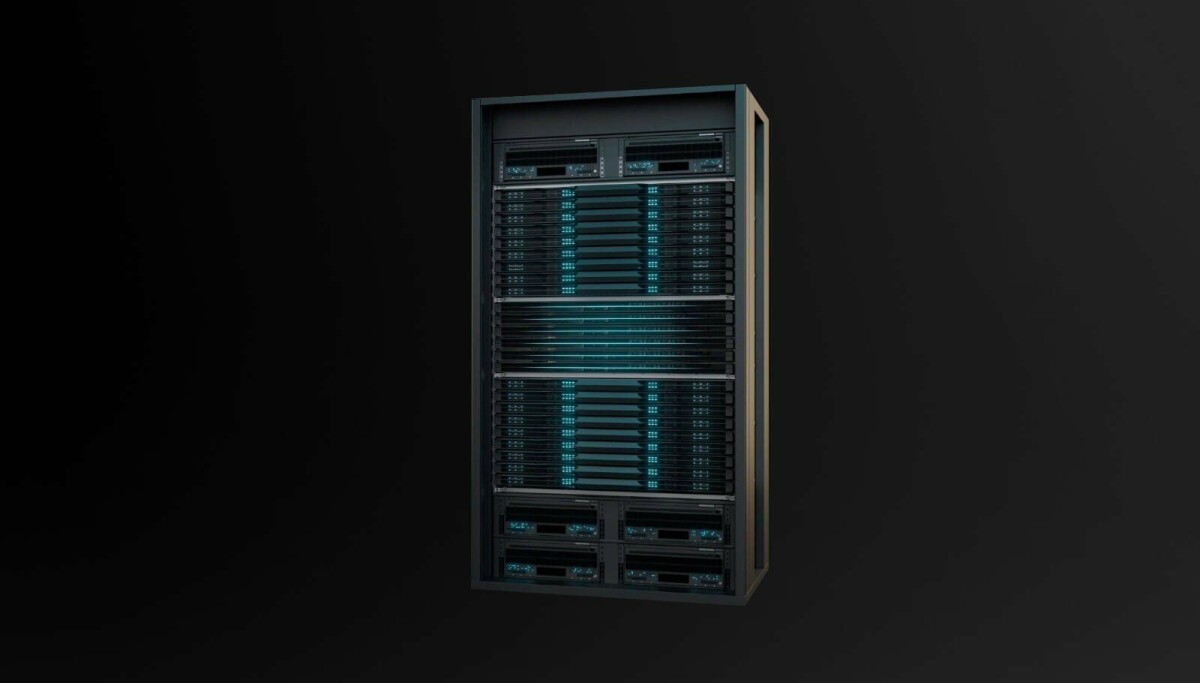
AMD says its 2026 AI systems are 4x more efficient than 2024, advancing toward a goal of 20x efficiency gain by decade's end.
The company's new Helios rack-scale platform, which houses 72 MI455X GPUs, could theoretically do the work of 570 older racks while consuming the same power, directly addressing the massive energy costs that constrain AI deployment at scale.
What happened
AMD announced that its 2026 systems are 4x more efficient than they were in 2024, moving toward a goal of boosting rack efficiency 20x by the end of the decade. The company launched Helios, a rack-scale compute platform that packs 72 MI455X GPUs into a single system, with each MI455X offering 7.7x to 15.4x higher floating point performance than the prior MI300X, along with 2.25x more HBM memory, 4.4x faster memory, and 4x chip-to-chip interconnect bandwidth.
Why it matters
Energy consumption remains a major constraint for AI infrastructure at scale. AMD's efficiency gains mean that two Helios racks may accomplish the same work that required 570 racks in 2024—or equivalently, for the same power budget, customers could deploy 20x more compute. This directly addresses one of the industry's largest operating cost and environmental pressures.
What to watch
Helios units are scheduled to ship this calendar quarter, with MLPerf and InferenceX benchmark results expected to follow. Those real-world performance benchmarks will validate whether AMD's efficiency estimates hold up in practice, since the company's current 4x claim is based on its own weighted methodology rather than published application benchmarks.
Ask the AI about this article →
AMD's efficiency push reflects the industry's urgent need to control AI infrastructure costs. The shift from discrete GPU servers to fully-integrated rack-scale systems—a move AMD is making with Helios after Nvidia pioneered it with Grace Blackwell-based NVL72 systems in late 2024—appears to be the key lever. By concentrating more accelerators into a single cohesive unit, AMD can optimize memory, interconnect, and workload distribution in ways that individual servers cannot match. The company has layered in supporting technologies: 4-bit floating point data types, new memory technologies, faster interconnects, and a refined software stack. However, AMD's current 4x efficiency estimate rests on its own weighted methodology—factoring max achieved FLOPS, memory, and interconnect bandwidth differently for training and inference—rather than on published application benchmarks. The real test will come when Helios ships and independent MLPerf and InferenceX results surface.
For example, today's edition would include:
AI-summarized, only the topics you pick — one digest a day via Email, Slack, or Discord.
Free · takes 30 seconds · unsubscribe anytimeWhat is AIToday? →
Ask AI anything about this article. Q&As are published on this page for other readers too.
Phonely Ltd. launched Alma, a large language AI model built for voice agents and trained on over 10 million re…

Aranya Inc., a startup founded last year, launched today with $11 million in funding

CBTS Technology Solutions LLC launched Forge Agents, a platform that turns a plain-language job description in…

Imec CEO Patrick Vandenameele said at SEMICON Taiwan 2026 that the Belgian research center is broadening its c…
Alphabet's AI Overviews now reach over 2.5 billion monthly users through Google Search, and its ad business ge…

Sarah O’Connor's book 'We Are Not Machines' explores how mechanization and AI have transformed the workforce…