
What happened
Energy-Based Reasoners (EBR) report 99.9% accuracy on Sudoku-Extreme, reached with 1.8M parameters, while using 345× less inference compute than the next-best model; single-pass accuracy is 99.4%.
Why it matters
Because EBR uses the same energy score to update, stop, and pick among candidates, easy puzzles end in a few steps while only hard ones keep iterating — a design that may suit scheduling and constraint optimization where judging candidates is hard.
Summaries like this, every morning.
EBR sits on a simple idea: instead of running a fixed number of update blocks and then applying a separate stopper or verifier, treat the model's state as a point on a landscape scored by an energy value and move it downhill. The paper's framing recasts iterative reasoning as energy minimization, so the same score that guides each update also tells the model when the trajectory has settled and which of several final candidates to take.
That contrasts with the prior chain of work it is placed against. Tiny Recursive Model and Hierarchical Reasoning Model also iterate to solve Sudoku and Maze, but they place stopping and selection outside the loop. EBR's claimed novelty is that update and scoring live in the same coordinate system, which is offered as the reason candidate comparison becomes principled rather than bolted on.
The reported numbers — 99.9% on Sudoku-Extreme, 1.8M parameters, and 345× less inference compute than the next-best model — are striking, but what is not yet visible: where the compute savings actually come from, whether a single gradient threshold holds across problems, and what the energy landscape looks like when a puzzle has multiple valid solutions. Those open questions, rather than the headline accuracy alone, are likely to decide how far the approach travels beyond Sudoku.
Pick your industry and the AI tools you use, and get news related to your work every day.
Free · 30 seconds with Google · unsubscribe anytimeWhat is AIToday? →
Ask AI anything about this article. The AI reads this article, earlier AIToday articles, and Wikipedia, and cites its sources. Q&As are published on this page for other readers too.
With Google Chrome's Modern Web Guidance plugin loaded, Claude Opus 5.5 wrote 2,740 JavaScript lines across 16…

A paper by University of Macau and The Hong Kong Polytechnic University researchers tested web-application dev…

Google detailed the Mirror Dimension, an isolated replica internet with social media, shopping and bank dashbo…

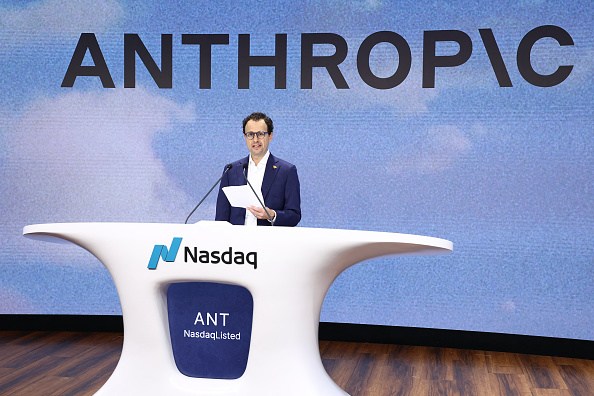
On IPO day, Dario Amodei told the Nasdaq opening bell crowd Anthropic will pace training and deployment of its…
Meta employees said Muse mixed up chats across accounts and surfaced messages and bank balances they never sha…

Anthropic's shares began trading on the Nasdaq at $111.50, 33% above the $83 IPO price set Wednesday, which wa…