Alphabet has raised its 2026 capital spending guidance to a range of $195 billion to $205 billion as it doubles down on AI computing infrastructure.
Google Cloud, the division renting that capacity to other companies, posted an 82% year-over-year revenue jump to $24.8 billion in Q2 with a 36% operating margin—higher than Alphabet's overall company margin.
Because the infrastructure investment is already generating outsized profits, the spending could fuel significant profit growth over several years as demand for AI computing capacity remains strong.
What happened
Alphabet increased its 2026 capital expenditure guidance to a range of $195 billion to $205 billion, with $200 billion as the midpoint. Google Cloud's Q2 revenues rose 82% year over year to $24.8 billion, and its operating margin expanded by about 15 percentage points to 36%.
Why it matters
Google Cloud is renting computing infrastructure to companies that need to build, train, and run AI applications but don't own the hardware themselves. Because Google Cloud's profitability (36% operating margin) now exceeds Alphabet's companywide operating margin (34%), the massive capital spending is already translating into outsized profit growth rather than just cost.
What to watch
Alphabet plans to expand its data center footprint rapidly for several years. The scale of this infrastructure build could sustain Google Cloud's expansion for an extended period, potentially creating a compounding effect on Alphabet's overall operating profits.
Ask the AI about this article →
Alphabet's increased capital expenditure guidance reflects the company's conviction that demand for AI computing infrastructure will remain strong and profitable for years to come. The timing is significant: the company is not merely announcing future spending but already demonstrating that the investments are paying off in the present. Google Cloud's Q2 results—an 82% revenue surge paired with a 36% operating margin that exceeds the company's overall profitability—show that renting computing power to AI-hungry enterprises is a high-margin business. This is not speculative; the evidence is already flowing through Alphabet's financial statements.
The two-pronged approach is also worth noting. While Alphabet develops its own AI models (Gemini) and offers free and paid consumer versions, the article frames this as "table stakes"—necessary to stay competitive but not the primary profit engine. The real value sits in Google Cloud's infrastructure-as-a-service model. Companies prefer to remain asset-light and rent capacity rather than build their own data centers, creating a sustained, growing revenue stream for Alphabet. As long as companies continue to build and train AI applications, they will need access to computing power that Alphabet is positioned to supply.
For example, today's edition would include:
AI-summarized, only the topics you pick — one digest a day via Email, Slack, or Discord.
Free · takes 30 seconds · unsubscribe anytimeWhat is AIToday? →
Ask AI anything about this article. Q&As are published on this page for other readers too.
Aranya Inc., a startup founded last year, launched today with $11 million in funding

CBTS Technology Solutions LLC launched Forge Agents, a platform that turns a plain-language job description in…

Phonely Ltd. launched Alma, a large language AI model built for voice agents and trained on over 10 million re…

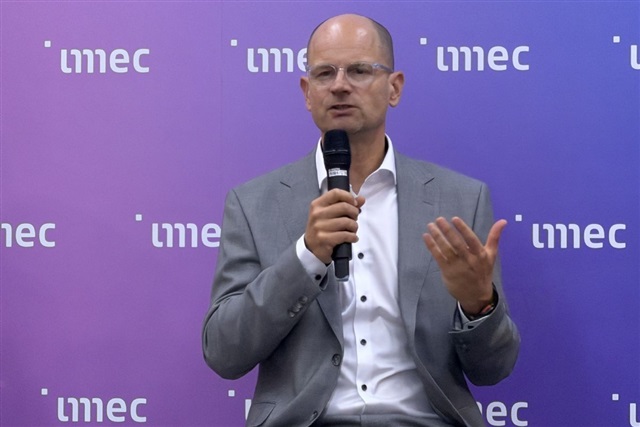
Imec CEO Patrick Vandenameele said at SEMICON Taiwan 2026 that the Belgian research center is broadening its c…
Alphabet's AI Overviews now reach over 2.5 billion monthly users through Google Search, and its ad business ge…
Sarah O’Connor's book 'We Are Not Machines' explores how mechanization and AI have transformed the workforce…