What happened
Carbon Robotics announced the Large Plant Model in February 2026, trained on 150 million-plus plant images, cutting new-crop setup from weeks to minutes of iPad photos; it also boosted LaserWeeder and its Autonomous Tractor Kit.
Why it matters
Easier crop-adaptation could speed up deployment of weeding and harvesting robots, where field conditions otherwise slow practical use — the company frames this as a first-of-its-kind plant foundation model.
What to watch
Whether adoption hinges on more than the model — Japan's market still sells only Level 2 automation, where an unmanned machine needs a human watching it, with Level 3 stuck on liability rules. Watch Agriculture Minister-certified plans under the 2024 law.
WHO IT HITSThis lands on farm operators and agritech suppliers weighing robot adoption: it points to lower setup effort per crop, though Japanese rules and certification for subsidies will shape actual deployment. Enterprise IT and operations teams in agribusiness may need to connect farm imagery to these models.
Summaries like this, in your inbox every morning.
The article places the Large Plant Model in a broader pattern: agricultural robots are advancing alongside foundation-model AI. Rather than building a model for each crop, the approach is to pre-train broadly and then fine-tune minimally for each field, and Carbon Robotics applies that idea to plants. That matters because fields vary widely, and the speed of adaptation largely decides how fast harvesting and weeding robots become practical.
Underneath it all sits a labor problem. Japan's core agricultural workers fell to 1.036 million in 2025, down 56.8% from 2.4 million in 2000, with an average age of 67.7 and 69.6% aged 65 or older. Robotics players have emerged both domestically (AGRIST's cucumber harvester Q, Kubota's autonomous combine with NVIDIA) and abroad (eternal.ag's greenhouse Harvester, which raised 800万ユーロ, and Agroz with UBTECH's Walker S humanoid).
Because farms are outdoors and uneven, the article notes that robotics here is technically as hard as construction sites, so lowering upfront cost through rent or Robot-as-a-Service is a common route — AGRIST's planned 2026 rental fits that. Japan's 2024 smart agriculture law backs this with priority goals and tax and financing support. Whether any of it pays off is likely to hinge on how quickly models adapt to each field and whether Level 3 rules, including liability in accidents, get resolved.
Pick your industry and the AI tools you use, and get news related to your work every day.
Free · 30 seconds with Google · unsubscribe anytimeWhat is AIToday? →
Ask AI anything about this article. The AI reads this article, earlier AIToday articles, and Wikipedia, and cites its sources. Q&As are published on this page for other readers too.
Writing for Robotics and Automation News, Unbox Robotics CEO Pramod Ghadge said reverse logistics needs AI dec…
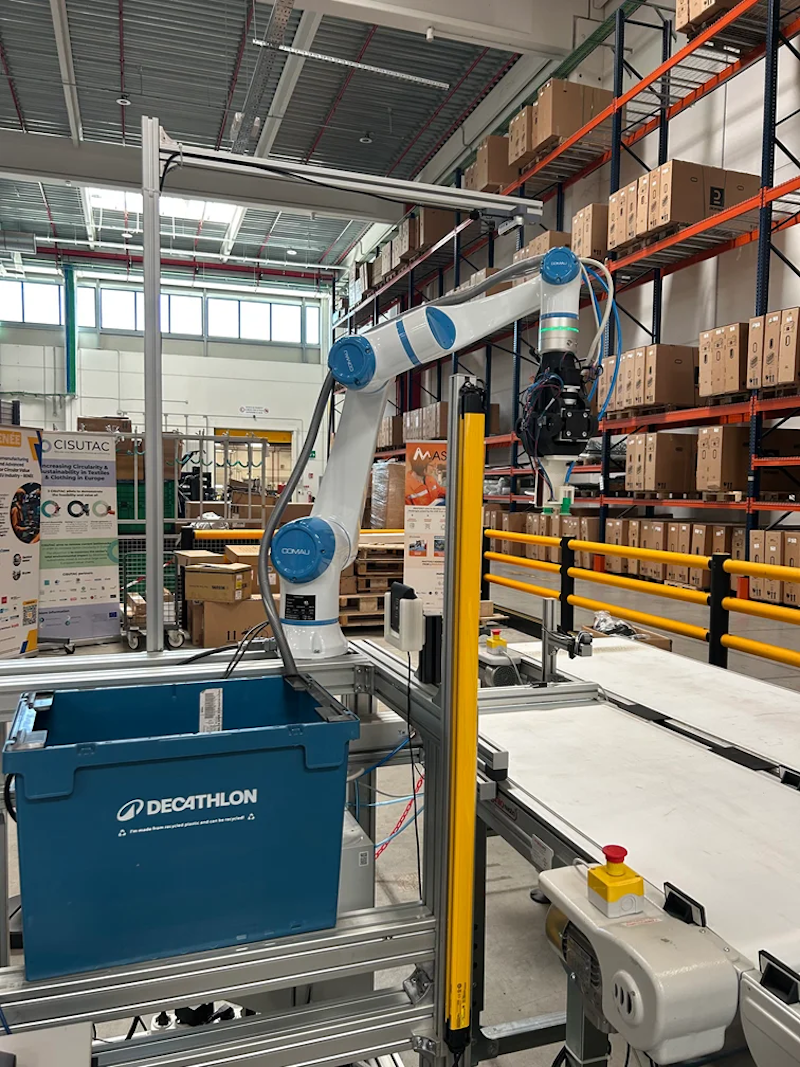
Comau designed and validated an order preparation solution tested within Decathlon's e-commerce fulfillment op…
Defense Secretary Pete Hegseth said the US will create an "Autonomous Combat Force" under a four-star officer…

Anthropic fed a database of roughly 900 occupations and about 19,000 tasks into its Claude AI, which sorted th…

Caterpillar showcased AI and remote control technology at its demo center in Edwards
Destro came out of stealth Tuesday with an $8 million seed round led by Base10 Partners and Bonfire Ventures…