
What happened
Canada, the EU, and other middle-power nations are prioritizing open-source AI as a path to technological sovereignty, with the EU placing open source at the center of its strategy and countries from Germany to Japan integrating it into national plans. Meanwhile, open-source AI models grew from roughly 1–2% of token volume in late 2024 to nearly 30% by mid-2025 among developers.
Why it matters
Open-source AI allows governments and companies to own the infrastructure they build on and lets anyone inspect the code for safety and accountability—contrasting with AI controlled by a small number of large corporations. The body notes research showing open-source technology has created over $8.8 trillion(約1400兆円) in demand-side value, suggesting broad economic stakes in how AI infrastructure evolves.
What to watch
The shift reflects a response to concerns about concentrated control, particularly after the U.S. government's action to suspend access to Mythos unnerved governments and companies worldwide. The private sector is responding: developers are gravitating toward open-source AI tools, and a recent a16z and OpenRouter study found that open-source model adoption among builders represents significant business momentum.
Summaries like this, in your inbox every morning.
Pick your industry and the AI tools you use, and get news related to your work every day.
Free · 30 seconds with Google · unsubscribe anytimeWhat is AIToday? →
Ask AI anything about this article. The AI reads this article, earlier AIToday articles, and Wikipedia, and cites its sources. Q&As are published on this page for other readers too.
OpenAI put a broad range of new mathematical results from an internal frontier model on GitHub — covering 90 o…
Opper published jevman, an open-source Pac-Man benchmark that runs six AI models — among them TypeSafe AI's Je…

On a self-built 76-question Jev-format set, six trained 3B–9B open-weight models (Imajev-4B, Clef-Flash 9B, Je…

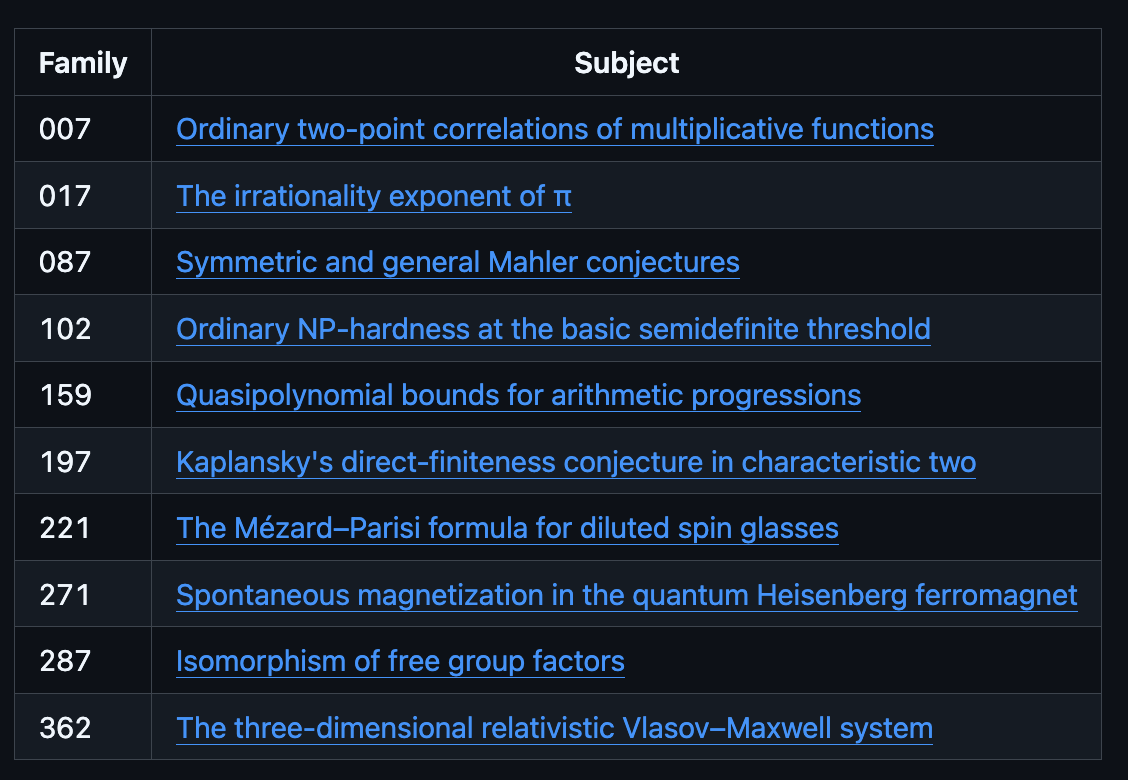
OpenAI published 719 manuscripts covering 372 topic families on October 6, 2026, all produced by an internal f…
The open-source ax-engine for Apple Silicon Macs measured over 76 tok/s decode on one M5 Max setup, and about…

RedMonk published an analysis of open-weight AI models, citing SIAI data showing Chinese models grew from 4.5%…