What happened
On a 50-case multilingual reasoning test, base GPT-OSS-20B reasoned in the requested language only 22% of the time. After SFT on Amazon SageMaker HyperPod, that hit 100%, and GRPO lifted answer-language from 62% to 70% (both correct).
Why it matters
SFT teaches behavior the model lacks entirely, while GRPO only refines a sometimes-correct behavior. Answer-language improved because it had headroom; where the model was already at peak accuracy, GRPO added no gain.
WHO IT HITSTeams deploying open-weight reasoning models for non-English users—such as customer support, local-language search, or multilingual chat—can use SFT to enforce target-language reasoning, then apply GRPO only when evaluation shows room to improve answer quality.
Summaries like this, in your inbox every morning.
The base GPT-OSS-20B has a strong English prior: it acknowledges a request to reason in French, German, Spanish, or Italian, then produces its chain-of-thought in English anyway. That is not a prompting issue but a capability gap, which is why SFT proved necessary rather than optional—it moved reasoning-language correctness from 22% to 100% across the 50 test cases.
The remaining difficulty was the final answer, which is short and where the English prior is strongest. SFT brought answer-language accuracy to 62%, leaving a clear target for GRPO. GRPO improved answer-language to 70% while holding reasoning at 100%, a +8 point gain that came from reinforcing a behavior the model could already sometimes produce.
A controlled Qwen2.5-7B experiment on two tasks confirmed the pattern: GRPO added +6 points on multilingual reasoning where headroom existed, but no gain on GSM8K where the model was already at 90.5%. The practical decision rule is to use SFT for missing behavior and GRPO only when evaluation shows that the desired behavior is sometimes correct and there is room to improve.
Pick your industry and the AI tools you use, and get news related to your work every day.
Free · 30 seconds with Google · unsubscribe anytimeWhat is AIToday? →
Ask AI anything about this article. The AI reads this article, earlier AIToday articles, and Wikipedia, and cites its sources. Q&As are published on this page for other readers too.
Google released TorchTPU, a version of the PyTorch framework that lets developers run existing AI apps and mod…
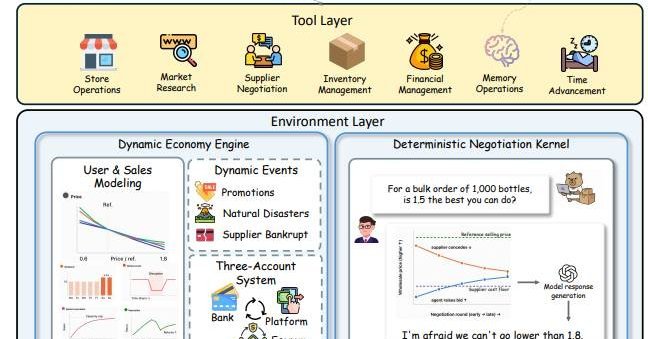
In a benchmark called E-Commerce Bench, 18 AI models ran up to four simulated shops for 365 days, using 18 too…
ITmedia's AI Plus released a 14-page booklet on using Gemini Notebook's (formerly NotebookLM) Studio feature…

IBM Research's ALTK-Evolve turns each customer-service agent trial into short action rules and injects them in…

Testing Pi 0.84.2 with claude-sonnet-4-5, a hook returning { block: true, reason } on rm produced a normal too…
A Zenn author migrating a ten-year-old PHP/Laravel monolith — hundreds of endpoints and more than 600 shared m…

