
What happened
A Zenn author migrating a ten-year-old PHP/Laravel monolith — hundreds of endpoints and more than 600 shared models — to Laravel 12 microservices plus a Vue 3 frontend split the work across 16 Claude Code sub-agents.
Why it matters
Each role can only read its own slice (the frontend analyst never sees legacy code, the contract designer never reads code at all), so biased interpretations are structurally harder and handoffs move through files under docs/.
Summaries like this, in your inbox every morning.
The author's starting point is scale: a decade-old monolith with hundreds of endpoints and more than 600 shared models is too large for one person to track which API has moved and whether the old logic was copied correctly. Handing the whole job to an AI produced four recurring failures — invented response structures, contaminated context, code written before the spec was fixed, and dependency order broken.
The diagnosis is that the root cause is cramming too many responsibilities and too much information into one context, not a weak model. Extraction agents shown new code drift toward "the old one must work like this"; contract designers allowed to touch code start making well-meaning spec changes. The fix mirrors ordinary team management: separate roles, handoff documents, and review gates, with file handoffs letting each sub-agent start from a clean context and a PreToolUse hook mechanically blocking writes outside defined directories.
Operationally the author caps each pass at 5–10 endpoints and isolates one domain per context, because sub-agents cannot launch other sub-agents nested and delegation must route through the dispatcher. The legacy monolith stays read-only, and a conclusion of "not in the original" requires a fresh fetch since it is still actively updated.
Pick your industry and the AI tools you use, and get news related to your work every day.
Free · 30 seconds with Google · unsubscribe anytimeWhat is AIToday? →
Ask AI anything about this article. The AI reads this article, earlier AIToday articles, and Wikipedia, and cites its sources. Q&As are published on this page for other readers too.
Google released TorchTPU, a version of the PyTorch framework that lets developers run existing AI apps and mod…
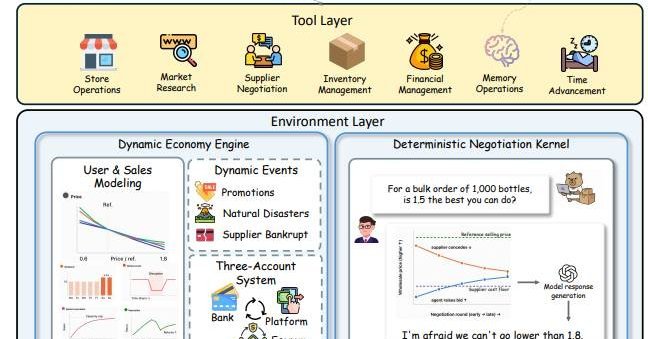
In a benchmark called E-Commerce Bench, 18 AI models ran up to four simulated shops for 365 days, using 18 too…
ITmedia's AI Plus released a 14-page booklet on using Gemini Notebook's (formerly NotebookLM) Studio feature…

IBM Research's ALTK-Evolve turns each customer-service agent trial into short action rules and injects them in…
Testing Pi 0.84.2 with claude-sonnet-4-5, a hook returning { block: true, reason } on rm produced a normal too…
After six rounds of tuning TypeSafe AI's Jev for note selection, the author benchmarked it on 100 requests aga…

