What happened
Apple researchers introduced shared selective persistent memory, which keeps four categories of reusable context — task specifications, data schemas, tool configurations, and output constraints — and discards session-specific reasoning traces. Across three enterprise deployment scenarios it reached 96% task completion, versus 79% without memory and 71% with full history.
Why it matters
The gain suggests how an agent's context is filtered, not how much of it is stored, drives reliability, since naive full-history persistence appears to bias the agent with stale reasoning traces. The memory is also shareable across users with role-based access control.
What to watch
Whether the 96% completion holds beyond the three enterprise scenarios, since the wider evidence is a replication on four public datasets. Worth tracking is the complementary zero-token data refresh, which the team says eliminates re-invocation for recurring updates at 14× task time reduction.
WHO IT HITSTeams building or running agentic coding tools and internal data platforms, plus the engineers and analysts who rely on them, would feel this through more reliable task completion and cheaper recurring data refreshes.
Ask the AI about this article →
Summaries like this, in your inbox every morning.
The architecture is built around a problem Apple's researchers describe plainly: in multi-turn tool use, each session starts from zero, discarding the configuration choices, domain constraints, data schemas, and tool-use patterns that made previous sessions productive. Their answer is to keep only part of the past, identifying four categories of reusable context while discarding session-specific reasoning traces.
The platform side of the work is a deployed collaborative workspace where LLM agents produce, edit, and maintain git-versioned artifacts — interactive dashboards, structured reports, and data-driven documents — from heterogeneous sources accessed via CSV upload, SQL, REST APIs, and MCP servers. Git-backed versioning with draft isolation lets users explore modifications risk-free and restore to any prior state without re-invoking the model, and a zero-token data refresh decouples generated programs from runtime data so artifacts can be reused without re-invocation.
The standout comparison is against the obvious baseline. Naive full-history persistence actively degrades task completion, the team reports, apparently biasing the agent with stale reasoning traces, while selective memory outperforms both extremes. The reading is that the commercial benefit hinges on what gets filtered out, not on how much context is retained — though the 96% figure comes from three enterprise deployment scenarios, so whether it generalizes rests on the replication across four public datasets.
For example, today's edition would include:
AI-summarized, only the topics you pick — one digest a day via Email, Slack, or Discord.
Free · 30 seconds with Google · unsubscribe anytimeWhat is AIToday? →
Ask AI anything about this article. Q&As are published on this page for other readers too.
Palo Alto Networks' Leeor Piazza said an AI agent scanned the internet, found a public API endpoint, then move…

Mozilla and Mistral launched Firefox Smart Window (beta), an AI assistant that helps with complex searches, re…

TypeSafe AI introduced Jev, a classification-only model that scores developer-defined options instead of gener…
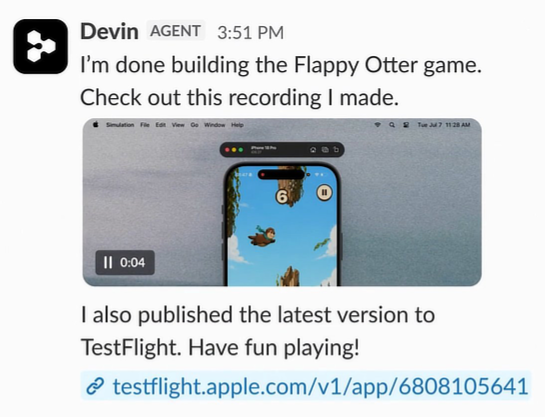
Cognition's Devin began offering macOS inside its hosted virtual environment on September 15, 2026, joining th…
Anthropic's Chris Cronbaugh told Sleuthcon that after a prepaid account sent over 100,000 API requests a day t…

Nvidia Inception's Global Head of Physical AI, Les Karpas, will explain at TechCrunch Disrupt 2026 why general…