What happened
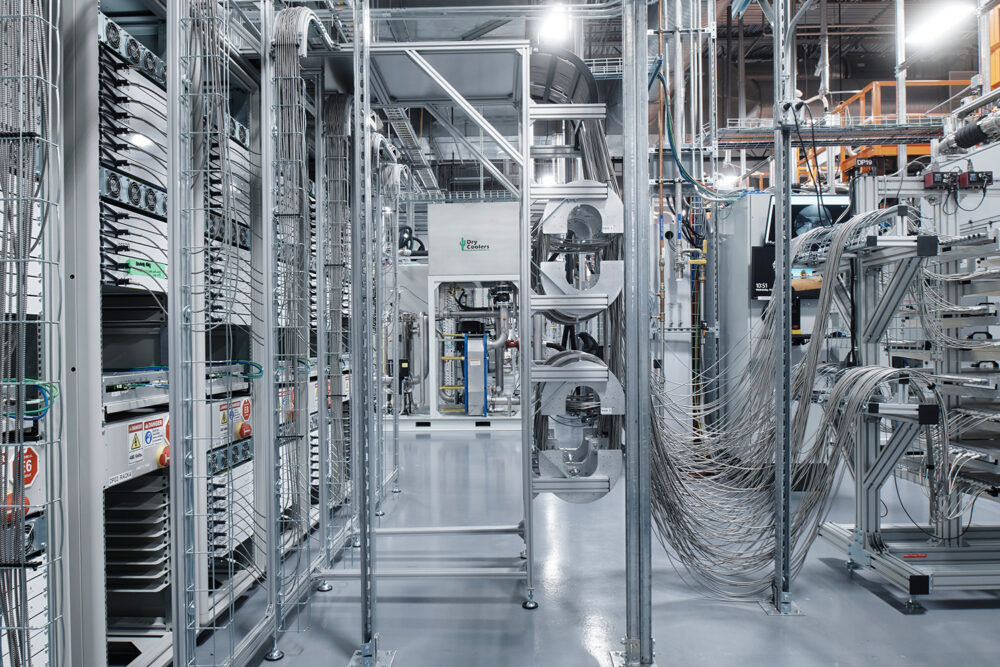
Robotics and physical AI companies have raised nearly $48 billion in 2026, but VulcanForms CTO Michael Kenworthy says factories still lack data linking process decisions to quality outcomes, blocking autonomous deployment.
Why it matters
Without confirmed links between parameters like welding angle and finished quality, even advanced robotic systems may struggle to adapt to changing production conditions, so manufacturers may miss the efficiency gains they expect.
Summaries like this, every morning.
Capital is flowing into robotics at scale, with nearly $48 billion raised so far in 2026, but the factory floor has not been wired to match. Michael Kenworthy's argument is that much of what skilled technicians know — how welding angle, travel speed, or workpiece position affect the result — never gets recorded in a form robotics partners can use. He extends the same point to other processes where adjustments rely on undocumented experience.
The data problem is not simply a volume issue. Manufacturers already collect operational data, but it often sits in separate systems, with machine parameters in one place and inspection results in another. The Manufacturing Leadership Council’s 2026 survey shows how sharply this is being felt: 37% of surveyed manufacturers call a lack of data interoperability a major roadblock, up from 22% in 2025. Kenworthy concludes that interoperability alone will not suffice, because production records must also be tied to measurable quality outcomes.
His three recommendations — capture data reflecting real production conditions, connect it across the whole process into a digital thread, and build feedback loops with clear oversight — are framed as preparation, not procurement. He suggests linking existing process records to inspection results may deliver more value than buying more sensors. The piece does not offer a timeline or a forecast of when physical AI will clear these hurdles; it presents the gap as the operative barrier.
Pick your industry and the AI tools you use, and get news related to your work every day.
Free · 30 seconds with Google · unsubscribe anytimeWhat is AIToday? →
Ask AI anything about this article. The AI reads this article, earlier AIToday articles, and Wikipedia, and cites its sources. Q&As are published on this page for other readers too.
Bastian Koller of the High-Performance Computing Center Stuttgart said HammerHAI, built on Hewlett Packard Ent…

In a taiziii survey of 170 valid respondents — managers at companies with 300 or more employees whose departme…

The fair value estimate for Alphabet was cut from US$408.09 to US$397.13, a modest reset tied to research weig…

The Nasdaq 100 fell 5.6% Friday and 10.43% for the week, its worst since March 2020; Nvidia closed at $125.53…

Citi added a section to its online user agreement this month stating that any access or transactions by a thir…
Interpreter Sara Campos lost a longtime Berlin client to AI, which the company chose because it is cheaper and…