What happened
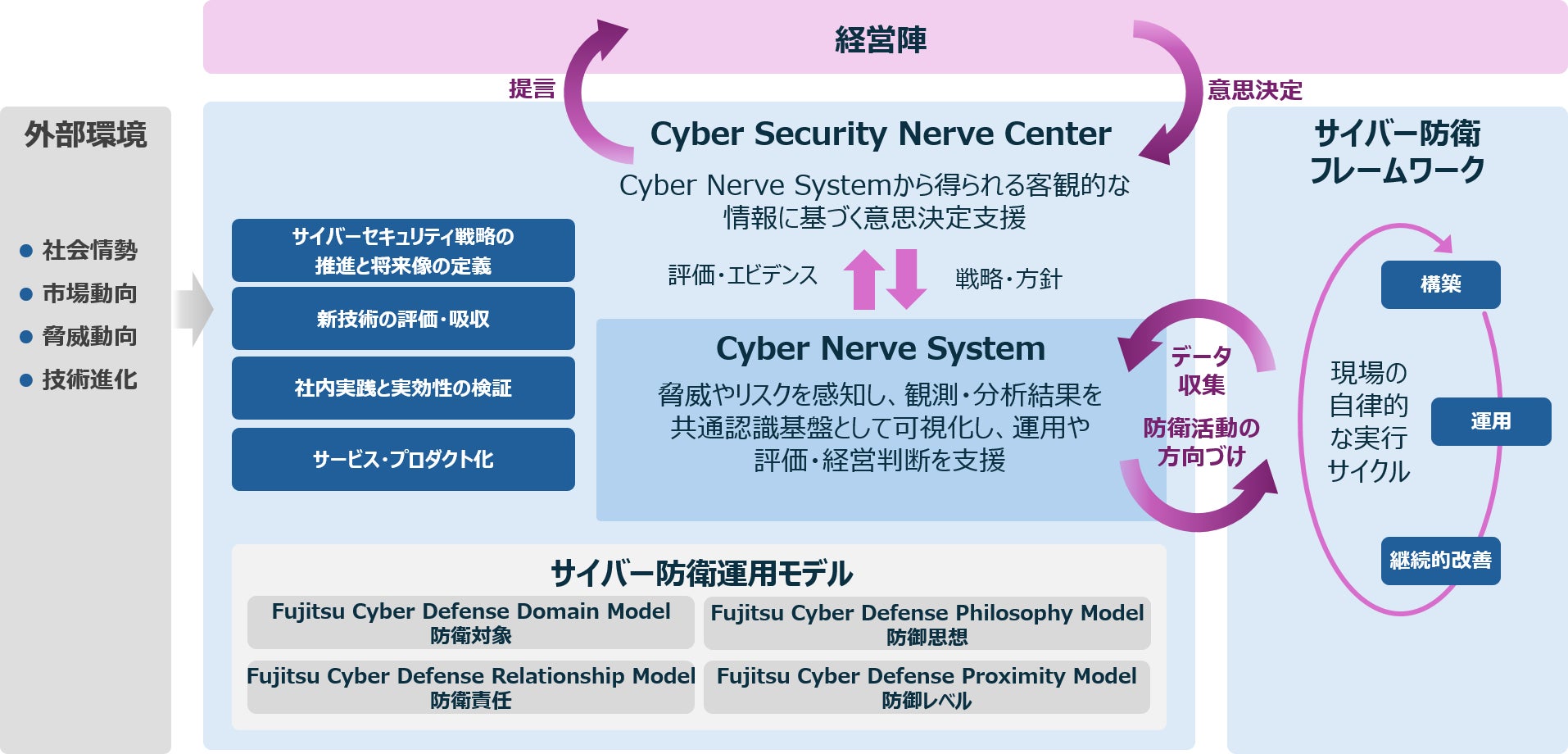
Fujitsu has formulated a cybersecurity strategy that treats defense as an ongoing lifecycle—from planning and design through operations and improvement—rather than as post-build maintenance. It also established a virtual organization called Cyber Security Nerve Center (Nerve Center), staffed by around 100 people, to support executive decisions with objective data.
Why it matters
Cyberattacks are becoming faster and more automated thanks to generative AI, while corporate IT environments grow more complex, expanding the defense perimeter to the entire supply chain. Fujitsu's approach, including a "slow-down defense" philosophy and models that define defense targets and responsibilities, aims to help companies maintain business continuity even when attacks succeed.
What to watch
Fujitsu plans to gradually offer consulting, system building and operation services, and AI-powered defense services such as AI threat hunting and AI red team operations. It also intends to expand services like advanced monitoring and automatic response, and to integrate its own technologies, including the large language model "Takane," into a next-generation cyber defense foundation.
Summaries like this, in your inbox every morning.
Fujitsu's new strategy responds to two shifts: AI-driven attacks that are faster and more precise, and IT environments that now span clouds, external data links, and entire supply chains. The company argues that traditional security operations—focused on preventing intrusion or detecting it after the fact—are no longer enough to keep corporate defense capabilities up to date. Therefore, it redefines cyber defense as a continuous lifecycle from strategic planning through improvement, supported by models that clarify what to protect, how to defend, and who is responsible.
The initiative combines organizational and technical elements. The Nerve Center acts as the core, consolidating knowledge from Fujitsu's own experience as a "customer zero," customer feedback, and external technology from startups and partners. The Cyber Nerve System will provide data-driven visibility to guide defense activities and promote autonomous action at the operational level. The strategy also includes developing specialized talent through Fujitsu's security master program, feeding practical knowledge back into training. Going forward, Fujitsu plans to roll out consulting, system building, and AI-powered defense services gradually, potentially including contributions to Project YATA-Shield, a Japanese government initiative announced in May 2026 to counter high-speed, large-scale AI attacks.
Pick your industry and the AI tools you use, and get news related to your work every day.
Free · 30 seconds with Google · unsubscribe anytimeWhat is AIToday? →
Ask AI anything about this article. The AI reads this article, earlier AIToday articles, and Wikipedia, and cites its sources. Q&As are published on this page for other readers too.
A Zenn contributor sorted AI use into three modes — AI as an assistant, AI running alongside people, and AI th…

A developer released agent-guardrails, a one-script Python standard-library plugin that guards Bash, Write, Ed…
A Qiita article compared automated red-teaming methods for LLM apps — GCG, PAIR, and TAP — using mock implemen…

In a webinar hosted by French Mathematical Society president Isabelle Gallagher, Fields Medal winner Hugo Dumi…
Anthropic said on October 15 it has started giving METR's six staff company devices, office space and access t…

NVIDIA published a blog post titled "AI Security Is an Engineering Problem - How to Solve It at Every Layer of…