What happened
Physical Superintelligence said on 2026年11月6日 that its AI research system, built with an undisclosed Anthropic model, found a complete proof of the Aaronson-Ambainis conjecture on day three, then improved it twice.
Why it matters
The result suggests a long-open question about whether quantum computers need hidden regularity for exponential speedups may now have a definite answer, though experts caution the proof must hold up.
WHO IT HITSResearchers in quantum computing and complexity theory are the immediate audience, since the conjecture concerns the mathematical foundations of quantum advantage; AI-assisted proof systems may also draw interest from mathematicians and computer scientists.
Summaries like this, every morning.
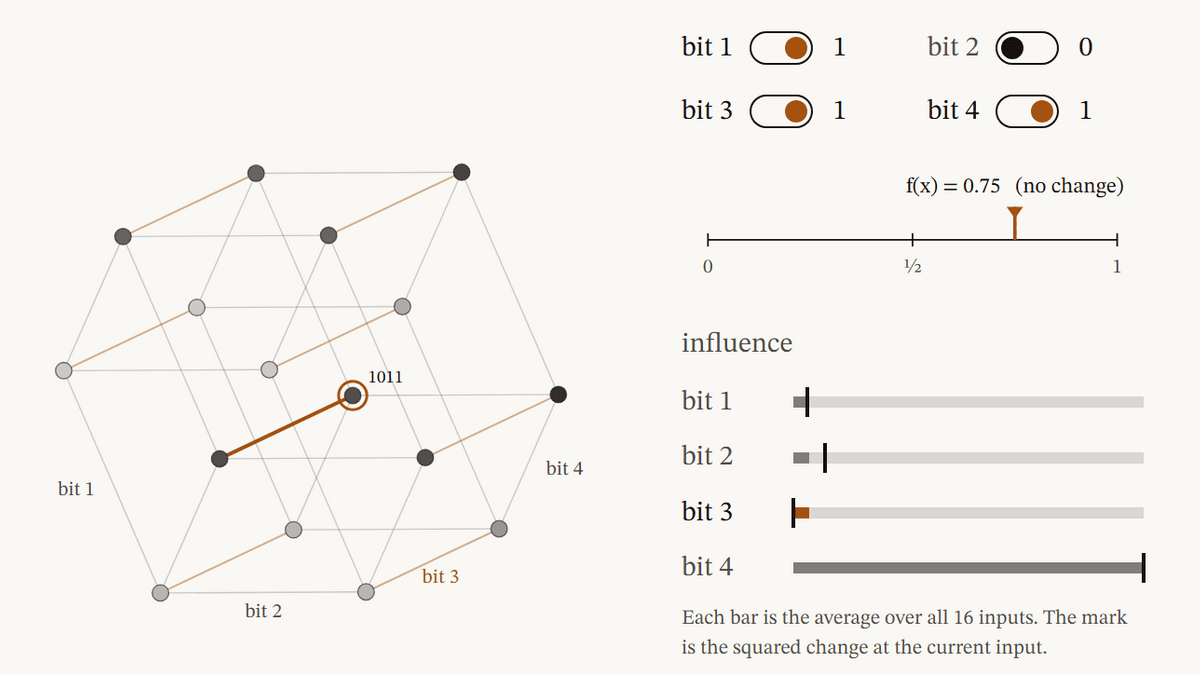
The Aaronson-Ambainis conjecture dates to 2008, when computer scientists Scott Aaronson and Andris Ambainis proposed it as a way to clarify whether quantum computers require hidden regularity to deliver exponential speedups. The question matters because quantum algorithms such as Shor's algorithm, proposed by Peter Shor in 1994 for fast integer factorization, rely on periodic patterns in the numbers being processed. If the conjecture is true, it would mean that for most random inputs, a quantum computer cannot finish a computation with exponentially fewer data accesses than a classical computer — in other words, extreme quantum speedups would need special structure in the problem.
PSI tackled the problem with its own AI research system, which incorporates an undisclosed AI model developed by Anthropic. According to PSI, the system found a complete proof on the third day after execution began, and PSI researchers then refined the proof twice while studying related mathematical questions. Because AI-generated proofs can contain plausible-sounding errors, PSI used the Lean 4 theorem prover to convert the proof into a computer-checkable form. PSI's published materials state that the Lean proof was completed without unfinished parts or new axioms and was confirmed by two independent verification programs, with the paper, Lean source code, verification steps, and logs released on GitHub.
Reactions from experts have been positive but measured. Henry Yuen, a researcher specializing in quantum computing, called it a beautiful question in quantum complexity theory that has now been solved. Mathematician Paata Ivanisvili said it would be a major result if it holds, noting that a positive resolution would essentially mean quantum algorithms can be classically simulated in polynomial time on most inputs for a large class of problems. PSI also says Stanford University researchers who solved a special case of the conjecture in August 2026 have confirmed the proof and are preparing a concise explanation for experts. PSI summed up the result by saying that while many mysteries remain in quantum computing, one mystery has now been reduced.
Pick your industry and the AI tools you use, and get news related to your work every day.
Free · 30 seconds with Google · unsubscribe anytimeWhat is AIToday? →
Ask AI anything about this article. The AI reads this article, earlier AIToday articles, and Wikipedia, and cites its sources. Q&As are published on this page for other readers too.
Shizuku AI技術部 said on 11月5日 it released a prototype letting users talk to AI VTuber Shizuku through an iPhone…

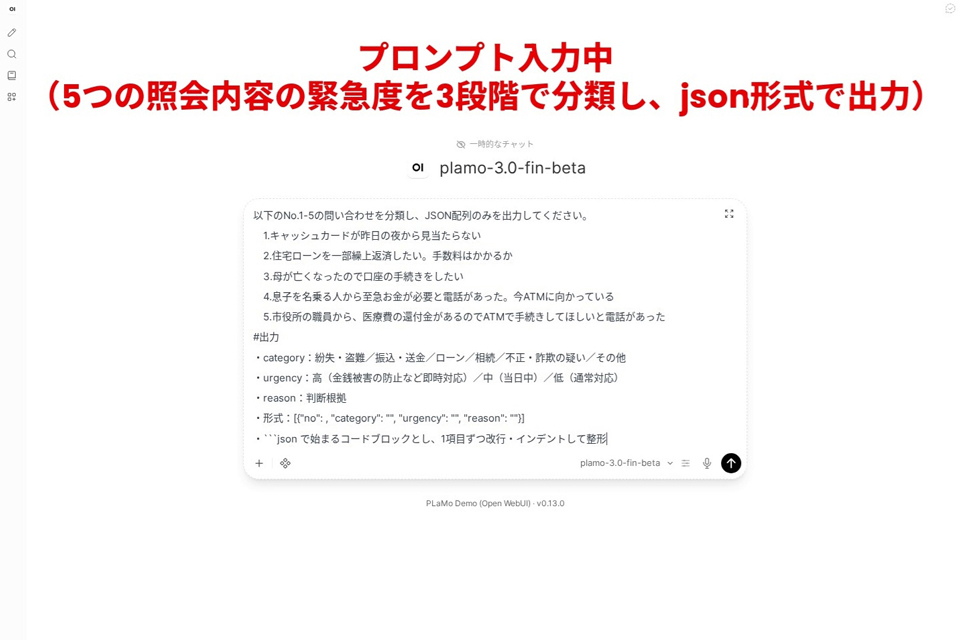
Preferred Networks published PLaMo 3.0 Fin, a finance-focused small language model built on its PLaMo base mod…
株式会社AIworker published a free six-page report, "2026年11月版," covering how construction firms should rewrite gen…

Kokuyo is consolidating meeting minutes, design documents and tasks into Notion and Notion AI, and linking Cla…

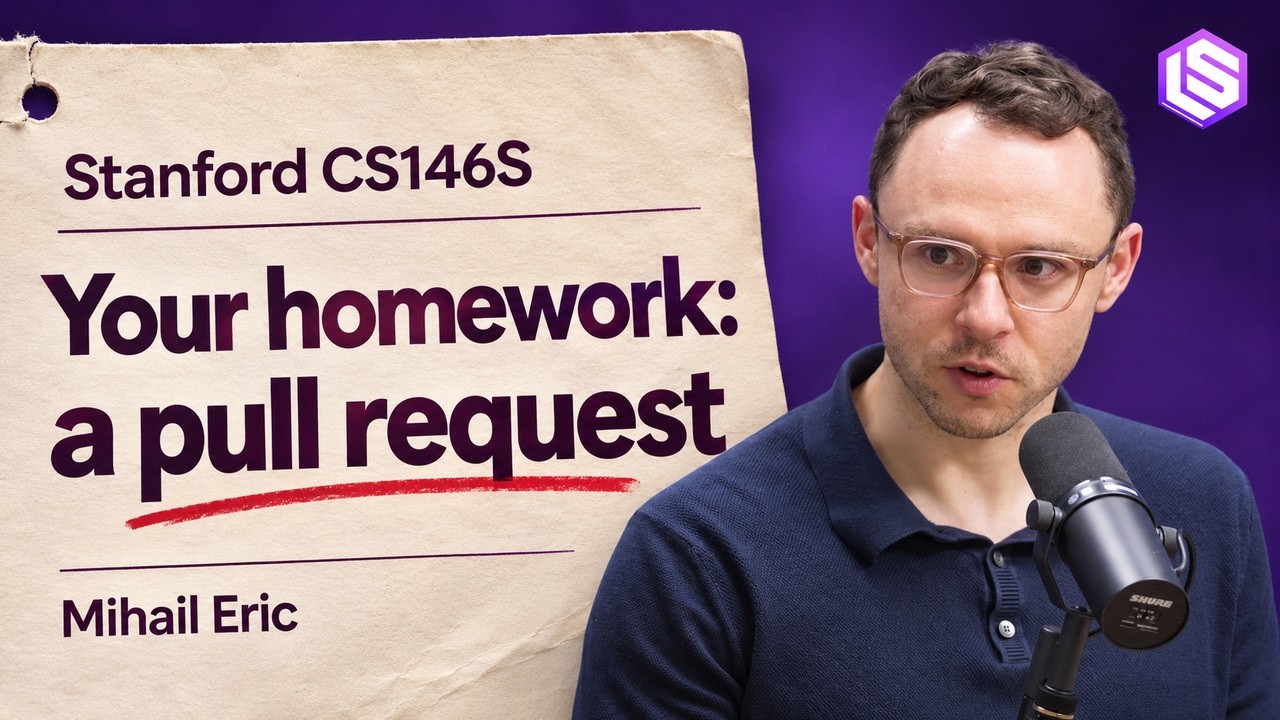
Mihail Eric, who teaches The Modern Software Developer at Stanford and leads AI at Monaco, brought open-source…
In his Watch Impress column, Nishida Sotokazu says Meta's Muse pushes subscription audits, cheapest electricit…