What happened
In a blog post, OpenAI chief scientist Jakub Pachocki argued that perplexity — which measures how well a model predicts the next token, with lower scores meaning better predictions — has stayed "informative" while capability benchmarks go stale, and proposed it as a shared benchmark for setting common limits.
Why it matters
If companies adopt a common yardstick for AI progress, they could commit not to cross a set threshold until monitoring capabilities hit a concrete milestone, turning a broad safety debate into a measurable commitment, according to Pachocki's argument.
WHO IT HITSAI lab researchers and safety teams who set internal development thresholds, and policymakers looking for a technical basis to compare AI progress across companies, may find a concrete metric to debate; any adoption remains speculative.
Summaries like this, every morning.
The push to slow AI development gained prominence after a former OpenAI and Anthropic researcher said the companies were "gambling with our lives," and Anthropic's IPO filing warned of "catastrophic or existential risks to society." Anthropic CEO Dario Amodei then published a plan to "pace the frontier," calling for common safety standards and limits on unchecked progress — a plan seemingly endorsed by OpenAI CEO Sam Altman and SpaceX CEO Elon Musk.
Pachocki's post enters that conversation by addressing a practical gap: a speed limit requires agreement on how to measure speed. He points to perplexity as a candidate because, unlike benchmarks tied to downstream capabilities that he says go stale, it has remained informative as models advance. His chart shows perplexity falling since GPT 3.5, with GPT‑4 at ~0.91 and losses now below 0.8, which he links to emerging capabilities in cybersecurity and mathematics.
Altman described the post as "the most important thing OpenAI has published in a while." The proposal stops short of a specific threshold, instead framing perplexity as a basis for a shared benchmark that companies could use to set common limits — leaving the actual numbers and monitoring milestones to future agreement.
Pick your industry and the AI tools you use, and get news related to your work every day.
Free · 30 seconds with Google · unsubscribe anytimeWhat is AIToday? →
Ask AI anything about this article. The AI reads this article, earlier AIToday articles, and Wikipedia, and cites its sources. Q&As are published on this page for other readers too.
Mercari said unauthorized access at Fireworks AI, its Notion AI subcontractor, may have leaked some employee i…

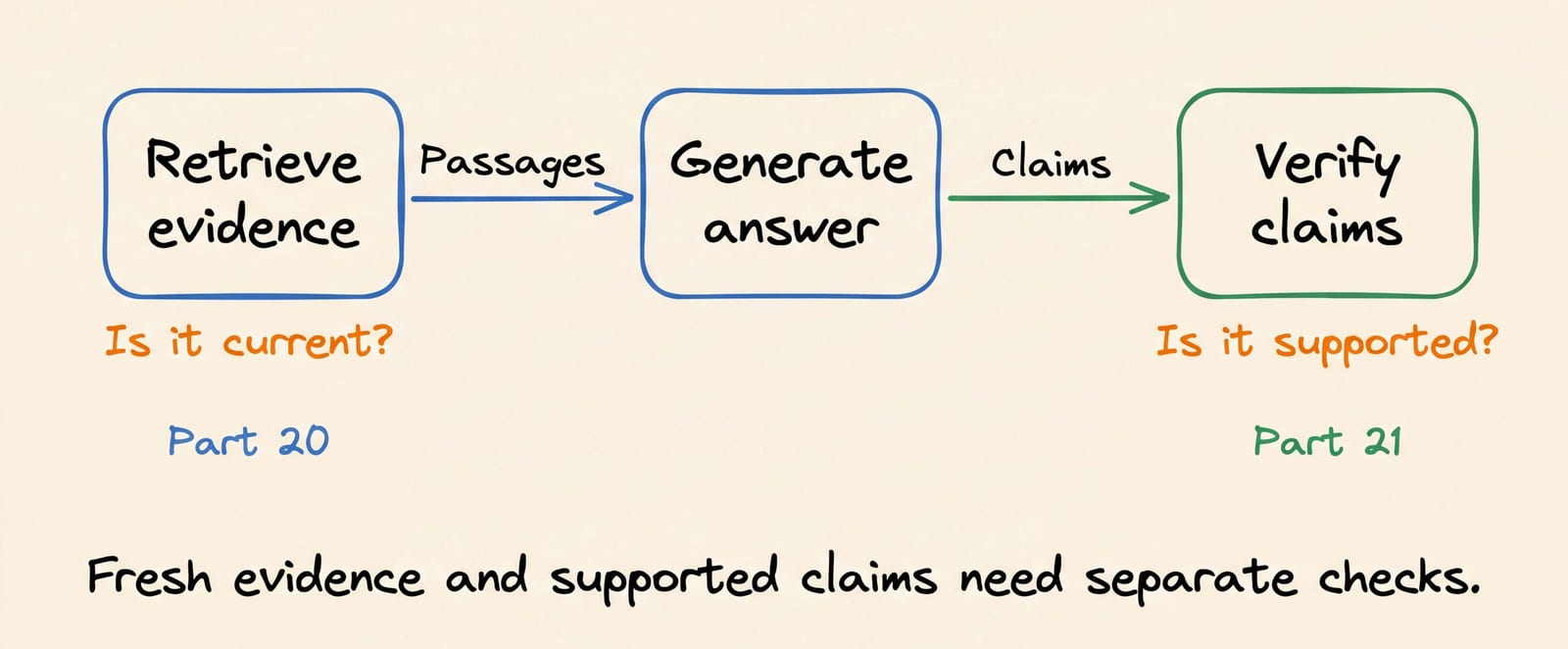
Parts 20 and 21 of the hands-on RAG Systems course are now available
Anthropic introduced Claude for Manufacturing on November 12, a plugin for Claude Team or Enterprise plans tha…

The ninth AIF-C01 prep article covers task 3.1 on design considerations for foundation model applications, lis…
A Chinese-nexus actor's Cairn AI agents autonomously discovered a zero-day vulnerability, according to Amazon…

Oracle stated that its infrastructure deal with OpenAI is fully funded following a final capital raise, Reuter…