
What happened
The ninth AIF-C01 prep article covers task 3.1 on design considerations for foundation model applications, listing nine selection axes including cost, modality, latency, and prompt caching.
Why it matters
The guide argues bigger models are not always correct, and that matching cost, latency, and accuracy to the task is the right approach.
Summaries like this, every morning.
This installment sits in a series walking through the domains of the AWS Certified AI Practitioner exam, and it focuses on Domain 3, Applications of Foundation Models — the largest domain at 28% of the score. The guide frames model choice as a balancing act rather than a search for the most powerful model, noting that a small model may be enough for classifying fixed-format text.
Beyond selection, inference parameters shape how a trained model responds, distinct from the model weights themselves. It stresses that temperature and top P work differently, and that a low temperature makes wording more deterministic but does not guarantee factual accuracy — for accuracy, supplying source documents through RAG is the more reliable route. It also separates prompt caching, which reduces processing cost and delay, from the context window, which it does not expand.
The guide closes by ranking customization approaches from cheapest and easiest to most expensive: in-context learning, then RAG, fine-tuning, distillation, and pretraining from scratch. Design considerations also cover data handling, with Bedrock described as not sharing prompts or outputs with model providers or using them for training, plus Guardrails for safety and Model Evaluation for assessment.
Pick your industry and the AI tools you use, and get news related to your work every day.
Free · 30 seconds with Google · unsubscribe anytimeWhat is AIToday? →
Ask AI anything about this article. The AI reads this article, earlier AIToday articles, and Wikipedia, and cites its sources. Q&As are published on this page for other readers too.
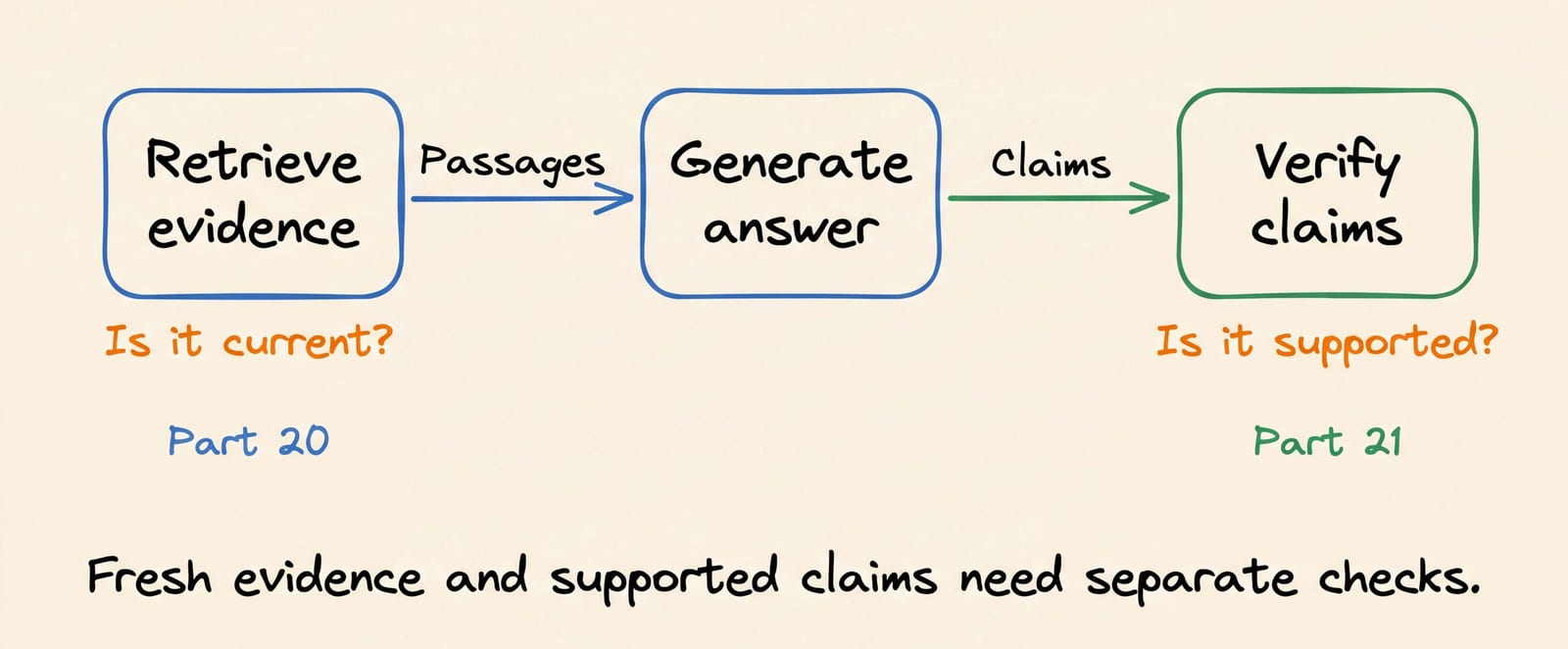
Parts 20 and 21 of the hands-on RAG Systems course are now available
Anthropic introduced Claude for Manufacturing on November 12, a plugin for Claude Team or Enterprise plans tha…

In a blog post, OpenAI chief scientist Jakub Pachocki argued that perplexity — which measures how well a model…

A Chinese-nexus actor's Cairn AI agents autonomously discovered a zero-day vulnerability, according to Amazon…

Oracle stated that its infrastructure deal with OpenAI is fully funded following a final capital raise, Reuter…

A traveler writing for Upgraded Points says trusting AI for visa advice cost them hundreds of dollars