China's AI supernode buildout is accelerating with intelligent-computing capacity up 177% year-over-year and potential 15th Five-Year Plan investment reaching CNY4 trillion (US$593 billion), prompting regional suppliers like OCI Holdings and Taiwan Mobile to expand capacity and market position.
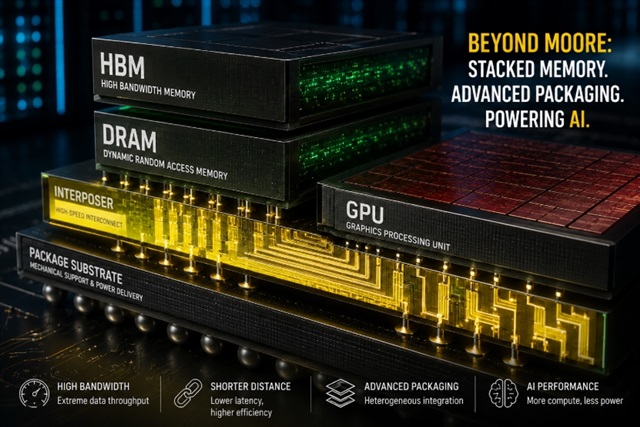
Memory remains a supply constraint and geopolitical flashpoint—former Intel CEO Pat Gelsinger called HBM "lousy," and industry attention is shifting toward co-designed architectures beyond HBM, while Apple's testing of China-made CXMT DRAM highlights both supply tightness and political sensitivity.
What happened
China's intelligent-computing capacity hit 2,185 EFLOPS in 1H26, up 177% year-over-year, with 15th Five-Year Plan investment potentially reaching CNY4 trillion (US$593 billion). Taiwan Mobile is raising its stake in Systex to more than 50% to compete in AI and cloud services; OCI Holdings saw 1H26 revenue up 11.1% to KRW1.92 trillion (US$1.36 billion) and reports its Malaysian polysilicon and Vietnamese wafer capacity already sold out through 2028–2029. Asia Vital Components and Tripod Technology posted record margins as AI server demand and liquid-cooling deployments accelerate.
Why it matters
Memory remains a bottleneck—former Intel CEO Pat Gelsinger called HBM "lousy," and SK Hynix agreed it is not the final answer, prompting industry shift toward co-designed GPU, memory, and interconnect architectures. AI supernodes in China are combining more accelerators with high-speed interconnects to offset weaker single-chip performance and drive domestic chip adoption. Apple's testing of CXMT DRAM signals growing supply tightness and geopolitical sensitivity around memory sourcing.
What to watch
Liquid-cooling penetration is forecast to reach 50% by 2027 as Nvidia Vera Rubin and ASIC deployments expand. Asia Vital Components plans NT$15 billion in 2026 capex and a 50% Vietnam capacity raise; Tripod Technology plans more than NT$10 billion in 2026 capex. OCI's reported KRW1 trillion, 3–5 year SpaceX deal could extend polysilicon demand into space applications.
Ask the AI about this article →
China's AI infrastructure push is reshaping the global semiconductor and computing supply chain. The country's intelligent-computing capacity surged 177% year-over-year to 2,185 EFLOPS in the first half of 2026, with potential 15th Five-Year Plan investment of CNY4 trillion (US$593 billion) signaling sustained commitment. Chinese vendors are building supernodes by combining multiple AI accelerators with high-speed interconnects and system-level optimization to compensate for weaker single-chip performance and accelerate adoption of domestic AI chips. This regional pivot is driving capacity expansions across the supply chain: Taiwan Mobile's takeover of Systex (a provider serving 40,000+ customers across 24 countries with NT$43.9 billion, or approximately US$1.47 billion, in 2025 revenue) reflects a telecom provider's bid to compete in cloud and AI services, while OCI Holdings, a non-China polysilicon supplier, is doubling polysilicon capacity to 70,000 tonnes by 2029 as its Malaysian and Vietnamese capacity sells out through 2028–2029.
Memory remains a critical bottleneck, and industry confidence in high-bandwidth memory (HBM) as the solution is fracturing. Former Intel CEO Pat Gelsinger's dismissal of HBM as "lousy" over heat, efficiency, and bandwidth concerns, echoed by SK Hynix's acknowledgment that HBM is "not the final answer," is accelerating a pivot toward co-designed GPU, memory, packaging, and interconnect architectures. Apple's testing of CXMT DRAM—China-made memory that climbed from 3% of global DRAM revenue a year earlier to 8% in 1Q26, with revenue rising more than 700%—adds geopolitical complexity to the memory supply picture. US export controls and CXMT's Pentagon-linked status make deeper Apple-CXMT cooperation politically sensitive, yet AI demand is tightening memory availability and prices sufficiently to force the issue.
Liquid cooling and advanced PCB demand are accelerating in tandem with AI server deployment. Asia Vital Components forecasts liquid-cooling penetration to reach 50% by 2027 as Nvidia Vera Rubin and ASIC deployments expand, driving the company to plan NT$15 billion in 2026 capex and a 50% Vietnam capacity raise. Tripod Technology's record 2Q26 revenue of NT$24.86 billion and gross margin of 30.09%—the first time above 30%—underscore strong server and memory PCB demand, with the company planning more than NT$10 billion in 2026 capex to expand capacity in Vietnam and China.
AI-summarized, only the topics you pick — one digest a day via Email, Slack, or Discord.
Free · takes 30 seconds · unsubscribe anytime
Ask AI anything about this article. Q&As are published on this page for other readers too.
Apple is laying off staff in its Vision team as part of a strategic shift away from VR headsets toward AI-driv…

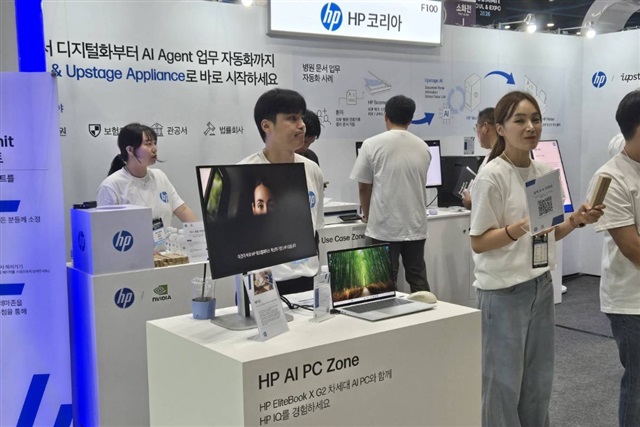
HP Korea has formed a partnership with Upstage, a large language model (LLM) startup, to advance its localized…
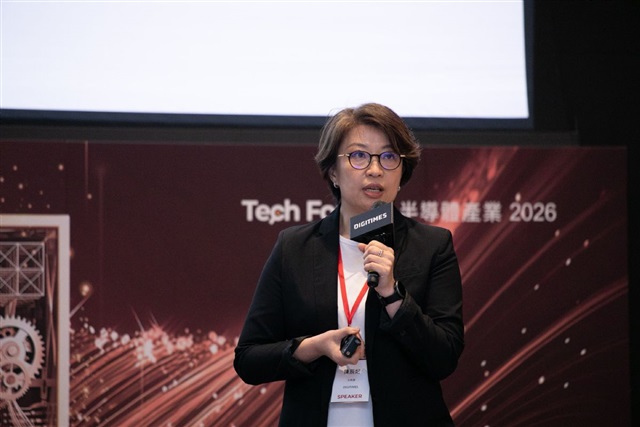
DIGITIMES analyst Joyce Chen stated on August 20 at a semiconductor industry forum in Taipei that optical comm…
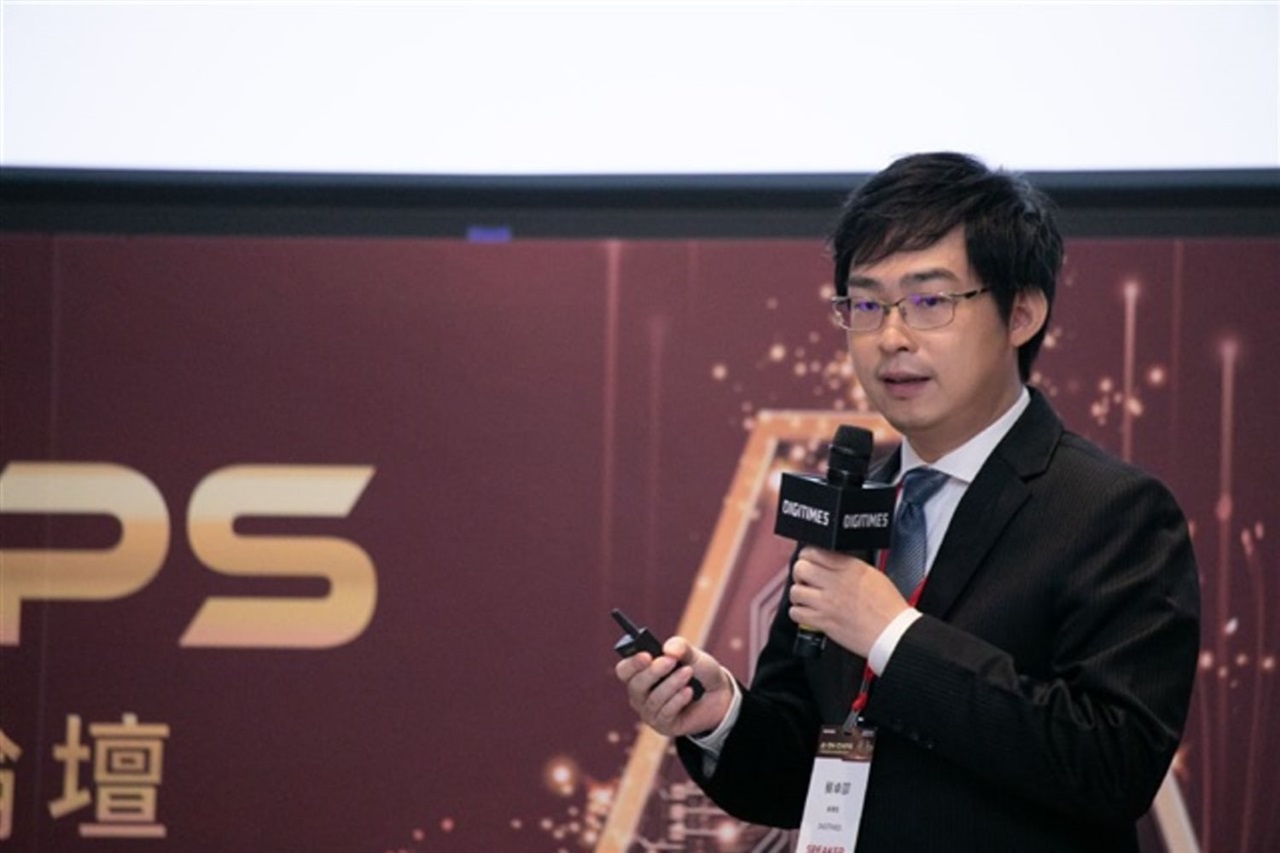
At the "AI on Chips: Semiconductor Industry Trends Forum" hosted by DIGITIMES, industry experts highlighted th…
JCET Group posted record first-half 2026 revenue, driven by demand from artificial intelligence infrastructure…

Scott Ortkiese, CEO of Faulkner Capital Holdings, argues that AI infrastructure risk has been routed away from…