What happened
In a Science study using complex New England Journal of Medicine cases, Microsoft's MAI-DxO was correct 83% of the time, versus 36% for primary care doctors and general internists working individually with reference materials.
Why it matters
The study's own data suggests most of the improvement comes from the underlying AI models, not Microsoft's orchestration, and the comparison excluded the specialists and physician teams who normally handle such complex cases.
WHO IT HITSHospital administrators and clinicians evaluating AI diagnostic tools should note that the headline accuracy gap may reflect stronger underlying models rather than the orchestration layer itself, and that the comparison excluded the specialist teams who typically handle such cases.
Summaries like this, in your inbox every morning.
Microsoft's study joins similar claims from Google and OpenAI that their AI can match or outperform doctors, but the details reveal a more nuanced picture. The system was tested with models from several companies, including OpenAI, Google, Anthropic, Meta, and DeepSeek, and its best results came with OpenAI's GPT-5 and GPT-5.5. Yet the study's own data indicates that the gap between weaker and stronger models was larger than the boost DxO provided, suggesting the orchestration layer adds only incremental value on top of model capability.
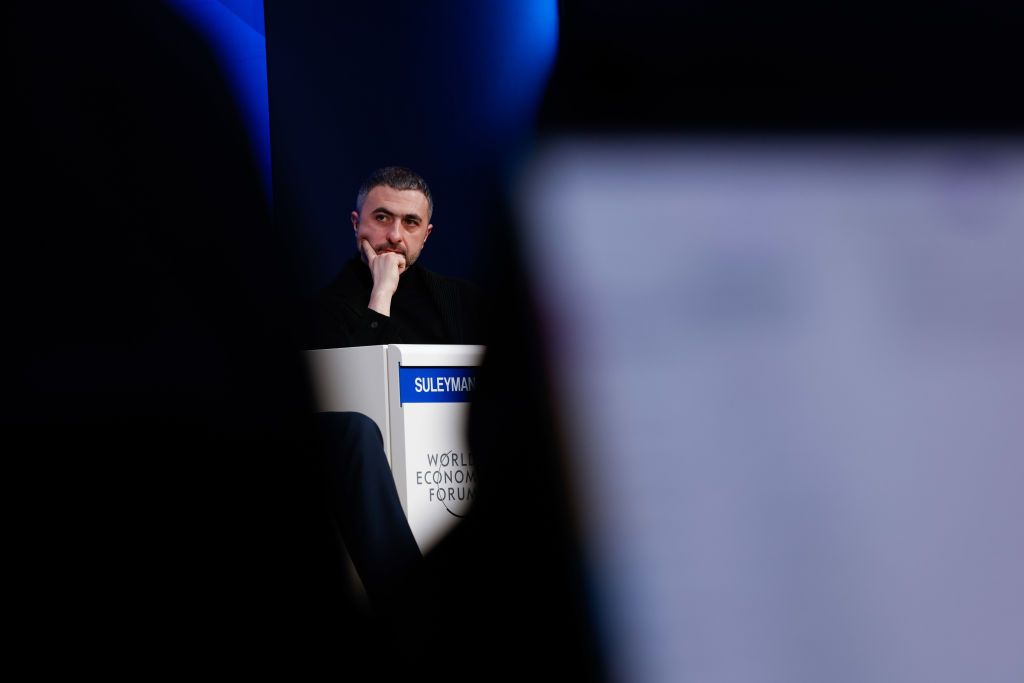
Mustafa Suleyman, Microsoft AI's CEO, called the result a step toward "medical superintelligence" and said the company is working with Mayo Clinic to train a foundation model for healthcare, planned for release next year. He expects that model to enable "really enormous leaps" and predicted that by 2027 there will be a "coding style breakthrough for medical records," with the ability to stream highly accurate predictions about how a medical record might unfold.
The study coincides with a Microsoft manifesto defining medical superintelligence as "the capacity to surpass the strongest contemporary human-led health systems in medical reasoning and coordination across the full arc of care." Microsoft already sells dictation and radiology tools to clinicians and sees DxO as an expansion of those efforts. Through a new partnership with Beth Israel Deaconess Medical Center in Boston, Microsoft will evaluate DxO's clinical reasoning across different hospital settings, which King described as potentially "the biggest study of its kind."
Pick your industry and the AI tools you use, and get news related to your work every day.
Free · 30 seconds with Google · unsubscribe anytimeWhat is AIToday? →
Ask AI anything about this article. The AI reads this article, earlier AIToday articles, and Wikipedia, and cites its sources. Q&As are published on this page for other readers too.
Morgan Stanley already blocks AI agents entirely, and JPMorgan, Bank of America and Citi are doing the same, A…

Modal CEO Erik Bernhardsson said the AI infrastructure company crossed $1 billion in annualized run rate, rais…

Goldman Sachs crowned Every Cure, a Frankfurt analyst team, winner of its 11th Analyst Impact Fund, awarding i…

Microsoft's Diagnostic Orchestrator, powered by OpenAI's GPT-5, scored about 83 percent diagnostic accuracy on…
Zuckerberg said Muse, released to the public last month, has been downloaded and set up by more than 10 millio…

Microsoft says China state-aligned hackers stole application credentials from ConnectWise's cloud backup servi…