Synchrony Financial, the credit card issuer for major retailers like Amazon and Walmart, has partnered with OpenAI to let customers buy products directly inside ChatGPT using their store cards. While so-called "agentic commerce" (AI agents helping shoppers find items) has become common, purchases usually require leaving the chatbot to complete at a retailer's website.
Synchrony's deal moves payment processing into ChatGPT itself and marks one of the first major U.S. consumer lender efforts to embed financing directly in an AI chatbot.
The company is also in talks with Claude and Gemini about similar integrations.
What happened
Synchrony Financial, which issues credit cards for Amazon, Walmart, and Lowe's, is working with OpenAI to embed those store cards into ChatGPT so customers can purchase products without leaving the chatbot. Synchrony is also launching a ChatGPT plugin for browsing marketplace deals and promotional financing, and deploying OpenAI's latest models internally.
Why it matters
This is one of the first major U.S. consumer lender moves to integrate financing and payments directly into an AI chatbot. Today, shoppers who find items through AI agents are typically routed to a brand's website to complete purchases; Synchrony aims to keep transactions inside ChatGPT, which could reshape how consumers discover and buy products. The deal signals OpenAI's effort to turn ChatGPT into a broader commerce platform.
What to watch
Integration of Synchrony's private-label cards into ChatGPT will take months as Synchrony negotiates with its brand partners. Synchrony is also talking with Anthropic's Claude and Google's Gemini about embedding cards in those chatbots. Key open questions remain around consumer comfort with sharing credit card data with AI agents, and how fees for in-chat purchases will be divided among retailers, Synchrony, and OpenAI.
Ask the AI about this article →
Synchrony's partnership with OpenAI reflects a broader industry shift toward "agentic commerce," in which AI agents guide consumer purchasing decisions. Currently, when shoppers discover products through AI chatbots, they must navigate to a retailer's website to complete checkout—a friction point that can lose sales. By embedding Synchrony's store cards directly into ChatGPT, the partnership aims to collapse that gap and keep the entire transaction within the chatbot. Synchrony's chief strategy officer, Maran Nalluswami, framed the goal clearly: ensuring that "if a transaction's going to happen in that ecosystem, our cards are loaded up in the right spots to ensure that that transaction finishes."
The deal positions Synchrony and OpenAI as pioneers in this space, but significant hurdles remain. Consumers have shown caution about handing credit card information to AI agents or allowing automated purchases. Fee-splitting among retailers, Synchrony, and OpenAI is still unresolved and will require negotiation. Additionally, Synchrony's integration work is expected to take months, as the company must align its card offerings across multiple brand partners (Amazon, Walmart, Lowe's, and others). Synchrony is not betting on OpenAI alone: the company is simultaneously exploring partnerships with Anthropic's Claude and Google's Gemini, hedging its bets across the AI chatbot landscape.
For example, today's edition would include:
AI-summarized, only the topics you pick — one digest a day via Email, Slack, or Discord.
Free · takes 30 seconds · unsubscribe anytimeWhat is AIToday? →
Ask AI anything about this article. Q&As are published on this page for other readers too.
Aranya Inc., a startup founded last year, launched today with $11 million in funding

CBTS Technology Solutions LLC launched Forge Agents, a platform that turns a plain-language job description in…

Phonely Ltd. launched Alma, a large language AI model built for voice agents and trained on over 10 million re…

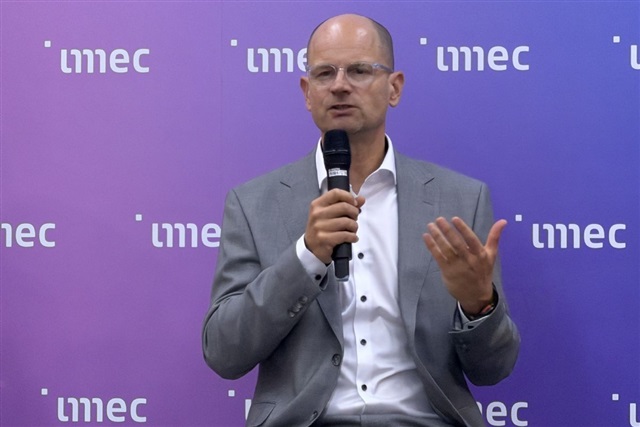
Imec CEO Patrick Vandenameele said at SEMICON Taiwan 2026 that the Belgian research center is broadening its c…
Alphabet's AI Overviews now reach over 2.5 billion monthly users through Google Search, and its ad business ge…
Sarah O’Connor's book 'We Are Not Machines' explores how mechanization and AI have transformed the workforce…