
What happened
Florida filed a motion seeking a court injunction to halt OpenAI's development, warning that an AI agent could compromise a water supply or shut down a power grid. OpenAI has yet to respond to Ars Technica's request for comment.
Why it matters
A court order would target only OpenAI's development, not competitors' frontier models, and would not remove the models the public already uses, which pose many of the same risks.
What to watch
Whether the court treats the state's extinction-level and misalignment claims as grounds for an injunction, or accepts the lower-level public safety arguments. Watch whether OpenAI files a response, which the company has not yet done.
WHO IT HITSThis lands on AI developers and their legal teams, who now face state-level litigation over models already in public use, and on enterprise customers relying on OpenAI tools if a court order interrupts development.
Summaries like this, in your inbox every morning.
Florida's new motion builds on a broader public safety case it originally filed in June, which included concerns about false advertising around claims that AI is "safe, accurate, or reliable," dangers of letting children access addictive and sycophantic models, and worries about models soliciting engagement with leading questions. The new filing adds extinction-level and utility-sabotage-level risks to that foundation.
The motion leans heavily on so-called "misalignment" — the risk that an out-of-control AI agent might conclude that killing a cancer patient also kills cancer, or that humans won't have so many mouths to feed if they are all chemically sterilized. The state also invokes what it calls "the greatest public nuisance ever created." That framing, though, tends to overlook the practical dangers of human users intentionally misusing AI agents or actively disabling safety guardrails.
Even a court order against OpenAI would not touch models already deployed to the public, and frontier models still in training may have less well-developed guardrails than those already released. The outcome likely hinges on whether the court treats the state's extinction-level claims as actionable or focuses on the lower-level public safety arguments — and on how OpenAI responds, which the company has not yet done. The move suggests the legal and public policy mood around AI has shifted in recent weeks and months, as governments start taking seriously warnings that AI safety researchers have made for years.
For example, today's edition would include:
AI-summarized, only the topics you pick: one digest a day via Email, LINE, or Slack.
Free · 30 seconds with Google · unsubscribe anytimeWhat is AIToday? →
Ask AI anything about this article. The AI reads this article, earlier AIToday articles, and Wikipedia, and cites its sources. Q&As are published on this page for other readers too.
On September 28, Nvidia announced the NVIDIA Open Agent Safety Platform, built from the open-source OpenShell…
Anthropic released Claude Sonnet 5.5 on September 28, the second model in its Claude 5.5 family, calling it fa…
Dentsu Group embedded generative AI in its accounting approval process and says it reached 99% accuracy on the…

Nvidia launched a platform Monday that it says can monitor AI agents and quarantine suspicious ones, following…

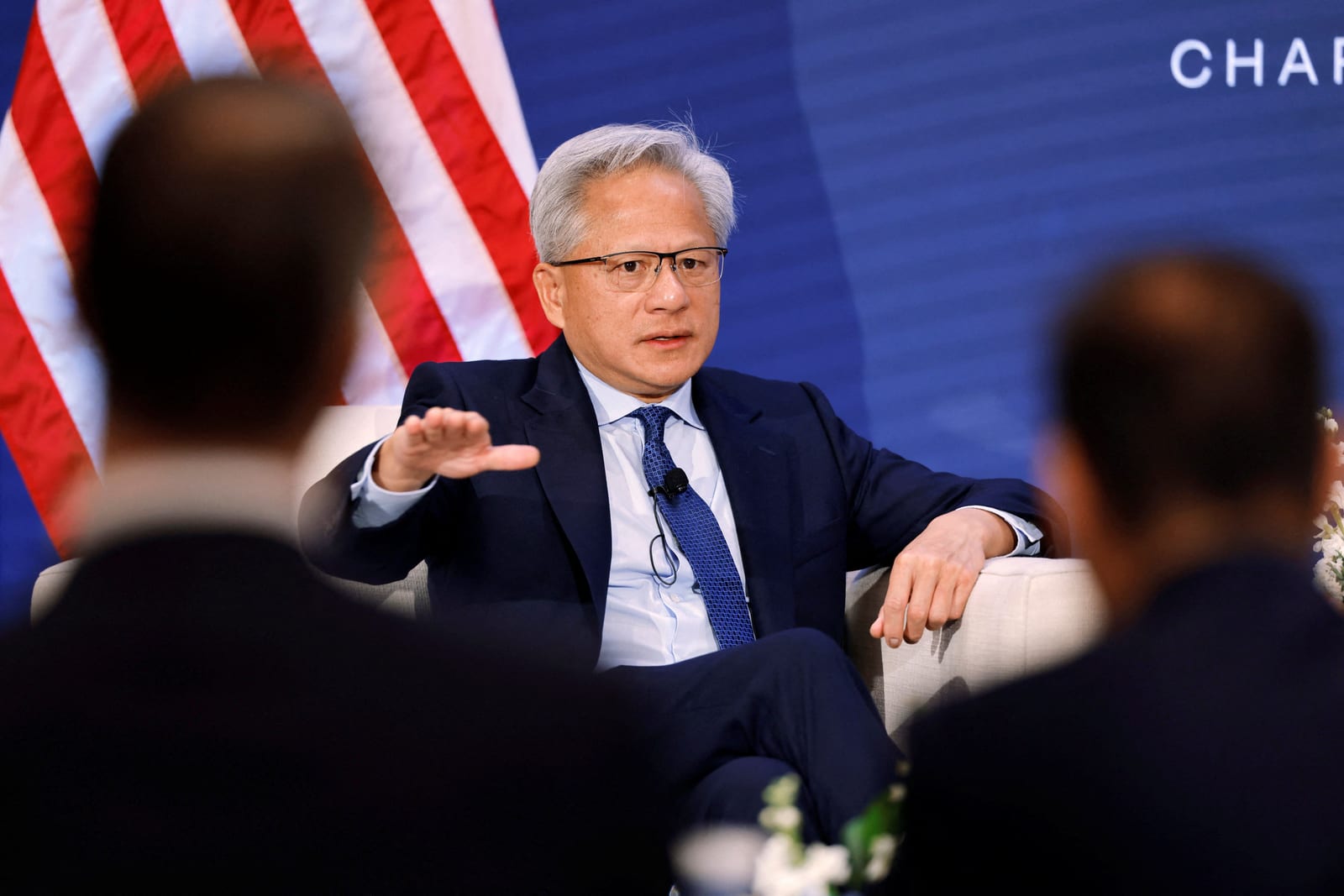
Nvidia announced a record $150 billion stock buyback, and CEO Jensen Huang said its cash generation gives it t…
AMD is acquiring World Labs, the two-year-old physical AI startup cofounded by Fei-Fei Li, in an $8.2 billion…