What happened
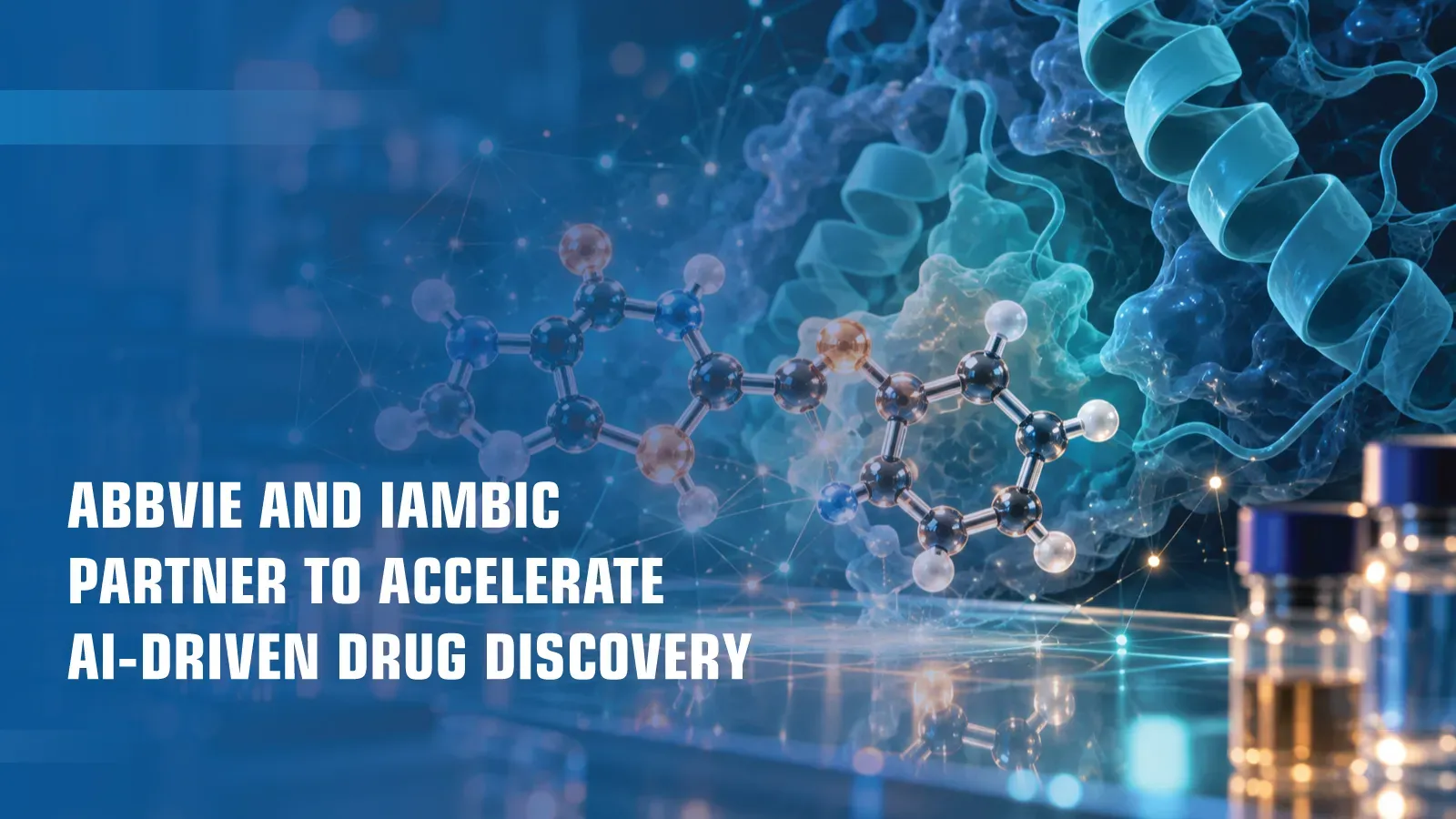
AbbVie and Iambic announced a collaboration on September 21, 2026 to discover small-molecule drugs in immunology, neuroscience and oncology, using Iambic's Enchant v3 model, which draws on over 6,000 molecular properties.
Why it matters
The deal suggests pharma is shifting from generic AI tools to platforms built specifically for molecular design, letting AbbVie keep therapeutic control while tapping dedicated technology, and Iambic stands to gain upfront, milestone and royalty payments.
What to watch
The value hinges on whether AI-predicted candidates survive laboratory validation and clinical development; AbbVie's September 29, 2026 Valkai partnership points to how broadly it is spreading these bets.
WHO IT HITSThis lands on pharmaceutical discovery researchers and the business-development teams at drugmakers — AbbVie gains a broader AI portfolio spanning discovery and clinical development — while Iambic takes on the burden of turning its predictions into drugs that pass laboratory and clinical testing.
Summaries like this, in your inbox every morning.
The AbbVie-Iambic deal fits into a pattern the body describes rather than a one-off experiment. AbbVie already runs an internal strategy called AI@AbbVie, and on September 29, 2026 — just over a week after the Iambic announcement — it disclosed a separate AI partnership with Valkai aimed at selected areas of clinical development. Together, the two arrangements sit at different stages of the pipeline: Iambic on discovery, Valkai on clinical development. The body presents this as evidence that AbbVie is applying AI beyond a single step of pharmaceutical development.
What distinguishes the Iambic side is its specificity. Earlier AI efforts in life sciences, according to the body, generally involved isolated use cases like analysis, target identification or clinical trial assistance. Iambic's platform is instead built on biomedical data and molecular characteristics relevant to pharmaceuticals, and its Enchant v3 model uses over 6,000 molecular properties. That specificity matters for a practical reason the body highlights: improving any one molecular characteristic can create trade-offs in others, so evaluating many properties simultaneously — rather than one at a time — is the point.
Still, the body is careful about what such partnerships can deliver. AI cannot reduce biological uncertainties, and predictions generated with AI will still need validation in laboratories. AbbVie's chief business and strategy officer, Dr. Nicholas Donoghoe, frames the goal as equipping discovery scientists with tools rather than replacing them. How much long-term value emerges from these collaborations appears likely to depend on whether AI-generated insights translate into drugs that clear research and clinical development — a question the body leaves open.
Pick your industry and the AI tools you use, and get news related to your work every day.
Free · 30 seconds with Google · unsubscribe anytimeWhat is AIToday? →
Ask AI anything about this article. The AI reads this article, earlier AIToday articles, and Wikipedia, and cites its sources. Q&As are published on this page for other readers too.
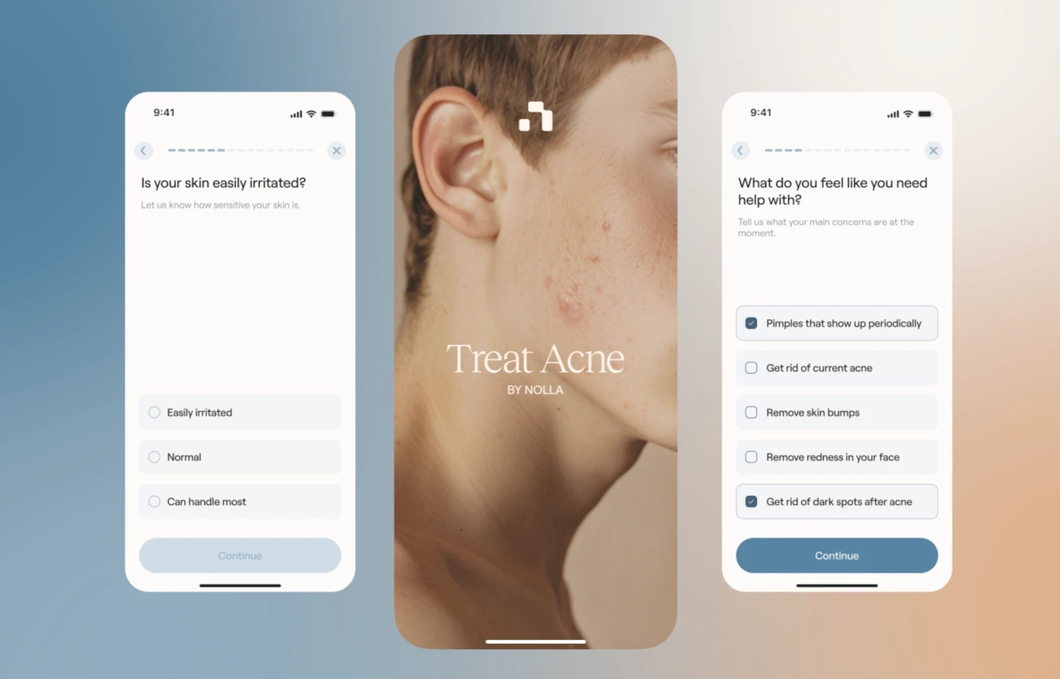
Utah cleared Nolla Health's pilot letting its AI prescribe topical acne creams after a face scan, with no huma…
Ghost AI raised $11 million, led by Andreessen Horowitz with Abstract, Audacious Ventures, Nova and SV Angel…

Moonshot AI closed its final private round at about a $50 billion valuation and is aiming for a Hong Kong IPO…
OpenAI told Fortune it is piloting a 'mission interview' for candidates on certain teams, starting with market…
Reactor said it added Nvidia's venture capital arm and Sapphire Ventures to its cap table, bringing its total…
A Stanford, Carnegie Mellon, UC Berkeley, and Microsoft Research team ran 6,800+ math, coding, and science tas…