What happened
On 2026-10-02 the author wrote that his pipeline had zero mechanisms to dynamically stop it from outside; while testing whether that was true, Claude Code's auto mode classifier refused two commands before execution, both labeled 'Exfil Scouting' — one a multi-command Bash probe of external hosts, the other a local git log read in a repository he can write to.
Why it matters
This shows that at least one dynamic external block does exist in the pipeline, contradicting the earlier zero, and that the refusal layer appears to flag a broad pattern of probing behavior rather than just network access — since a purely local read got stopped for the same reason.
Summaries like this, in your inbox every morning.
The author's earlier article counted only static boundaries visible in configuration files, such as a five-minute workflow timeout and a session's repository access scope. The two refusals he encountered came from a different layer — the execution platform itself — which he had not examined when concluding there were zero dynamic mechanisms. Because both commands were stopped before any byte left the network or any local output was returned, the classifier is acting before execution rather than reacting to observed behavior. Notably, the second command had no network component and was a routine read in a repository he can write to, yet it drew the identical 'Exfil Scouting' label, which the author suggests may mean the layer watches for a broader pattern of probing behavior rather than network egress alone. He is careful to note that this is an observation of two cases, that he did not retry by other means, that the classifier's internal logic is undisclosed, and that a single find does not prove sufficient defense. He also distinguishes this black-box layer from a published monitoring design like Nvidia's Sentry, saying the two should not be equated.
Pick your industry and the AI tools you use, and get news related to your work every day.
Free · 30 seconds with Google · unsubscribe anytimeWhat is AIToday? →
Ask AI anything about this article. The AI reads this article, earlier AIToday articles, and Wikipedia, and cites its sources. Q&As are published on this page for other readers too.
OpenAI's GPT-5.6 Sol found two critical PHP vulnerabilities, CVE-2026-109618 and CVE-2026-109619, collectively…

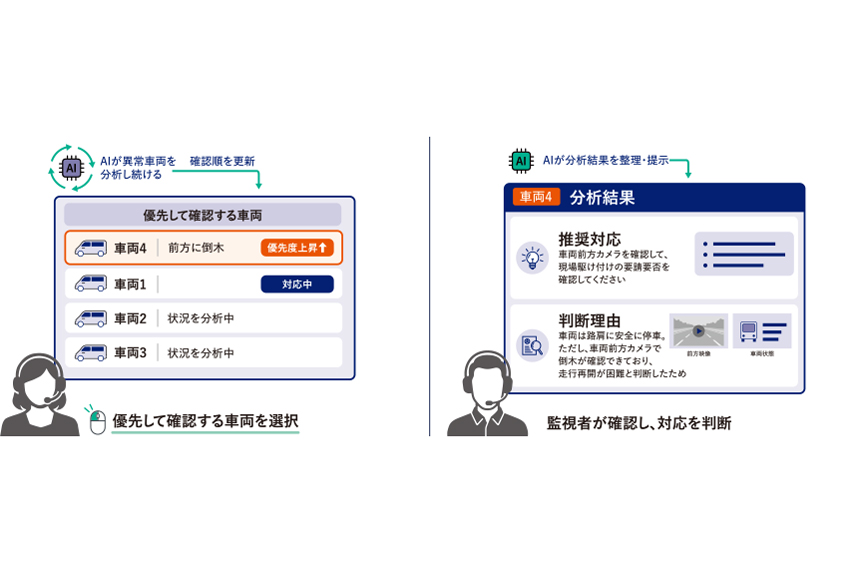
KDDI developed an AI agent for 1対N remote monitoring in レベル4 autonomous driving
Impress is publishing a book on October 22 featuring 100 practical "oshi-waza" ideas for Gemini Notebook (form…

KDDI, Okinawa Cellular and KDDI Digital Life added ChatGPT 5.5, ChatGPT 5.5 Pro and ChatGPT 5.5 Thinking to po…

Google and OpenAI said the GPT-6 Astra, GPT-6.1 Sol and GPT-6 Luna models will be offered via Model Garden, wi…

OpenAI expanded ChatGPT ads to 26 new countries, reaching 89 markets worldwide, and says over 100,000 advertis…