What happened
Google and OpenAI said the GPT-6 Astra, GPT-6.1 Sol and GPT-6 Luna models will be offered via Model Garden, with a private preview now open for select customers.
Why it matters
Enterprise customers will get more models to choose from on Google Cloud, while OpenAI widens distribution of its models and Google expands Model Garden use.
WHO IT HITSEnterprise IT teams and developers who standardize AI workloads on Google Cloud gain another major model family to pick from without adding a new vendor, while procurement and security reviewers will be assessing Google's guarantees on data and access boundaries.
Summaries like this, in your inbox every morning.
The arrangement pairs two companies that compete at the model layer but can cooperate at the distribution layer. For Google, adding OpenAI's models to Model Garden addresses enterprise customers who want to use several AI models side by side rather than commit to one vendor. For OpenAI, the deal is a way to expand adoption of its models among companies already running on Google Cloud.
The three models are positioned for different workloads: GPT-6 Astra for coding and advanced scientific research, GPT-6.1 Sol for specialized work with an emphasis on cost performance, and GPT-6 Luna as a low-cost option for everyday tasks. They are slated to work in Google Antigravity and Gemini Agent, and can be reached through Google's API or by connecting local Codex CLI and desktop workflows directly to the Gemini platform for inference.
Google is also emphasizing the robustness of the Gemini platform, saying it strictly manages data and access boundaries and provides high visibility and transparency into how AI agents and models behave. It guarantees that customer prompts, context and outputs will not be used to train the underlying models — a point likely to matter to enterprise buyers weighing whether to route sensitive work through a third-party model inside Google's environment. General enterprise availability is expected within the next few weeks, with applications handled through a dedicated form from both companies.
Pick your industry and the AI tools you use, and get news related to your work every day.
Free · 30 seconds with Google · unsubscribe anytimeWhat is AIToday? →
Ask AI anything about this article. The AI reads this article, earlier AIToday articles, and Wikipedia, and cites its sources. Q&As are published on this page for other readers too.
OpenAI's GPT-5.6 Sol found two critical PHP vulnerabilities, CVE-2026-109618 and CVE-2026-109619, collectively…

Vertiv and NVIDIA launched a DSX POD modular AI factory reference design that targets 14 day deployment cycles…
IBM beat Q3 estimates with revenue of $17.1 billion and adjusted earnings of $2.95 per share, but CEO Arvind K…
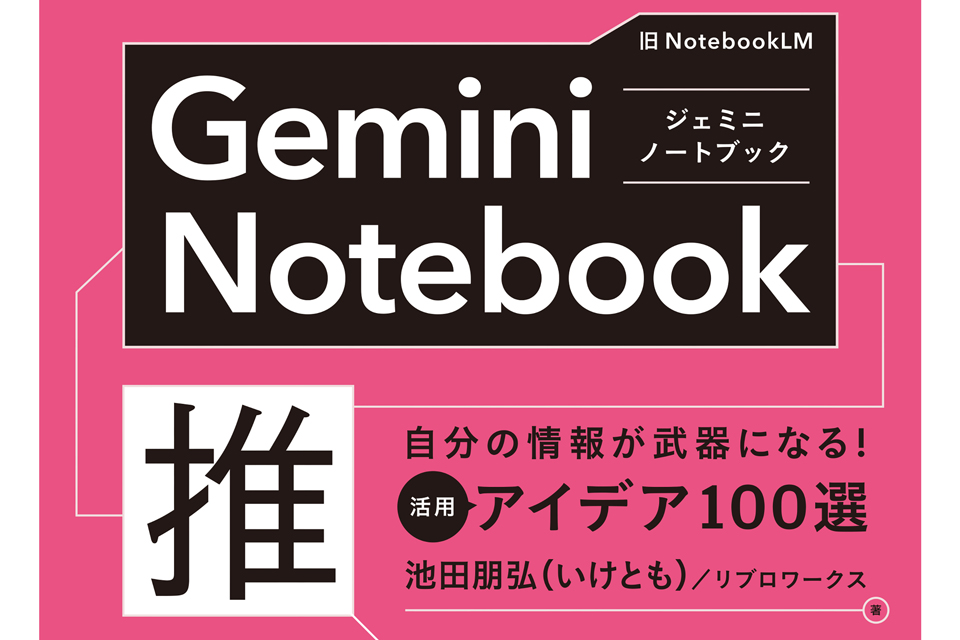
Impress is publishing a book on October 22 featuring 100 practical "oshi-waza" ideas for Gemini Notebook (form…
Ricoh Japan will host "RICOH Value Presentation 2026 in 広島" on 11月18日・19日 at its Hiroshima Hatchobori office…

KDDI developed an AI agent for 1対N remote monitoring in レベル4 autonomous driving