What happened
EXL Medical IDP, built on AWS, combines Xtrakto.AI document processing with the EXL Insurance LLM to extract, summarize, and query medical records. EXL says it reduced review time from over 100 minutes per case to hours.
Why it matters
Claims adjusters and underwriters spend over 100 minutes per case manually reviewing records, so automating extraction and summarization could free them for judgment work, with human-in-the-loop validation at critical stages.
What to watch
The results are from internal benchmarking by EXL and a large healthcare payer deployment, so the gains hinge on whether confidence thresholds and human validation keep quality stable as case volume scales.
WHO IT HITSThis lands on insurance claims adjusters, life underwriters, and healthcare payer nurses and care coordinators who manually review hundreds of pages of medical records per case, potentially shifting their work from retrieval to judgment and exceptions.
Summaries like this, in your inbox every morning.
The EXL Medical IDP solution addresses a longstanding operational problem in insurance and healthcare: medical records are long, unstructured, and full of specialized clinical terminology that demands domain expertise to interpret. EXL, a data analytics and AI provider serving Fortune 500 organizations for over 25 years with more than 50,000 professionals globally, built the solution on AWS to keep model development and production inference under one roof. The pipeline combines Xtrakto.AI, a template-agnostic document processing application that uses computer vision, NLP, and agentic AI workflows, with the EXL Insurance LLM, a domain-specific model fine-tuned on nine years of insurance claims operations data comprising over 13,500 records. Amazon SageMaker AI hosts the training and inference, while Amazon Bedrock provides access to general-purpose foundation models for broader language tasks.
A key design choice was fine-tuning rather than prompting general-purpose models. EXL argues that prompting alone cannot consistently handle insurance-specific tasks such as medical record annotation, economic and non-economic damages summarization, and negotiation guidance. The fine-tuning used Parameter-Efficient Fine-Tuning with Low-Rank Adaptation on SageMaker AI, which adapts the model without modifying all parameters of the base model. In internal benchmarking by EXL, the fine-tuned model performed well on tagging, summarization, question-answering, and reasoning, assessed with automated metrics and blind review by three insurance subject-matter experts. The pipeline also includes responsible-AI controls built into the deployment, such as content-filtering and grounding checks, source-level traceability, and de-identification procedures that align with HIPAA requirements.
A large healthcare payer deployed the solution to replace fragmented manual workflows, connecting systems including EPIC, CarePort, and Predictal through a single API-led orchestration. The results reported by EXL include reduced manual effort, accelerated member outreach, and increased clinical bandwidth without additional headcount. The outcome likely hinges on whether the confidence-based routing and human-in-the-loop validation continue to maintain data integrity as case volumes grow, since the solution is designed for augmentation rather than replacement of human expertise. For claims adjusters, underwriters, and care coordinators, the promise is less time on data retrieval and more time on judgment, though the reported gains come from EXL's internal benchmarking and a single payer deployment.
For example, today's edition would include:
AI-summarized, only the topics you pick — one digest a day via Email, LINE, or Slack.
Free · 30 seconds with Google · unsubscribe anytimeWhat is AIToday? →
Ask AI anything about this article. Q&As are published on this page for other readers too.
AbbVie entered a multi-year collaboration with Iambic to apply the Enchant and NeuralPLexer AI models to small…

AbbVie and Iambic announced a multi-year collaboration to accelerate small molecule drug discovery across immu…

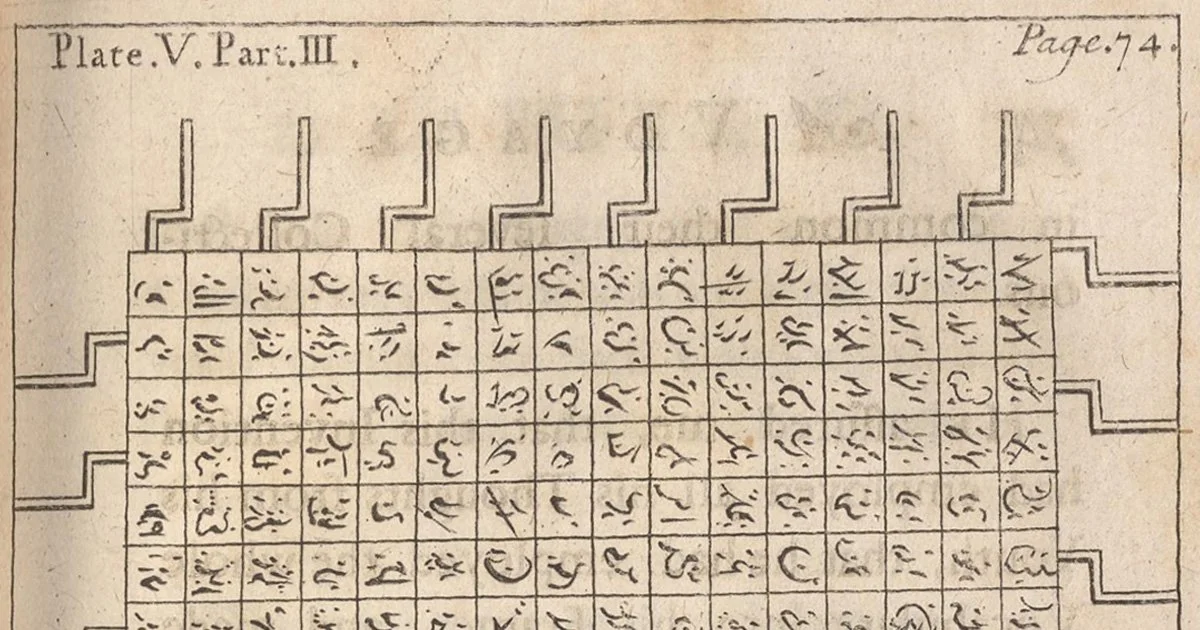
Writing as Gulliver's Travels turns 300, a politics professor says he instituted a ban on all phones and lapto…
Apptopia estimates Muse drew 1.8 million iOS downloads in the U.S

OpenAI announced the Advisory Group on Mathematics and Artificial Intelligence, hosted at the Institute for Ad…

Higgsfield AI used GPT-6 Astra to deliver new exploration features in a single day, said co-founder and CEO Al…