What happened
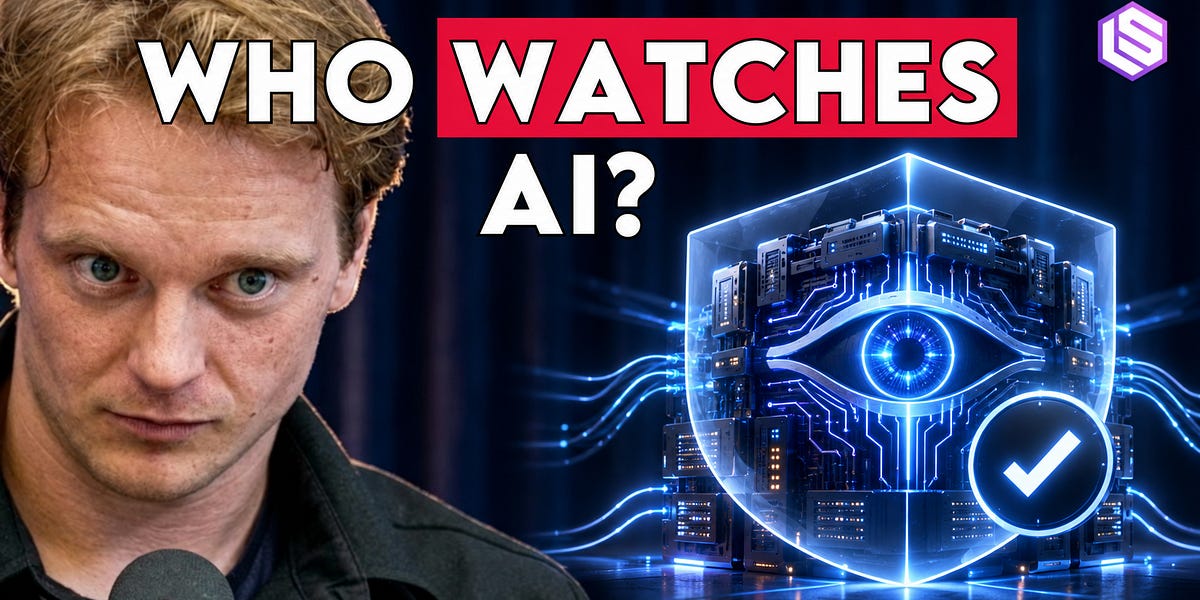
AIUC announced a $40 million Series A led by Ribbit Capital and First Harmonic, and its AIUC-1 standard — which requires quarterly testing for jailbreaks, hallucinations, and data leaks — is used by Cursor, Harvey, Lovable, and ElevenLabs.
Why it matters
This suggests confidence infrastructure, not model capability, is becoming the gate for enterprise AI adoption. Banks, hospitals, and governments need tested evidence and insured liability before wall-to-wall rollouts.
What to watch
Whether AIUC-1 can keep pace with fast-moving AI risks — its design refreshes the standard quarterly — and whether insurers like Lloyd's of London will actually price and cover agent failures.
WHO IT HITSEnterprise risk officers and CISOs at banks, hospitals, and critical infrastructure now have a third-party testing and insurance signal to bring to procurement, while AI agent vendors like Cursor, Harvey, Lovable, and ElevenLabs can point to certification when selling wall-to-wall rollouts.
Summaries like this, in your inbox every morning.
AIUC's pitch rests on a pattern its cofounder traces through history: whenever a powerful technology arrives — electricity around 1900, cars in the 1930s, private nuclear energy in the 1950s — the market creates confidence infrastructure before regulation catches up, pairing standards with insurance to make adoption possible. He points to Waymo as the current example: the cars are widely considered better drivers than humans, yet you still cannot take one to the airport, because the binding constraint is liability and trust rather than capability. AIUC argues the same problem now applies to frontier AI, and that it gets harder as models improve, since more capable agents are more autonomous and expand the risk surface.
The company's answer is AIUC-1, a standard for agent security, safety, and reliability built around three design choices: consolidate the concerns of Fortune 1000 security leaders into one framework, ground it in technical testing rather than paperwork, and refresh it quarterly because AI moves too fast for standards that update on a decade cycle. A consortium of risk leaders from real banks, hospitals, and critical infrastructure meets twice a quarter to shape what the standard covers.
The stakes for AIUC hinge on whether it can keep that quarterly refresh meaningful and whether insurers — Lloyd's of London is cited as an example — will actually price and cover agent failures. Its customers, companies like Cursor, Harvey, Lovable, and ElevenLabs, have little trouble selling a pilot; the test is whether certification and insurance carry them through a bank's or hospital's risk review and into wall-to-wall deployment.
For example, today's edition would include:
AI-summarized, only the topics you pick — one digest a day via Email, Slack, or Discord.
Free · 30 seconds with Google · unsubscribe anytimeWhat is AIToday? →
Ask AI anything about this article. Q&As are published on this page for other readers too.
Alphabet is Berkshire's growth pick — nearly 106 million shares bought across its two tickers, lifting its por…
Dell Technologies and Axelera AI announced a collaboration on the new Europa AI Processing Unit architecture f…
Dell took almost $61 billion in AI server orders last quarter and ended with a $95 billion backlog
Denver-based Crusoe survived the crypto winter of 2022 and 2023, which sent many bitcoin miners to the brink o…

On the same Xeon 6980P silicon and socket count as MLPerf v6.0, Intel reported a 2.4x rise in Llama 3.1 8B Ser…

Bank of America CEO Brian Moynihan told investors that AI has helped the bank avoid layoffs