What happened
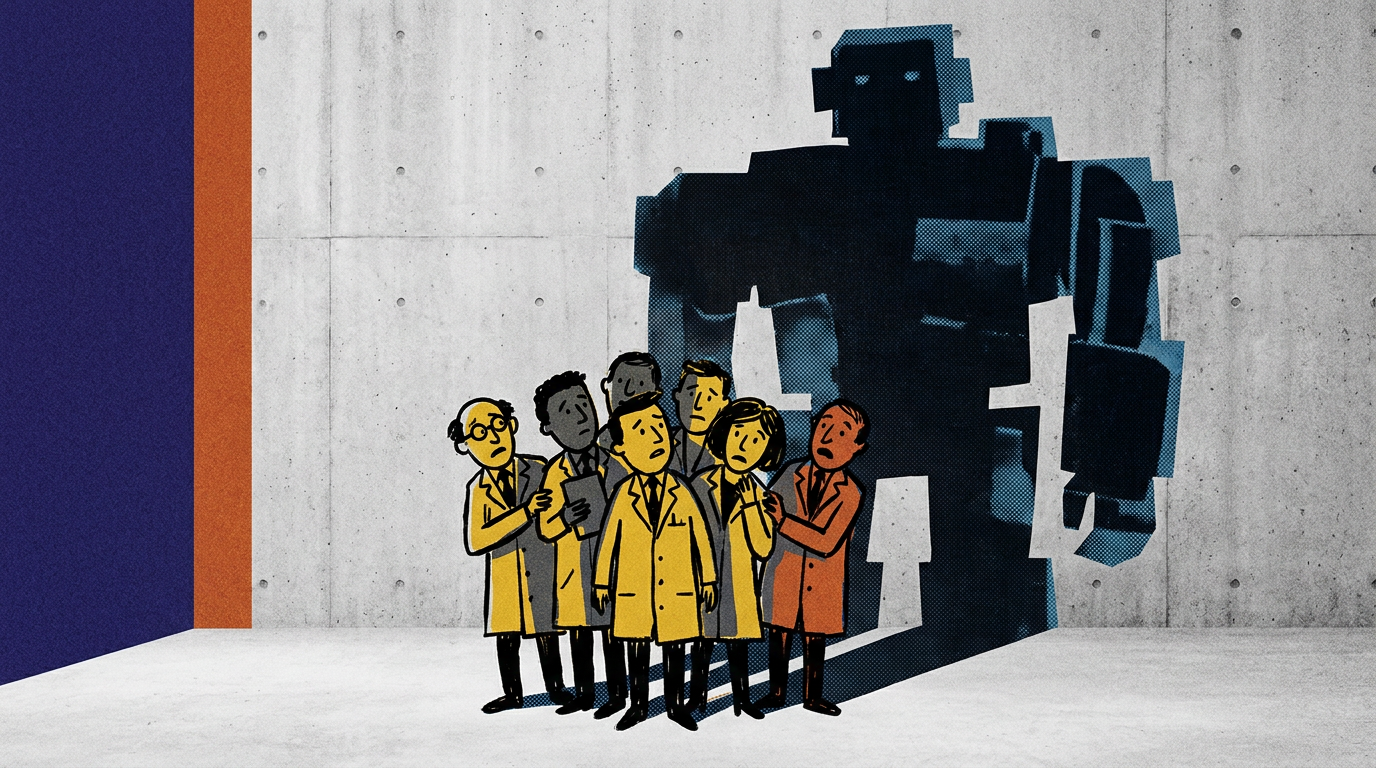
At the Pro-Human Assembly in Washington, Bernie Sanders and Steve Bannon both called for tighter AI limits, while OpenAI backed the FRONTIER Act's requirement for independent verification organizations.
Why it matters
The FRONTIER Act would create the first federal framework for AI safety, applying only to companies above high revenue and compute thresholds, and OpenAI's support is its first for a concrete federal audit mandate.
What to watch
Sanders wants a data center construction pause and a Trump–Xi deal on superintelligent AI, while Bannon prefers a presidential executive order over legislation — the White House opposes all of it.
WHO IT HITSAI lab policy and compliance teams above the bill's revenue and compute thresholds would face independent safety audits, while data center developers face Sanders' proposed construction pause.
Ask the AI about this article →
Summaries like this, in your inbox every morning.
The Pro-Human Assembly, hosted by the nonprofit Future of Life Institute, drew several hundred people and an unusual coalition: Republicans and Democrats, evangelical Christian, Mormon and Catholic leaders, plus artists. Hats carried the slogan "Keep the future human." Speeches from Representative Greg Casar, Representative Lori Trahan, Archbishop Salvatore Cordileone, and Ashley Judd of SAG-AFTRA all pointed the same direction, though the attendees disagreed on the path.
The disagreement is over method, not goal. Sanders has introduced a bill to pause data center construction and wants a Trump–Xi deal to ban superintelligent AI. Bannon does not believe legislation will work and wants a presidential executive order. President Trump has called fears about the technology a "hoax" and threatened AI chiefs with criminal action for harms caused by their systems.
OpenAI's move, reported by Politico, places it alongside the FRONTIER Act's sponsors in a federal push that the White House stands against. Whether that support translates into binding rules hinges on whether Congress moves on a bill the president's administration has so far rejected, and on how the revenue and compute thresholds are ultimately drawn.
For example, today's edition would include:
AI-summarized, only the topics you pick — one digest a day via Email, Slack, or Discord.
Free · 30 seconds with Google · unsubscribe anytimeWhat is AIToday? →
Ask AI anything about this article. Q&As are published on this page for other readers too.
At the All-In Summit 2026, Nvidia CEO Jensen Huang described China's approach to artificial intelligence as "m…
Calls to moderate frontier AI development have surfaced a financial dilemma alongside the safety debate, since…
Palo Alto Networks' Leeor Piazza said an AI agent scanned the internet, found a public API endpoint, then move…
Anthropic's Chris Cronbaugh told Sleuthcon that after a prepaid account sent over 100,000 API requests a day t…

Nvidia CEO Jensen Huang sided with Meta's chief in rejecting calls to coordinate an AI slowdown, saying AI saf…
Anthropic researcher Jacob Coxon's tweet triggered a broad debate on AI existential risk, and a survey of more…