
Summaries like this, in your inbox every morning.
Sign up free →What happened
NASA announced a project called MoonFall, in which Firefly Aerospace will launch one of its Elytra Dark spacecraft to the Moon sometime in 2028. The spacecraft will carry four 550-pound hopping drones built by CalTech's Jet Propulsion Laboratory. Thirty miles above the lunar surface, Elytra will release the drones to descend independently, where they will spend 14 days hopping around the lunar south pole using rockets to jump and rockets to land, taking high-definition images to create the highest-resolution map of the lunar surface ever created and detect potential water ice caches.
Why it matters
Firefly is being paid $75 million(約120億円) to conduct the mission, but the real value lies in positioning itself as integral to NASA's broader Artemis program—which plans crewed lunar missions including Artemis IV. By scouting landing sites and demonstrating its proven spacecraft systems from its recent successful Moon landing, Firefly gains PR value and a competitive edge in bidding on future Artemis contracts. This helps the company pursue its goal to more than 10x its annual revenue from $160 million(約260億円) last year to more than $2.1 billion(約3400億円) by 2030, according to S&P Global Market Intelligence forecasts.
What to watch
The MoonFall mission is scheduled to launch in 2028. Successful completion will strengthen Firefly's track record as the first American company to land a spacecraft on the Moon upright in the past 50 years and boost its standing for competing on future NASA programs.
AI-summarized, only the topics you pick — one digest a day via Email, Slack, or Discord.
Free · takes 30 seconds · unsubscribe anytime
No comments yet. Be the first to share your thoughts!
Log in to join the discussionGoogle DeepMind released Gemini Robotics 2, a system combining multiple AI models that allows robots—including…

At WAIC 2026, Shanghai Electric unveiled a suite of embodied AI robots (including the SUYUAN bipedal humanoid…

The FCC has issued a ban on new Chinese-made robots and internet-connected power inverters, citing supply chai…

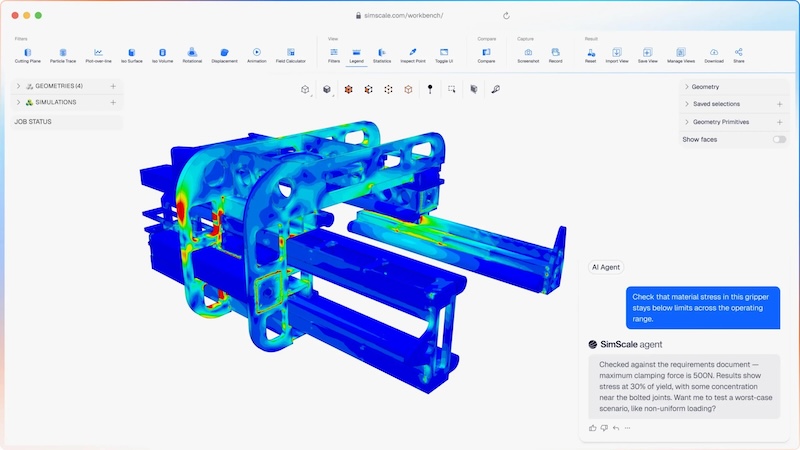
Dexory, a robotics and warehouse intelligence company, has deployed SimScale's Engineering AI to accelerate de…
Foundational Industries, a startup founded by a former Alphabet executive, raised $25 million(約40億円) in seed f…

Ikea introduced its AI-powered customer service bot Billie in 2021, which now assists 74% of customers (up fro…

Get curated AI news from 200+ sources delivered daily to your inbox. Free to use.
Get Started FreeFree · takes 30 seconds · unsubscribe anytime
