What happened
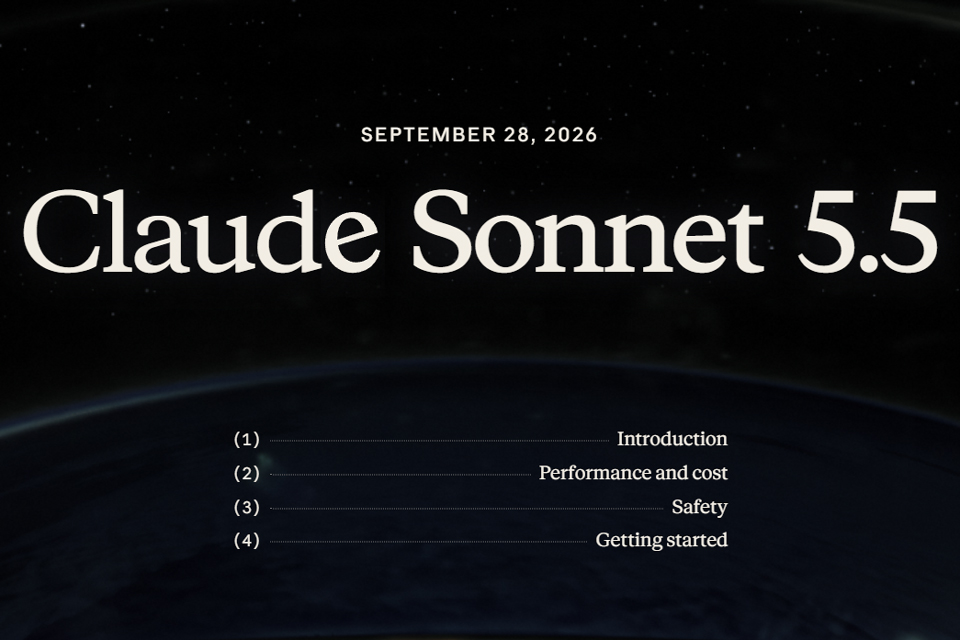
Anthropic announced Claude Sonnet 5.5 on September 28. It generates over 30% faster and cuts costs by up to 30% versus Claude Sonnet 5, scoring 70.6% on Terminal-Bench 4.0, up from 10.3%.
Why it matters
Anthropic is claiming major speed and efficiency gains at the same price per million tokens as Claude Sonnet 5, suggesting the model needs fewer tokens per task and may lower operating costs for teams running it at scale.
What to watch
The gains rest on efficiency the article ties to fewer tokens per task rather than a price cut, so real-world savings depend on how workloads use the model. Anthropic has also added safeguards for cybersecurity and anti-distillation without affecting general software or biology research.
WHO IT HITSEnterprise AI teams and developers running high-volume workloads on Claude Sonnet 5 stand to see faster responses and lower token costs if the claimed 30% efficiency gains hold, though actual savings will depend on how their specific tasks consume tokens.
Summaries like this, in your inbox every morning.
Claude Sonnet 5.5 arrives as part of Anthropic's Claude 5.5 family, positioned as the faster and more efficient option compared with the Claude Sonnet 5 it replaces. The pricing is unchanged at $2 per million input tokens and $10 per million output tokens, but Anthropic attributes the cost improvement to using fewer tokens for the same task rather than to a price reduction.
The performance jump on Terminal-Bench 4.0, from 10.3% to 70.6%, is unusually large for a model refresh, and the article says the model also approached Opus 5.5 on GDPval-AA. Anthropic is presenting the model's long-horizon task ability and image recognition as strengths, pointing to it being the first Sonnet model to clear Pokémon Red using only screenshots. That claim speaks less to typical business workloads and more to the model's ability to act over extended sessions with visual input.
The security additions are worth noting. Anthropic introduced safeguards for high-risk tasks as its cybersecurity capabilities improved, and added safety classifiers aimed at distillation attacks that try to improperly extract a model's capabilities. The article says these restrictions are applied in a way that does not affect general software development or biology research. Whether the efficiency claims translate into real savings will likely hinge on how much customers' own task patterns resemble the token-saving behavior Anthropic describes.
For example, today's edition would include:
AI-summarized, only the topics you pick: one digest a day via Email, LINE, or Slack.
Free · 30 seconds with Google · unsubscribe anytimeWhat is AIToday? →
Ask AI anything about this article. The AI reads this article, earlier AIToday articles, and Wikipedia, and cites its sources. Q&As are published on this page for other readers too.
Omdia principal analyst Todd Thiemann surveyed 400 security leaders; the top inhibitor to AI agent identity se…
Okta launched a multivendor reference architecture, the Blueprint Alliance, for agent runtime security
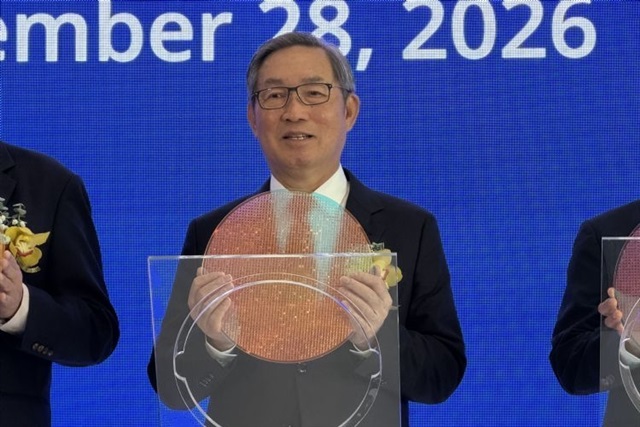
At the September 28 opening of VSMC's 12-inch (300mm) wafer fab in Tampines, Singapore, Vanguard and VSMC chai…
Meta said on September 28 it will offer its AI models and agents to companies and developers, starting with Mu…
Bain & Co.'s annual global technology report said the AI industry must reach $6 trillion in annual revenue by…

Chipmaker AMD agreed to acquire World Labs, the AI startup founded by industry pioneer Fei-Fei Li, for $8.2 bi…