What happened
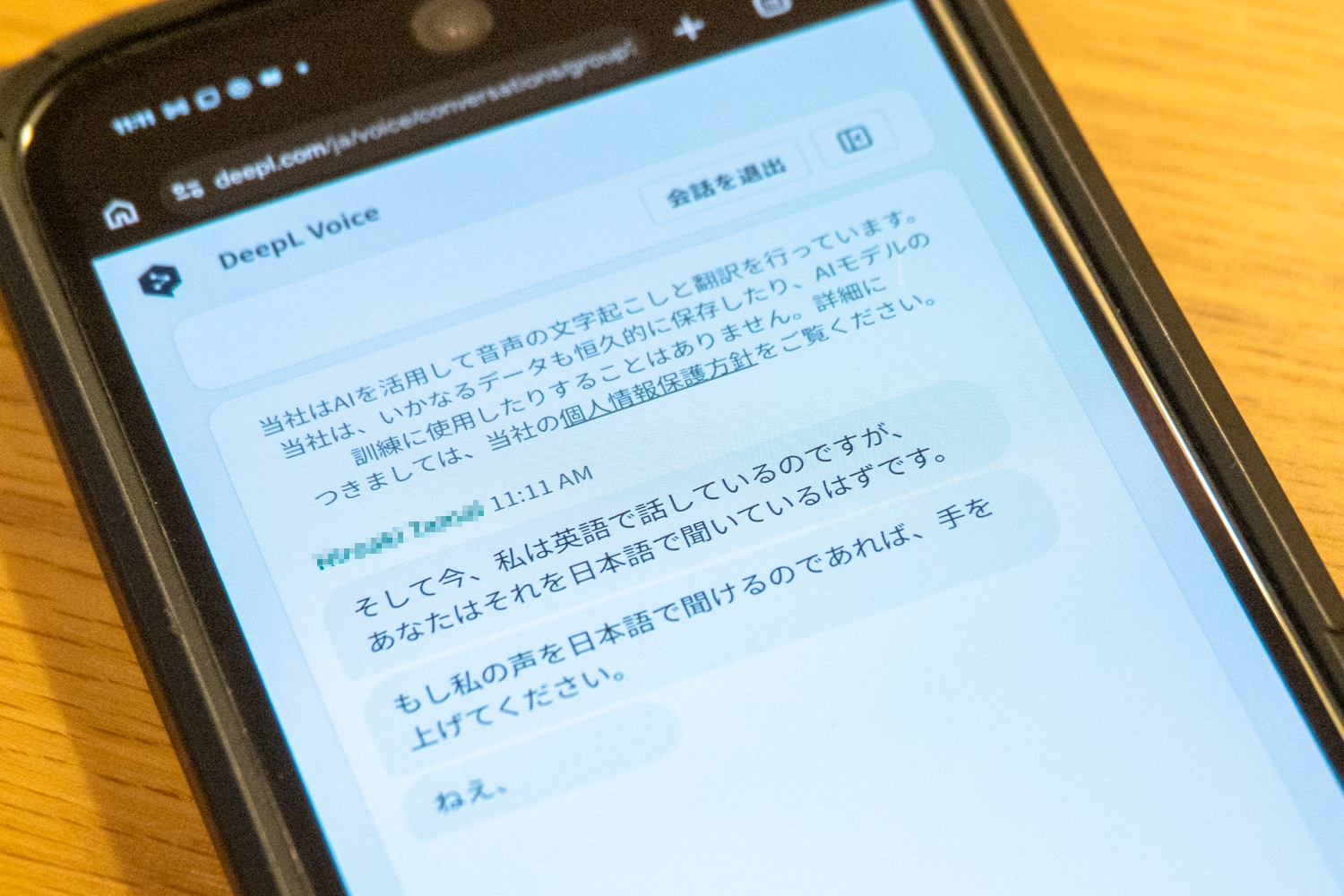
DeepL opened general availability of real-time speech-to-speech translation in DeepL Voice, supported by a new Voice AI model and speaker match in 14 of 30+ languages.
Why it matters
Conversations across languages can now keep the original speaker's voice and tone, which should make it easier to tell who is speaking in group meetings.
What to watch
Whether DeepL's planned unified model actually cuts latency, since today speech recognition, translation and voice output run as three separate models in sequence.
WHO IT HITSMultinational teams and enterprises that run cross-language meetings are the clearest beneficiaries, as participants can join a group conversation from their own device by scanning a QR code without a DeepL Voice license. Enterprises in privacy-sensitive sectors may also take note, since DeepL says processed audio is deleted from its servers after use.
Summaries like this, in your inbox every morning.
DeepL Voice was first announced in November 2024 as a real-time voice translation service, split into DeepL Voice for Meetings for web conferences and DeepL Voice for Conversations for in-person talks. Until now it translated speech into text; the speech-to-speech feature was shown as in development in October 2025 and ran as a beta with early access from April 2026. General availability arrives alongside a new Voice AI model that carries tempo, intonation, pitch and tone into the translated audio.
On the meetings side, DeepL is addressing an old friction point. In the browser version, users had to paste a meeting link into DeepL and manually send a translation bot into the call. The new Windows and Mac desktop app detects Zoom, Microsoft Teams and Google Meet sessions and connects them with one click. For in-person use, the group conversation feature creates a virtual room where participants join from their own devices, up to 20 at a time, rather than passing a single smartphone around.
DeepL is also positioning itself inside other AI tools. Its MCP support, announced on the 22nd, lets Microsoft Copilot, ChatGPT and Claude call DeepL for translation with a company's own glossary and custom rules, without users copying text out and pasting results back. On hardware, DeepL says it has no plans to build AI glasses itself, but its voice translation API leaves room for device makers to build translation display apps on top of it.
The immediate open question is latency. DeepL Voice currently runs speech recognition, translation and voice output as three separate models in sequence, and DeepL is developing a unified model that handles input to output in one pass. Whether that unified model lands will likely shape how close the translated speech feels to natural back-and-forth conversation.
Pick your industry and the AI tools you use, and get news related to your work every day.
Free · 30 seconds with Google · unsubscribe anytimeWhat is AIToday? →
Ask AI anything about this article. The AI reads this article, earlier AIToday articles, and Wikipedia, and cites its sources. Q&As are published on this page for other readers too.
The Tokyo District Court dismissed Kenjiro Tsuda's demand that TikTok remove AI voice-clone videos, citing pri…
ElevenLabs released Eleven v4, which handles up to 10,000 characters per request and supports more than 90 lan…

AHS launched two voice databases for Synthesizer V 2 on September 29 — the female Synthesizer V 2 AI Nanami an…
NTT West's VOICENCE company said it will open a free "Voice Consultation Desk" on September 28, 2026

AWS published Part 1 of a tutorial that deploys Qwen3-TTS on Amazon SageMaker AI using the vLLM-Omni Deep Lear…

Modulate raised $25 million, led by Future Ventures with returning investors Hyperplane and Lakestar, bringing…