What happened
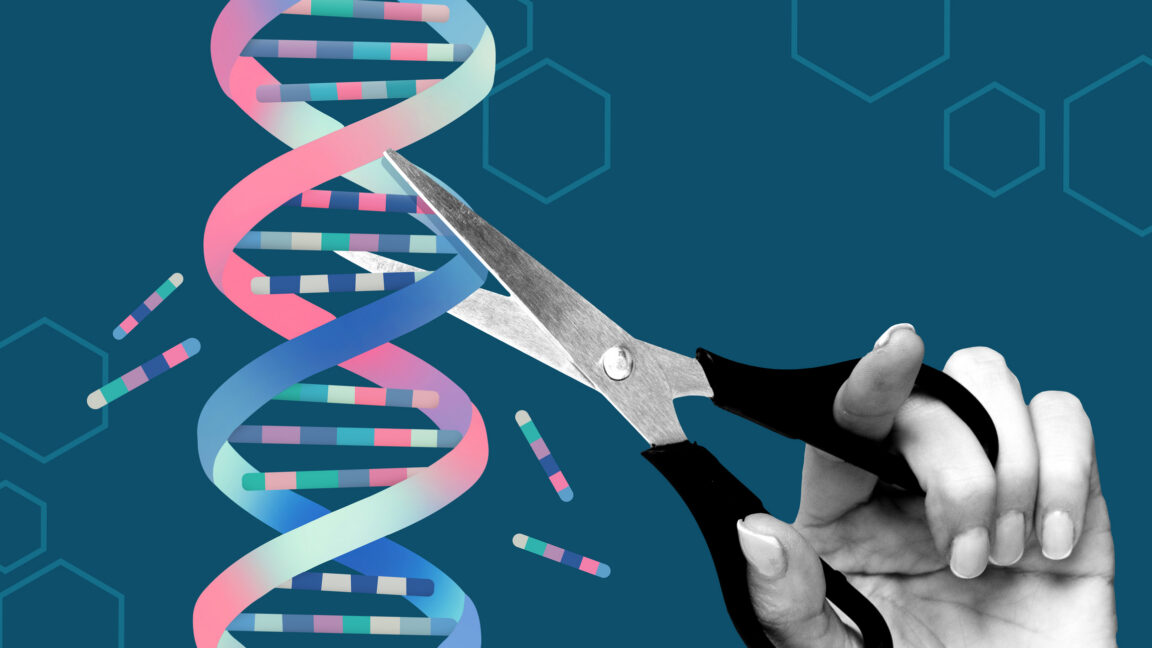
Researchers used Google's AlphaFold AI to identify which parts of the Cas9 protein (used in CRISPR gene editing) enable unwanted off-target edits. By modifying amino acids at 10 key positions identified through this analysis, they created a variant that maintained normal activity at intended targets while reducing off-target activity from 28% to 5%.
Why it matters
Gene-editing therapies must edit many cells to be effective, and even rare off-target sequences appear multiple times in the human genome by chance—making unintended edits inevitable at scale. This computational approach offers a systematic method to design safer gene-editing systems tailored to specific guide RNAs, potentially removing a safety bottleneck in therapy development.
What to watch
The researchers showed their method worked for both Cas9 and a different Cas protein (Cas12), suggesting broad applicability. They also note that individual changes could potentially be combined with previously developed Cas9 variants for even greater improvements, though that combination was not tested here.
Summaries like this, in your inbox every morning.
Gene-editing therapies have faced a fundamental safety challenge since CRISPR systems were first adapted for human use. Although guide RNAs are designed to match only the intended target sequence, the sheer size of the human genome (about 3 billion bases) means that even rare sequences can appear multiple times by chance. More problematically, the Cas9 protein can tolerate small numbers of mismatched base pairs without losing its ability to bind DNA, making it difficult to predict which off-target sequences will be cut. Researchers have pursued various strategies to address this—optimizing guide RNA selection, improving the Cas proteins themselves, and modifying the effector proteins that make the actual DNA change. This new work takes a computational approach, leveraging AlphaFold's ability to model protein-nucleic acid interactions to identify the exact structural features of Cas9 that enable off-target binding.
What makes this approach particularly valuable is its specificity and generality. By analyzing how Cas9's structure changes when binding mismatch-containing sequences, the researchers found that amino acids shift their contact patterns in predictable ways. This allowed them to design targeted modifications—swapping amino acids at identified positions—that reduce off-target activity dramatically without losing on-target performance. The fact that the method worked for both Cas9 and Cas12 suggests it could be applied to other gene-editing systems. While other research teams have achieved similar or slightly better results using directed evolution, this computational method offers the potential to design systems tailored to specific guide RNAs and known mismatch patterns, opening a path toward personalized safety optimization in gene therapy development.
Pick your industry and the AI tools you use, and get news related to your work every day.
Free · 30 seconds with Google · unsubscribe anytimeWhat is AIToday? →
Ask AI anything about this article. The AI reads this article, earlier AIToday articles, and Wikipedia, and cites its sources. Q&As are published on this page for other readers too.
In a webinar hosted by French Mathematical Society president Isabelle Gallagher, Fields Medal winner Hugo Dumi…

Anthropic said on October 15 it has started giving METR's six staff company devices, office space and access t…

NVIDIA published a blog post titled "AI Security Is an Engineering Problem - How to Solve It at Every Layer of…

At the Most Powerful Women Summit, Marissa Mayer said anyone who claims to know how AI will play out is 'eithe…

After its first meeting Thursday, the White House AI task force formally adopted its charter, opening a 120-da…

In a Harvard survey of more than 5,400 Americans, over half of men claimed familiarity with fictitious AI lumi…