What happened
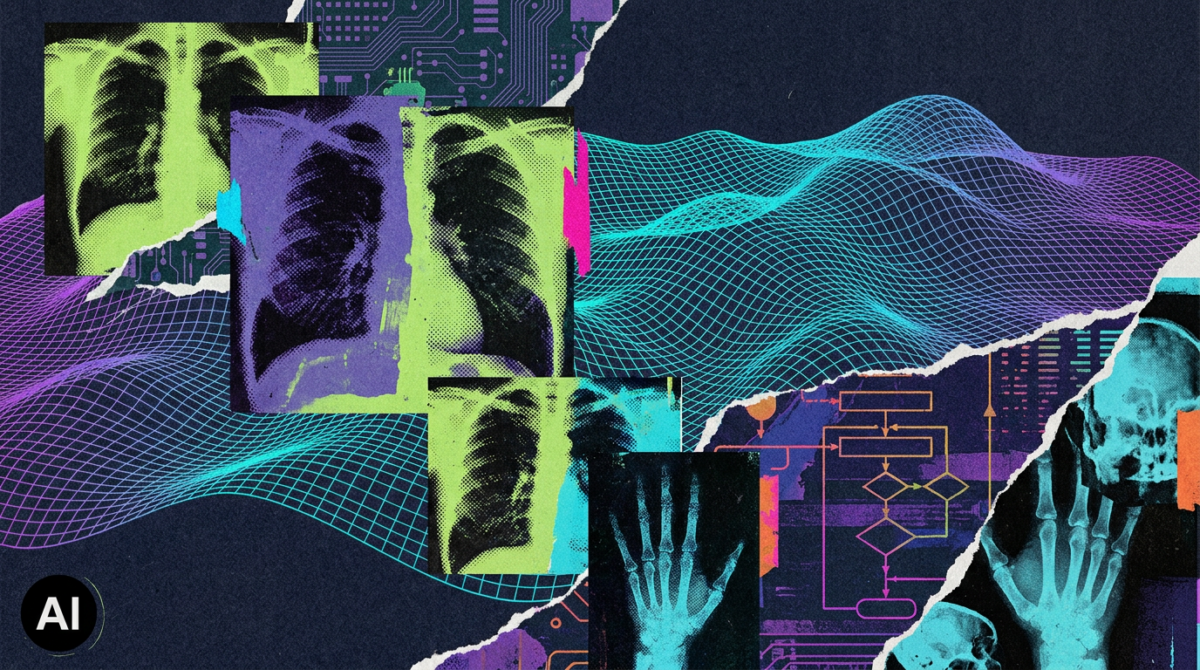
A survey of 215 breast imaging specialists found that about half already use FDA-approved AI tools for detecting breast cancer, and 11 percent plan to. However, the tools are delivering far fewer benefits than radiologists anticipated: only 35 percent report lower recall rates (though 59 percent expected this), 9 percent see fewer unnecessary biopsies (36 percent expected this), and 29 percent report less burnout (56 percent expected relief).
Why it matters
Radiologists view current AI mostly as a second opinion rather than a transformative tool. The gap between expectation and reality highlights a pattern where AI industry leaders made bold predictions about job displacement—a phenomenon UC San Diego Health's Joud Almogati's research now documents in practice. Nvidia CEO Jensen Huang has characterized such predictions as a "God complex" among AI commentators.
What to watch
Costs and lack of institutional support are cited as the biggest barriers to broader adoption. The survey suggests that for AI tools to meet radiologists' needs, either the technology must improve significantly or institutions must address structural obstacles to integration.
Summaries like this, in your inbox every morning.
The disconnect between radiologists' expectations and the tools' actual performance reflects a broader pattern in AI adoption. Lead author Joud Almogati's research, published in Clinical Imaging, documents what happens when industry hype meets clinical reality. Radiologists have come to view current AI tools primarily as a second opinion rather than as a means of significant transformation—a far cry from the transformative role the technology was marketed to play.
This gap has historical roots. About ten years ago, prominent AI researchers predicted that radiologists would soon be obsolete, a claim that has resurfaced in recent discussions about AI and knowledge work more broadly. However, Nvidia CEO Jensen Huang has characterized such dire predictions as a "God complex" among AI commentators, suggesting that the industry may have systematized overstatement about labor displacement. The survey results support a more measured view: the tools help, but they fall short of the promises made when they were introduced.
Pick your industry and the AI tools you use, and get news related to your work every day.
Free · 30 seconds with Google · unsubscribe anytimeWhat is AIToday? →
Ask AI anything about this article. The AI reads this article, earlier AIToday articles, and Wikipedia, and cites its sources. Q&As are published on this page for other readers too.
A Zenn contributor sorted AI use into three modes — AI as an assistant, AI running alongside people, and AI th…

A developer released agent-guardrails, a one-script Python standard-library plugin that guards Bash, Write, Ed…
A Qiita article compared automated red-teaming methods for LLM apps — GCG, PAIR, and TAP — using mock implemen…

In a webinar hosted by French Mathematical Society president Isabelle Gallagher, Fields Medal winner Hugo Dumi…
Anthropic said on October 15 it has started giving METR's six staff company devices, office space and access t…
NVIDIA published a blog post titled "AI Security Is an Engineering Problem - How to Solve It at Every Layer of…