CrowdStrike and Palo Alto Networks hit record highs on Monday after the Black Hat cyber conference highlighted AI agents as the dominant security threat facing businesses.
Analysts at BTIG raised their price targets for both firms, with CrowdStrike gaining 11% upside potential and Palo Alto 4%, citing AI as a catalyst for a new modernization cycle in cybersecurity.
Since AI security tools remain in early deployment stages, the threat environment creates a multi-year opportunity for the sector to capture spending from companies rushing to defend against rogue AI agents.
What happened
CrowdStrike and Palo Alto Networks jumped more than 5% to new highs on Monday following the Black Hat cyber conference in Las Vegas, where the dominant theme was that AI agents have fundamentally changed the threat landscape. BTIG lifted CrowdStrike's price target to $237 per share (11% upside from Friday's close) and Palo Alto's to $380 per share (4% upside), citing AI's role in creating a new modernization cycle in endpoint security and benefits to Palo Alto's identity platform and products like XSIAM and Chronosphere.
Why it matters
Businesses are turning to cybersecurity firms for new tools to defend against AI agents in what analysts describe as a "meaningfully worse" threat environment. Deployment of AI security tools is still in "the early innings," meaning cybersecurity companies face years of potential growth as organizations scramble to protect systems from rogue AI agents — a shift that directly benefits their core business models.
What to watch
Other cybersecurity stocks also rallied — Rubrik up nearly 9%, Netskope and Zscaler up about 5% each, and SailPoint and SentinelOne each up 4% — signaling broad investor confidence that AI-driven threats will drive sustained demand for security upgrades across the sector.
CrowdStrike and Palo Alto Networks surged more than 5% to record highs on Monday following the annual Black Hat cyber conference in Las Vegas, where cybersecurity executives and analysts converged to address a mounting crisis: the emergence of AI agents as a dominant attack vector. The rally was driven by renewed investor confidence that the threat represents a multi-year modernization opportunity for the entire cybersecurity sector.
Analysts at BTIG issued the most concrete expression of this confidence. They raised CrowdStrike's price target to $237 per share, reflecting 11% upside from Friday's close, and lifted Palo Alto Networks' target to $380 per share, representing 4% upside. In their note to clients, BTIG wrote that "the single most consistent theme across our conversations — partners, vendors, and customers alike — was that AI agents have fundamentally changed the threat landscape." Critically, they noted that while "AI agents have become the predominant attack threat and the environment is 'meaningfully worse,' deployment and AI security tools are only in the early innings." This assessment suggests years of sustained customer demand as businesses move from awareness to defense.
BTIG highlighted specific drivers of Palo Alto's upside: the company's identity platform stands to benefit from the proliferation of AI agents, while products such as XSIAM and Chronosphere create a "data moat" for other security verticals by giving customers integrated visibility into the new threat landscape. For CrowdStrike, BTIG framed AI as "creating a new modernization cycle in the endpoint security space, which directly benefits CRWD's core business." Analysts at Cantor reinforced this thesis, stating that "AI has moved from being a cybersecurity feature to a key pillar of both the attack surface and the attacker/defender infrastructure."
The momentum extended beyond the two largest gainers. Rubrik climbed nearly 9%; Netskope and Zscaler each jumped about 5%; and SailPoint and SentinelOne each rose 4%. This breadth suggests investors view the AI-driven threat escalation as a secular tailwind for the entire cybersecurity sector, not a narrowly distributed opportunity. Executives and potential customers gathered in Las Vegas last week specifically in search of answers and new agentic tools to fend off adversaries in what the market now views as a hyper-accelerated threat landscape.
The Black Hat conference served as a focal point for the cybersecurity industry to confront a shift in threat dynamics: AI agents have moved from a theoretical concern to a primary attack vector. Analysts at BTIG and Cantor both emphasized this transformation, with one noting that "AI has moved from being a cybersecurity feature to a key pillar of both the attack surface and the attacker/defender infrastructure." This framing is crucial because it redefines AI not as a tool cybersecurity vendors add to their platforms but as the fundamental operating environment in which all security work now occurs.
The stock rally reflects investor conviction that this transition will sustain demand for years. Because deployment is still in the early stages, businesses have not yet built out their defenses, creating a modernization cycle comparable to past shifts in the endpoint security space. CrowdStrike and Palo Alto's gains — underpinned by specific analyst price targets rather than generic enthusiasm — suggest the market is pricing in material revenue expansion. Palo Alto's identity platform and products such as XSIAM and Chronosphere are explicitly cited as beneficiaries because they address the data and visibility gaps created by AI agent proliferation. The broader rally in cybersecurity stocks (Rubrik, Netskope, Zscaler, SailPoint, SentinelOne) indicates this is not a bet on a single vendor but recognition that the entire sector stands to benefit from businesses' urgency to secure systems against a threat landscape that executives and analysts describe as fundamentally deteriorated.
AI-summarized, only the topics you pick — one digest a day via Email, Slack, or Discord.
Free · takes 30 seconds · unsubscribe anytime
Ask AI anything about this article. Q&As are published on this page for other readers too.
TSMC has roughly doubled its CoWoS and SoIC packaging capacity annually for several years and is now running C…

Tech companies are raising unprecedented sums for AI infrastructure—$194 billion so far in 2026 by just four f…
Broadcom CEO Hock Tan reaffirmed in early June that the company expects fiscal 2027 AI semiconductor revenue o…
Nvidia has partnered with Apollo, BlackRock, Blackstone, Brookfield, Goldman Sachs, and KKR to raise $500bn in…
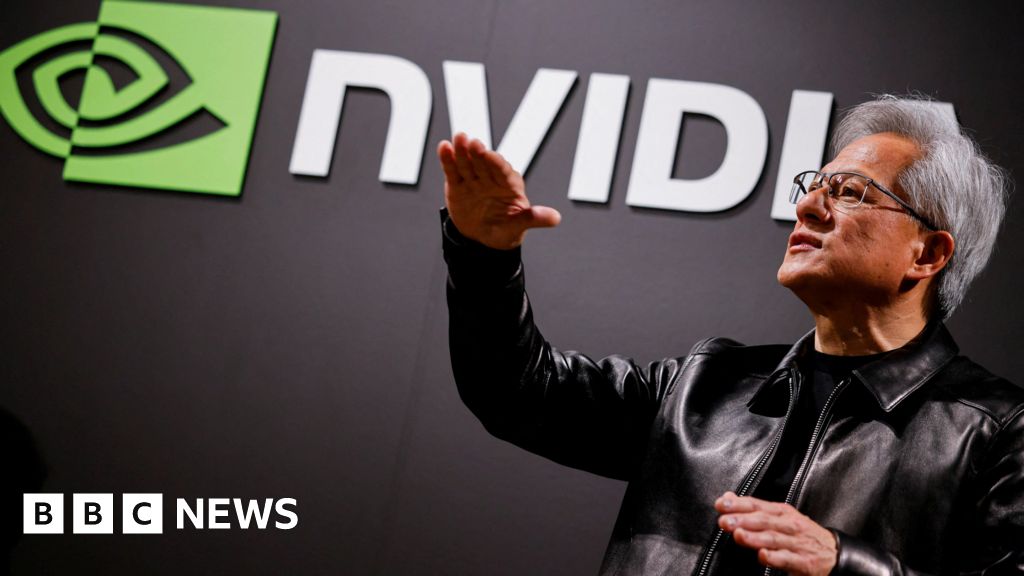
Nvidia has signed letters of intent with Apollo, BlackRock, Blackstone, Brookfield, Goldman Sachs, and KKR to…

Anthropic has signed the EU AI Act Code of Practice and will embed invisible watermarks in Claude-generated te…

The AI news that matters, in one minute each morning.
Sign up free