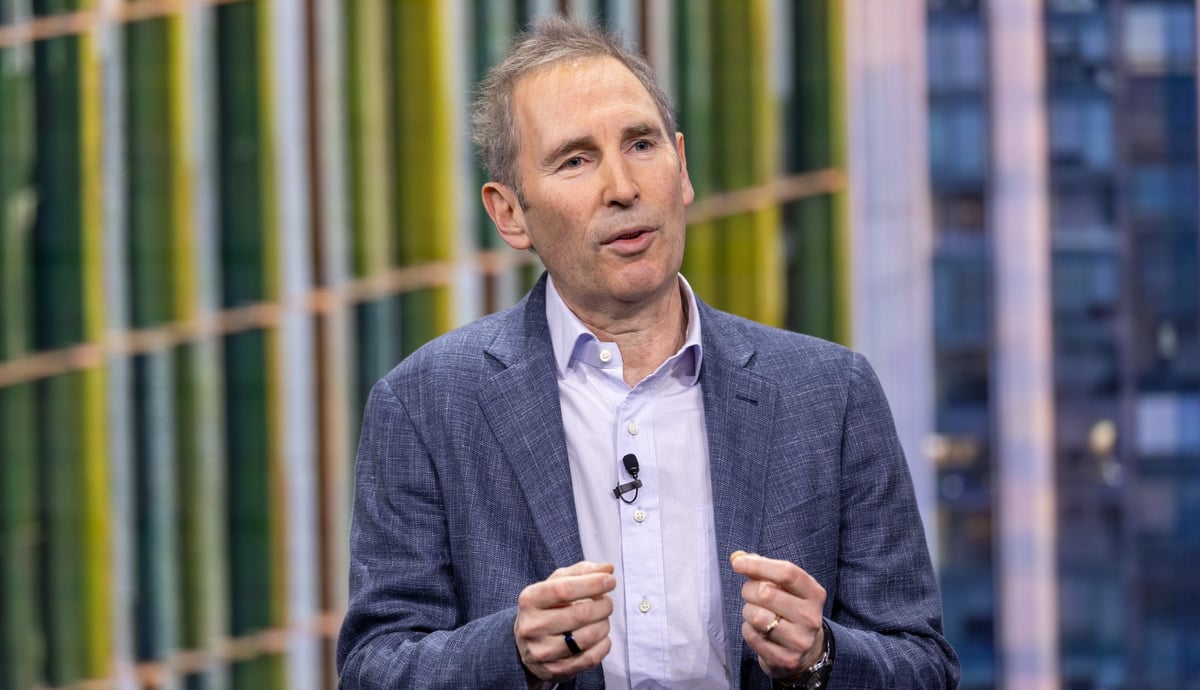
Amazon plans to invest roughly $200 billion(約32兆円) in capital spending in 2026, primarily for AI infrastructure. CEO Andy Jassy argues the bet is grounded in real demand, backed by Amazon's Trainium chip business, which recently hit an annual revenue pace above $20 billion(約3.2兆円) and has secured more than $225 billion(約36兆円) in pre-committed revenue from major AI developers. The custom chips offer better performance per dollar than third-party alternatives, allowing Amazon to control costs and build a vertically integrated AI supply chain.
Summaries like this, in your inbox every morning.
Sign up free →What happened
Amazon plans to spend roughly $200 billion(約32兆円) on capital spending in 2026, mostly for AI infrastructure. CEO Andy Jassy argues this is not speculative; Amazon's Trainium chip business recently exited a quarter at an annual revenue pace above $20 billion(約3.2兆円), with triple-digit percentage growth, and has already locked in more than $225 billion(約36兆円) in revenue commitments from major AI developers.
Why it matters
The advance commitments signal real, contracted customer demand rather than a bet on uncertain future sales. Amazon's custom Trainium processors offer better performance for the price than third-party graphics chips most companies rent, allowing Amazon to lower its costs and widen profit margins while controlling its AI supply chain end-to-end.
What to watch
The payoff depends on monetizing the spending in 2027 and beyond; if AI demand cools or customers delay, the spending could weigh on profits. Competition from Nvidia and other cloud providers remains fierce, and chip manufacturing is inherently challenging.
Amazon has announced plans to spend roughly $200 billion(約32兆円) on capital spending in 2026, with most of that money directed toward artificial intelligence infrastructure. CEO Andy Jassy has pushed back against investor concerns, insisting the company is not making this bet "on a hunch." The clearest evidence supporting his position is Amazon's own custom chip business, which operates under the Trainium brand.
The Trainium business has grown into a meaningful revenue generator. According to the article, the segment recently completed a quarter at an annual revenue pace above $20 billion(約3.2兆円) and is scaling at triple-digit percentage growth rates, making it one of the fastest-growing chip operations globally. Even more striking is the volume of future demand already locked in: Amazon reports more than $225 billion(約36兆円) in revenue commitments tied to Trainium alone, with major AI developers having signed on for substantial capacity. When customers commit that kind of capital in advance, it signals contracted demand rather than speculative guessing about what might eventually sell.
The competitive advantage of building custom silicon goes beyond revenue. Trainium's newer processors offer meaningfully better performance for the price than the third-party graphics chips most companies currently rent. Recent versions have largely sold out, indicating strong customer appetite. By using its own silicon instead of buying everything from Nvidia and other vendors, Amazon can lower its own infrastructure costs and widen profit margins over time. This vertical integration creates a cheaper, more controlled AI supply chain that Amazon owns end-to-end, combining direct customer revenue with internal cost savings.
Yet the risk is not eliminated by these facts. The $200 billion(約32兆円) is an extraordinary sum, and the article notes that Amazon is counting on monetizing much of it in 2027 and beyond, meaning the payoff is not immediate. If AI demand cools or customers delay their deployment, that spending could weigh on profits. Competition from Nvidia and other cloud providers remains fierce, and chip manufacturing is inherently challenging. Nevertheless, the article concludes that Amazon's massive spending pledge, backed by a chip business already running at $20 billion(約3.2兆円) annual pace and a mountain of pre-committed revenue, transforms what looks like a scary headline number into a more calculated bet grounded in actual customer demand rather than hope.
Amazon's announcement of a $200 billion(約32兆円) capital spend in 2026 would ordinarily raise investor concerns about a company betting heavily on an uncertain future. However, the article shows that this spending is anchored by tangible demand signals. The Trainium chip business, which Amazon designs and operates internally, has already reached an annual revenue pace above $20 billion(約3.2兆円) and is growing at triple-digit rates—demonstrating that the company has built a real, functioning operation at scale. More significantly, the $225 billion(約36兆円) in pre-committed revenue from major AI developers represents contracted demand locked in advance, not speculative forecasting. This forward commitment structure suggests customers are willing to pay for capacity before it is delivered, which typically indicates genuine market need rather than hope.
The economics of the vertical integration matter as well. By manufacturing its own silicon, Amazon can offer Trainium processors at better price-performance than renting third-party chips from vendors like Nvidia. This approach simultaneously serves two strategic goals: it generates revenue from external customers and reduces Amazon's own infrastructure costs. The ability to control both the hardware and the customer experience creates a competitive moat that a pure cloud provider relying entirely on purchased chips cannot match. That said, the risk remains material—$200 billion(約32兆円) is an extraordinary commitment, and the payoff is counted on for 2027 and beyond. If demand falters or deployment is delayed, the spending could depress profits in the interim.
AI-summarized, only the topics you pick — one digest a day via Email, Slack, or Discord.
Free · takes 30 seconds · unsubscribe anytime
No comments yet. Be the first to share your thoughts!
Log in to join the discussion

Get curated AI news from 200+ sources delivered daily to your inbox. Free to use.
Get Started FreeFree · takes 30 seconds · unsubscribe anytime
1 minute a day. The AI essentials.
200+ sources · Email / LINE / Slack
