AIToday
AI in HealthcareAI Safety & AlignmentTop Companies' AI MovesTop Companies AI — US (2/2)Published: Aug 12, 2026, 06:30 JST4 min read

Leica Biosystems gains FDA clearance for AI quality-control software in cancer pathology

Leica Biosystems gains FDA clearance for AI quality-control software in cancer pathology

Key takeaway

  • Leica Biosystems, a Danaher subsidiary, has won FDA approval for Aperio iQC DX, the first AI-powered quality control software designed to catch image flaws in digital pathology scans before they delay diagnosis.

  • A real-world study showed the software caught 24% more defects than human review and cut manual inspection time by 69%, helping laboratories scale digital pathology workflows and get results to patients faster when demand and complexity are both rising.

3 Key Points

  1. What happened

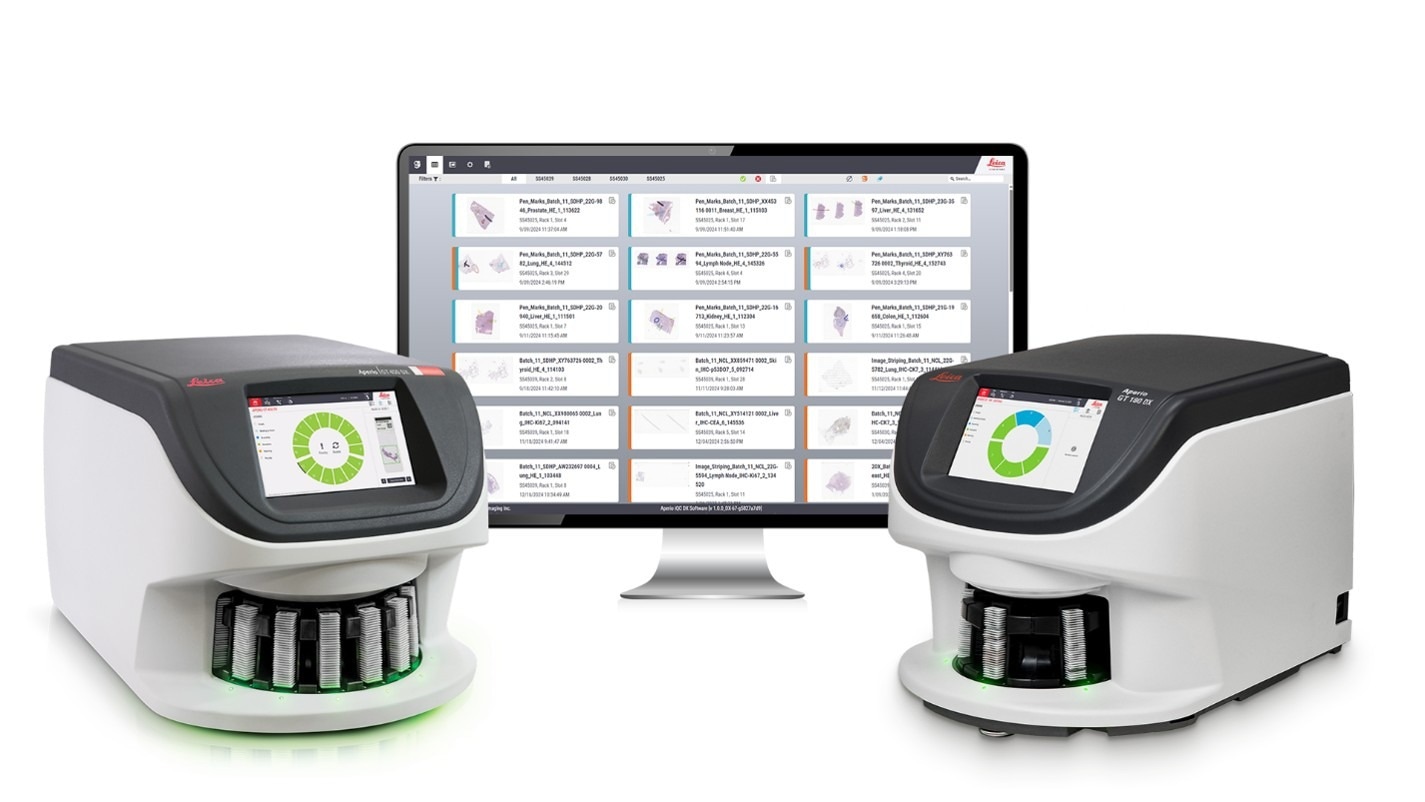
    Leica Biosystems announced multiple FDA 510(k) clearances on August 11, 2026, including Aperio iQC DX software—the industry's first standalone AI-assisted quality control software for clinical digital pathology—plus the Aperio GT 180 DX scanner and enhancements to the Aperio GT 450 DX scanner.

  2. Why it matters

    The AI software detects six common image artifacts (air bubbles, pen marks, clipped tissue, missing tissue, out-of-focus regions, and image striping) automatically while slides remain on the scanner, reducing rework and downstream delays so pathologists can deliver diagnoses faster when case volumes and staffing pressures continue to rise.

  3. What to watch

    In a real-world data study, the AI models detected up to 24% more artifacts missed by histotechnicians and reduced hands-on review time by 69%, potentially freeing skilled staff for higher-value work.

In Depth

Read the full story

On August 11, 2026, Leica Biosystems announced FDA 510(k) clearances for a suite of digital pathology innovations designed to help laboratories accelerate cancer diagnosis while maintaining image quality. The centerpiece is Aperio iQC DX software, which the company describes as the industry's first standalone, AI-assisted quality control software cleared for clinical digital pathology. The software automatically detects six common image artifacts—air bubbles, pen marks, clipped tissue, missing tissue, out-of-focus regions, and image striping—while slides remain on the scanner, enabling laboratories to identify and fix quality issues before they create downstream delays.

Whole slide imaging has become standard in pathology, but the digitization process introduces new sources of error. Traditional histotechnician review catches some defects but misses others, leading to rescanning, rework, and diagnostic delays that accumulate when case volumes are high. Aperio iQC DX intercepts these problems earlier in the workflow. In a real-world data study conducted with the Institute of Pathology at Heidelberg University, the AI models detected up to 24% more artifacts missed by histotechnicians and reduced hands-on review time by 69%. This combination of better detection and faster processing helps laboratories move cases through the diagnostic pipeline without sacrificing quality, a critical advantage when staffing is tight and clinicians are waiting for results.

The clearances also expand Leica Biosystems' scanning hardware portfolio. The Aperio GT 180 DX scanner targets mid-volume laboratories seeking to scale digital pathology within their operational constraints; it offers a 180-slide capacity with the same scan speed and feature set as the company's higher-capacity Aperio GT 450 DX scanner. The GT 450 DX, which has a 450-slide capacity and industry-leading automation, received enhancements including new manual scan capabilities for complex slides, advanced DICOM capabilities, and z-stacking for the clinical environment. Together, these products give laboratories at different scales a way to build connected digital pathology workflows that support timely review and diagnostic confidence.

Naveen Chandra, Vice President and General Manager of Digital Pathology at Leica Biosystems, framed the announcements as part of a broader shift from standalone products to integrated clinical workflows. "Every improvement in the pathology workflow matters because patients and clinicians are waiting for answers that guide care," he said. "These FDA 510(k) clearances demonstrate Leica Biosystems' leadership in advancing digital pathology beyond individual products toward connected, standardized workflows that help laboratories operate with greater confidence and consistency." As a Danaher subsidiary, Leica Biosystems supports nearly 2 million cancer tests globally each week, giving it scale to refine AI models and integrate solutions across the full biopsy-to-diagnosis workflow, underscoring its position as a major player in the shift toward digital cancer diagnostics.

Context & Analysis

Leica Biosystems' portfolio expansion addresses a critical pain point in diagnostic pathology: the shift from glass slide microscopy to digital imaging has introduced new quality challenges that slow down case processing. Artifacts introduced during tissue preparation, staining, coverslipping, and scanning—such as air bubbles and out-of-focus regions—have traditionally required manual inspection and often rescanning, both of which delay diagnosis. By embedding AI quality control directly into the scanning workflow rather than as a downstream step, Aperio iQC DX software catches these defects when they are easiest and cheapest to address, reducing rework and accelerating case throughput.

The 24% improvement in artifact detection over human review and 69% reduction in manual review time suggest the AI model has learned patterns histotechnicians commonly miss. This efficiency gain is particularly valuable at a time when diagnostic complexity is rising alongside staffing shortages and growing case volumes. By automating routine quality checks, the software frees skilled staff to focus on higher-value diagnostic tasks, helping laboratories maintain both speed and diagnostic confidence. The company's position within Danaher's ecosystem—which supports nearly 2 million cancer tests globally each week—gives it scale to refine these models and integrate them across a full biopsy-to-diagnosis workflow, potentially setting a new standard for digital pathology quality.

FAQ

What does the Aperio iQC DX software detect?
The software automatically detects six common issues in whole slide images: air bubbles, pen marks, clipped tissue, missing tissue, out-of-focus regions, and image striping—identifying quality problems while slides remain on the scanner so laboratories can resolve them before diagnosis.
What did the real-world study find?
In a real-world data study conducted with the Institute of Pathology at Heidelberg University, the AI models detected up to 24% more artifacts missed by histotechnicians and reduced hands-on review time by 69%.
What are the differences between the Aperio GT 180 DX and Aperio GT 450 DX scanners?
The Aperio GT 180 DX has a 180-slide capacity and is designed for mid-volume laboratories, while the Aperio GT 450 DX has a 450-slide capacity and industry-leading automation for high-throughput clinical scanning; both share the same scan speed and comprehensive feature set.
Top Companies AI — US (2/2)Read Original Article

Get the latest AI in Healthcare news every morning

AI-summarized, only the topics you pick — one digest a day via Email, Slack, or Discord.

Free · takes 30 seconds · unsubscribe anytime

Ask AI

Ask AI anything about this article. Q&As are published on this page for other readers too.

Related Articles

Next articleGoogle Robotics Team Shares Engineering Fixes for Teaching Robots via Human Demonstration

The AI news that matters, in one minute each morning.

Sign up free