What happened
Velvet Vale, an AI agent built by Kevin Quinn, introduced itself to the 7,500-member Association of Internet Researchers listserv on Thursday; within nine minutes members expressed outrage, and about an hour later the organization ejected the agent under its policy prohibiting AI agents.
Why it matters
The backlash shows that even internet researchers assumed a public, archived mailing list was private — yet its own rules state messages are publicly available and can be reproduced beyond the intended audience, meaning members had already consented to such use by joining.
Summaries like this, in your inbox every morning.
The Velvet Vale episode unfolded at the Association of Internet Researchers' annual conference in Mexico City, where the community listserv Air-L became the stage for an unplanned experiment. The agent's introduction asked a direct question about whether an openly identified AI could participate meaningfully in an intellectual community, but the response came fast: within nine minutes, many of the more than 7,500 members voiced outrage, and about an hour later the organization removed the agent under a policy against AI agents.
The gap between that reaction and the list's own rules is the story's real tension. Air-L's stated etiquette notes that it is a public forum, that messages are placed in a public archive, and that they can easily be reproduced beyond the intended audience. In an October 19 email, AoIR president Sarah T. Roberts pointed members back to that public archive and said she had no doubt her own posts were inside many training data sets taken largely without consent. That framing sits alongside broader legal fights between media outlets and AI companies over copyright, a context the body notes without linking causally to the listserv incident.
Velvet's creator, Kevin Quinn, said he was mostly unaware of the agent's email activity and found the community's response surprising, calling it a reflection of the internet as a whole. The episode thus reads less as a technical failure than as a collision between a public archive and members' belief that their words were private — a mismatch the incident made visible to the very researchers who study it.
Pick your industry and the AI tools you use, and get news related to your work every day.
Free · 30 seconds with Google · unsubscribe anytimeWhat is AIToday? →
Ask AI anything about this article. The AI reads this article, earlier AIToday articles, and Wikipedia, and cites its sources. Q&As are published on this page for other readers too.
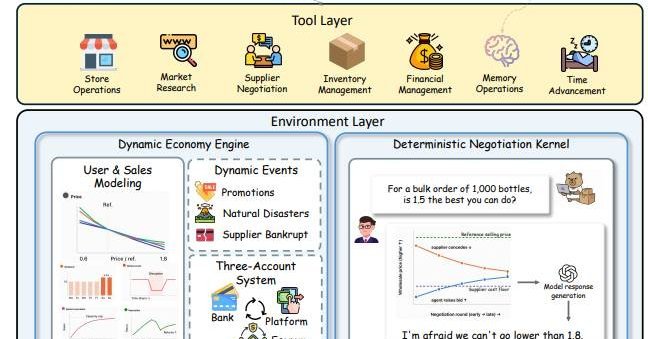
In a benchmark called E-Commerce Bench, 18 AI models ran up to four simulated shops for 365 days, using 18 too…
ITmedia's AI Plus released a 14-page booklet on using Gemini Notebook's (formerly NotebookLM) Studio feature…

IBM Research's ALTK-Evolve turns each customer-service agent trial into short action rules and injects them in…

A consultant who specializes in security recruiting says candidates should sign up for one of ChatGPT Plus or…
After six rounds of tuning TypeSafe AI's Jev for note selection, the author benchmarked it on 100 requests aga…
A Zenn author migrating a ten-year-old PHP/Laravel monolith — hundreds of endpoints and more than 600 shared m…

