
What happened
Albert Bourla told The Wall Street Journal's CEO Brief that Pfizer moved AI decisions from a central expert team to the leaders who own manufacturing, R&D and commercial, and that resistance fell and the pace quickened. He said Pfizer is starting about 20 Phase 3 trials this year, double 2025, but 14 of those come from obesity assets bought with Metsera and a cancer antibody licensed from 3SBio.
Why it matters
The savings Pfizer wants from AI land on the budgets of those same functional leaders, so giving them the AI decisions may have worked because the people asked to change the workflow now get credit for the savings. The trial-count increase, by contrast, traces mainly to assets Pfizer bought rather than to AI creating trials.
What to watch
Pfizer guided to 19 pivotal starts over the 12 months from August 4.
WHO IT HITSPharma executives and cost-program owners in large regulated companies are the clearest audience, since Pfizer tied its AI-linked savings to selling and administrative budgets owned by functional leaders. The reorg's success is currently evidenced only by the CEO's own account, with no published adoption rate or cycle-time figure.
Summaries like this, in your inbox every morning.
Pfizer's AI push did not start in a lab — it started in a cost program. After COVID revenue fell off a cliff, the company launched an enterprise-wide cost realignment in October 2023 and later added extra net savings targets, mostly in selling, informational and administrative costs, credited in large part to digital enablement, automation and AI. So AI's measurable job at Pfizer sits on the cost side: shrinking selling and administrative spend so R&D can grow without crushing margins.
Underneath the culture story is a structural swap. On Pfizer's adjusted operating lines, SI&A falls from 2025 actual to the 2026 guidance midpoint while adjusted R&D rises, and the selling-and-admin cut covers roughly 81% of the planned R&D increase, with Pfizer guiding to stable operating margins. The reorganization also came with a smaller top team holding bigger jobs and discipline-based "clans" meant to spread lessons across departments — coordination overhead booked in calendars rather than headcount.
Bourla has been careful not to declare victory, telling the paper he isn't certain this is the right way to do it, only that he has made choices he hopes are right. The evidence for the reorg remains his own account: lower resistance is a feeling, not a metric, and there is no published adoption rate, cycle-time number, or before-and-after. Pfizer's disclosure notice attached to its August call also adds a specific line that anticipated savings from AI, automation and digital enablement may not arrive in the expected amounts or on schedule.
Pick your industry and the AI tools you use, and get news related to your work every day.
Free · 30 seconds with Google · unsubscribe anytimeWhat is AIToday? →
Ask AI anything about this article. The AI reads this article, earlier AIToday articles, and Wikipedia, and cites its sources. Q&As are published on this page for other readers too.
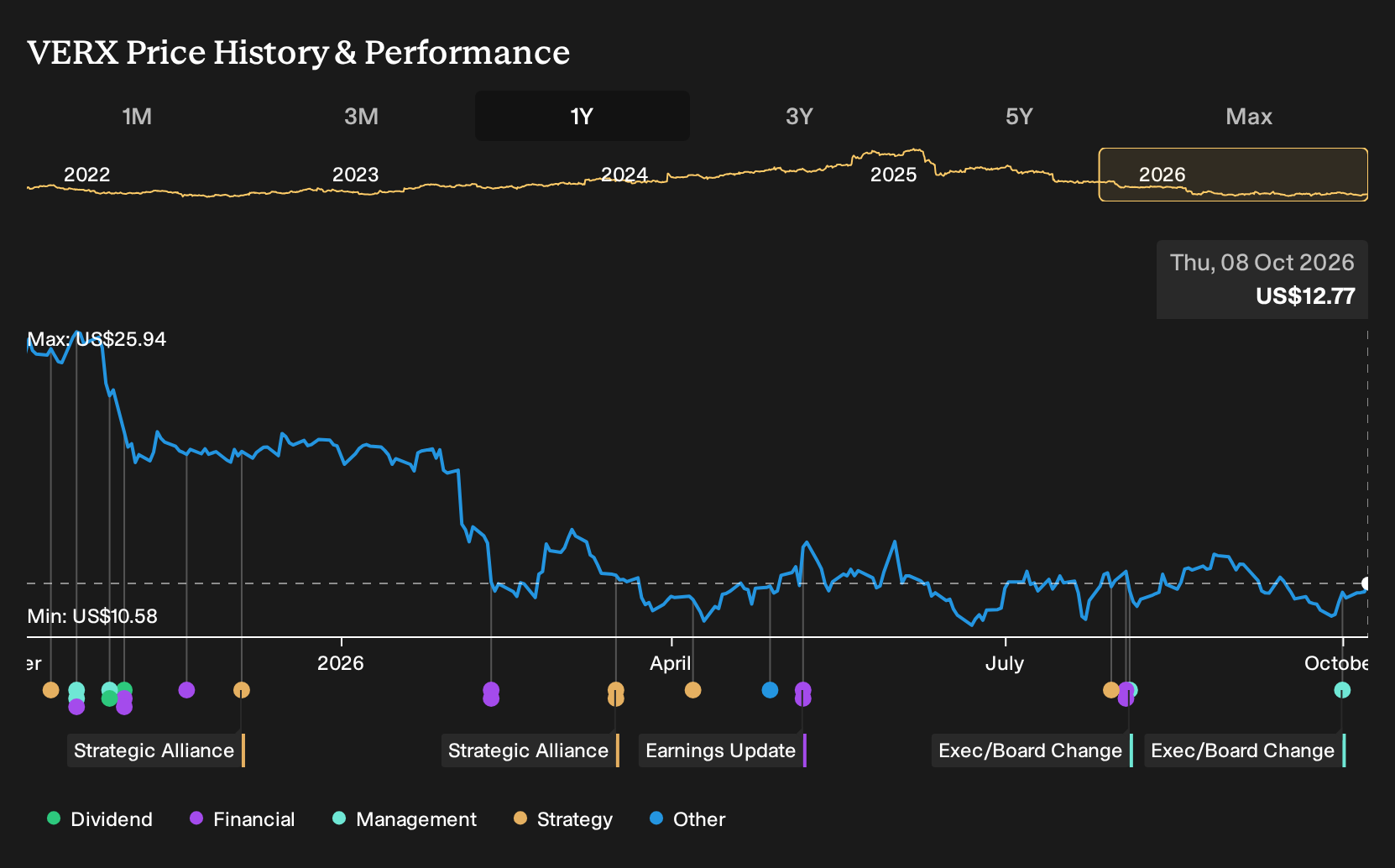
Vertex, Inc. named Debanjan Saha, DataRobot CEO and former Google Cloud and AWS executive, to its board effect…
Uber says its Legal Redlining Agent, built from early 2024 through 2025 and piloted with Uber Legal in 2025, d…
Verizon's latest data breach report found the "human element" was involved in about 60% of data breaches, and…

Western Digital's fiscal 2026 revenue rose 35.7% to $12.92B, as management says roughly 80% of hyperscale data…

Yorkville analyst Dan Ives reiterated an Outperform rating and $500 price target on Tesla, saying FSD, robotax…

Apple researchers, with the University of Pennsylvania and UIUC, introduced Normalizing Trajectory Models, whi…