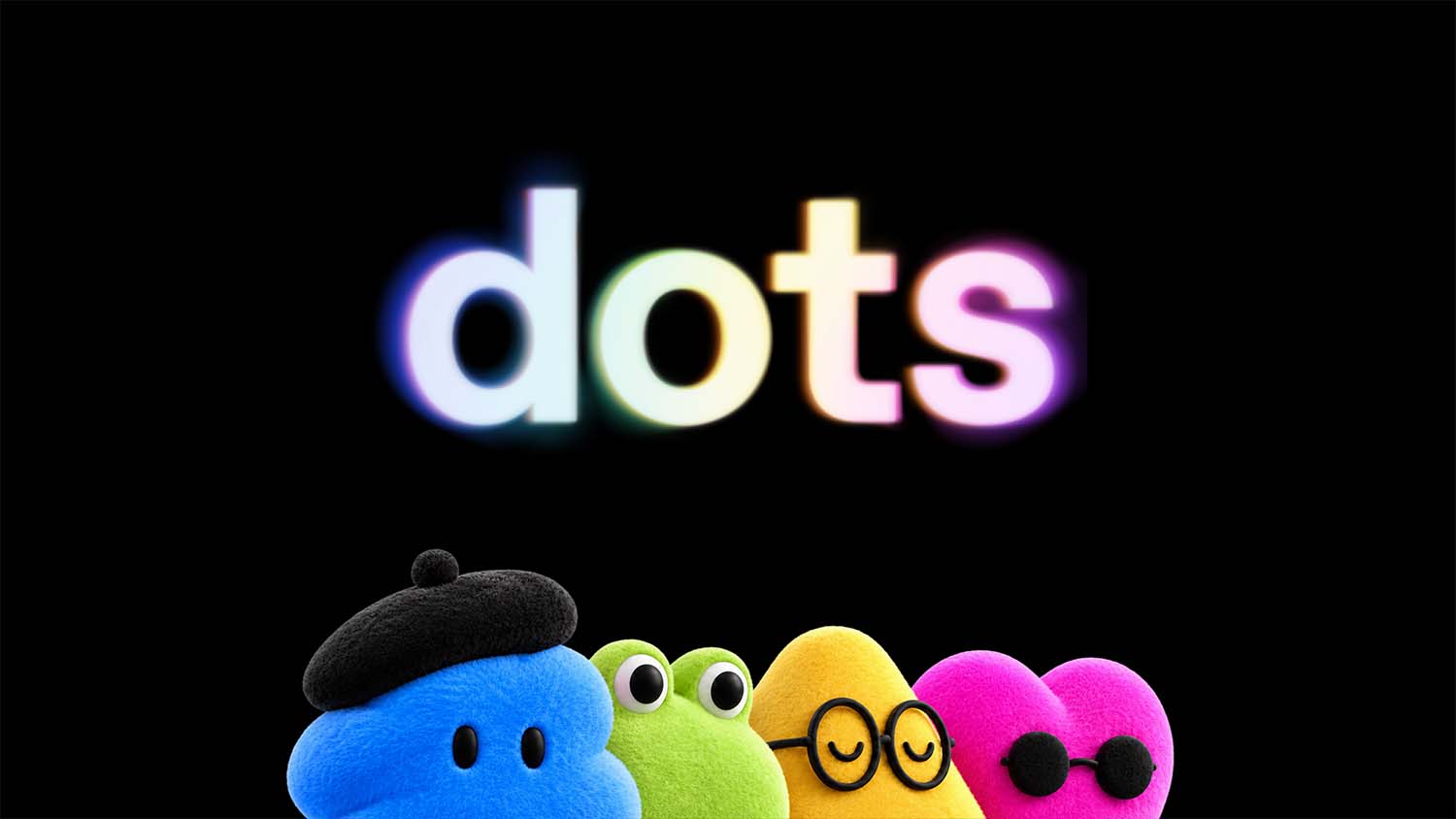
What happened
OpenAI unveiled Dots at DevDay 2026, a 24-hour agent on GPT-6 Astra with its own cloud computer, available from today for Pro and Business Premium users in supported regions.
Why it matters
Dots learns from feedback and keeps working toward a user's goal, so Pro and Business Premium users can delegate tasks that continue without being re-prompted.
What to watch
The no-extra-cost period and expanded limits last only for the first month after launch, and future plans call for monthly flat fees to add more dots or raise speed and capacity.
WHO IT HITSPro and Business Premium subscribers get an always-on worker that continues tasks in the background, while OpenAI's enterprise workspace administrators decide whether to enable the beta for Enterprise users.
Summaries like this, in your inbox every morning.
Dots arrives as OpenAI's answer to a field of task-running agents that already includes SpaceXAI's "Grok Bot", Meta's "Meta Muse", and Microsoft's business-focused "Autopilot". What sets the announcement apart is the combination OpenAI describes: a frontier model, GPT-6 Astra; a dedicated cloud computer; and the ability to learn from feedback while working toward a user's goal 24 hours a day. OpenAI says Dots can connect to more than 4,000 apps through its plugin ecosystem and can be reached from ChatGPT, text messages, Slack, or Teams, carrying context across those channels.
Inside OpenAI, the company says Dots is already in use and changing how work gets done. When a bug is reported in Slack, a dot begins investigating; when a new design arrives, a dot turns it into a working app while the team focuses on customer feedback. Outside testers report cases such as a dot noticing a tester had forgotten to bill a client, drafting the invoice, and sending it after approval. OpenAI also plans a limited enterprise preview of specialized dots with dedicated IDs and clear roles, and says it is working with Microsoft to integrate those specialized dots with Agent 365 governance and Microsoft's enterprise identity and access management.
For now, Dots starts with a single dot per user, with future plans for dots to work in teams. The early economics are deliberately open: no additional charge at first, with expanded limits during the first month, and future monthly flat fees for adding dots or increasing their speed and capacity. Whether that structure holds will shape how quickly individual subscribers and workspace administrators move from trying Dots to depending on it.
Pick your industry and the AI tools you use, and get news related to your work every day.
Free · 30 seconds with Google · unsubscribe anytimeWhat is AIToday? →
Ask AI anything about this article. The AI reads this article, earlier AIToday articles, and Wikipedia, and cites its sources. Q&As are published on this page for other readers too.
HBM is approaching half the cost of a GPU-HBM CoWoS package, prompting the question of whether memory remains…

DeepSeek is bringing more of the software it uses to develop its AI models to Huawei Technologies' Ascend 950…
Among respondents at companies with 1,001+ employees, 50.0% said AI is used company-wide, and 46.0% flagged AI…

Nvidia released the Open Agent Safety Platform on September 28, days after CEO Jensen Huang called warnings fr…
Oracle invoked "force majeure" to delay payment on its Project Jupiter data center, and its 2056 bonds then tr…

McDonald’s is increasingly using AI to guide menu prices in the U.S