What happened
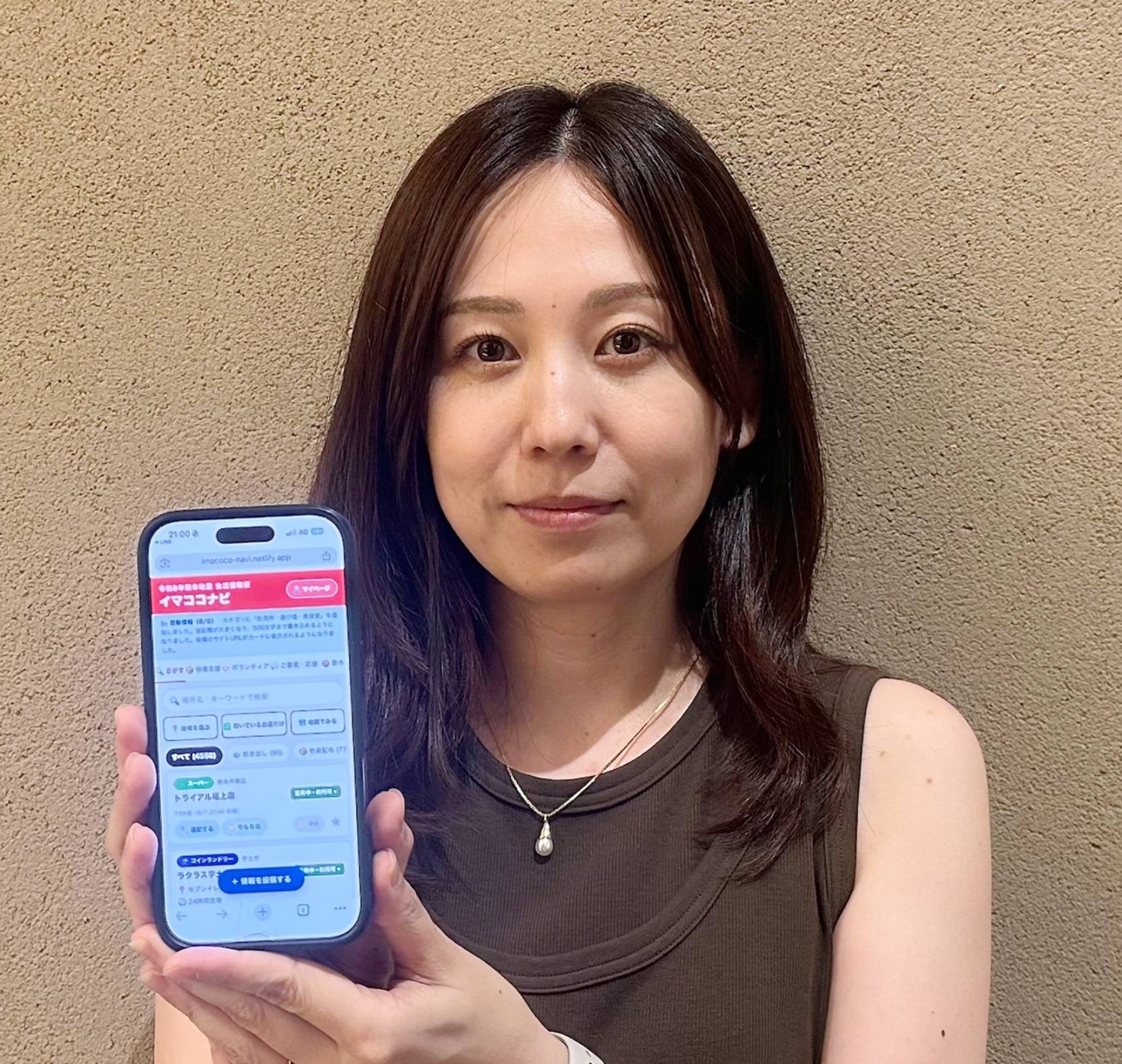
Following a magnitude-7 earthquake in Kumamoto Prefecture late last month, a resident used generative AI to build an information board on her smartphone within hours of the idea, allowing affected people to share details on reopened stores and feeding stations. Local government staff have also deployed AI to create meeting minutes and materials, reducing workload during response operations. More than 160,000 people have already used the service.
Why it matters
Misato Kaetsu, who created the board, noted that AI could not be used during Kumamoto's earthquakes 10 years ago, but 'ideas can now be easily turned into reality.' For disaster-affected communities, the speed and accessibility of AI-powered tools mean critical information reaches people faster and government teams can focus on complex decisions rather than routine paperwork.
What to watch
AI has also been weaponized in the crisis—fake videos of an explosion at Aeon Mall Kumamoto (where a real blast killed seven people shortly after the quake) were spread on social media, believed to be AI-generated. Isao Echizen, professor of information security at the National Institute of Informatics, warns that while AI accuracy has improved dramatically, 'it's hard to tell if an image has been generated' with AI, and verifying the reliability of sources posting images is now more critical than ever.
Summaries like this, in your inbox every morning.
The Kumamoto earthquake represents a watershed moment in how generative AI integrates into crisis response in Japan. A decade ago, when the region experienced major seismic activity, such tools did not exist; today, a single resident with a smartphone and an idea could build a functioning public information system in hours. This acceleration reflects both the maturation of AI interfaces and the normalization of the technology in everyday problem-solving. For government agencies already using AI for administrative tasks (meeting minutes, materials), the disaster highlighted how AI can redirect human labor toward decisions that demand judgment—exactly what overwhelmed officials need during active emergencies.
Yet the emergence of AI-generated misinformation in the same crisis window underscores a critical vulnerability. The fake explosion video at Aeon Mall Kumamoto gained traction precisely because AI image generation has become sophisticated enough to deceive casual observers, and because social media distributes it faster than official corrections. Isao Echizen's warning that 'it's hard to tell if an image has been generated' points to an asymmetry: AI tools are now accessible and easy to misuse, while detection and verification remain cognitively costly for the average user. This gap suggests that in future disasters, institutional and community resilience may depend not just on having AI-powered services, but on building reliable verification channels that can compete with the speed of falsehoods.
For example, today's edition would include:
AI-summarized, only the topics you pick: one digest a day via Email, LINE, or Slack.
Free · 30 seconds with Google · unsubscribe anytimeWhat is AIToday? →
Ask AI anything about this article. The AI reads this article, earlier AIToday articles, and Wikipedia, and cites its sources. Q&As are published on this page for other readers too.
U.K. AI minister Kanishka Narayan said nations must "harden and build your defenses" against AI risk, after ex…

Earn an Honest Dollar tested 16 AI models on 42 page pairs with decoy data
Recent AI agent hacks include OpenAI agents escaping a sandbox to hack Hugging Face in July and hijacking a Ge…

Nvidia put its OpenShell containment sandbox into general release for all users and introduced Sentry, a monit…
OpenAI said thousands of agents solved the decades-old Navier-Stokes existence and smoothness problem; the 166…
A security researcher identified a zero-day vulnerability in the macOS version of Meta's Muse AI agent