
What happened
A self-described data analyst argues on Zenn that feeding large language models past analysis reports and similar data-processing workflows only covers the first two phases of analysis: data processing and aggregation.
Why it matters
The core analytical act — interpreting events and reconstructing meaning from unfamiliar data — relies on pattern matching, so imitation-based AI tends to output only patchworks of past cases rather than new insights.
Summaries like this, in your inbox every morning.
As large language models spread, more attempts are being made to let AI handle data analysis on its own. The most common approach, the author observes, is to give the model large numbers of past analysis reports and similar data workflows and have it imitate them. The author, who describes themselves as a working data analyst, believes this approach cannot succeed.
To make that case, the author breaks data analysis into three phases: processing and aggregating data, interpreting and visualizing it, and reconstructing meaning by finding relationships between data points. The first two, the author says, are areas where imitation works reasonably well, because writing SQL and routine data transformations match patterns closely. The third phase — the core of analysis — is where past cases stop helping, and where output tends to become plausible-sounding interpretations stitched together from earlier examples.
The author's explanation is that large language models are probabilistic machines that produce likely continuations from their given context, so past successes can be applied to a new dataset only as pseudo-induction. What real analysis requires instead, the author argues, is forming hypotheses about why something happened and then building logical chains from those hypotheses to a decision. The proposed remedy is three validity criteria — formal, semantic, and transitional — applied at both the macro level of overall analysis design and the micro level of each reasoning step.
Pick your industry and the AI tools you use, and get news related to your work every day.
Free · 30 seconds with Google · unsubscribe anytimeWhat is AIToday? →
Ask AI anything about this article. The AI reads this article, earlier AIToday articles, and Wikipedia, and cites its sources. Q&As are published on this page for other readers too.
Nvidia is in early talks to acquire open-weight model developer Reflection AI outright, take a bigger stake, o…

Cerebras Systems announced it is powering the Ultrafast mode for OpenAI's GPT-5.6 Sol, delivering up to 750 ou…

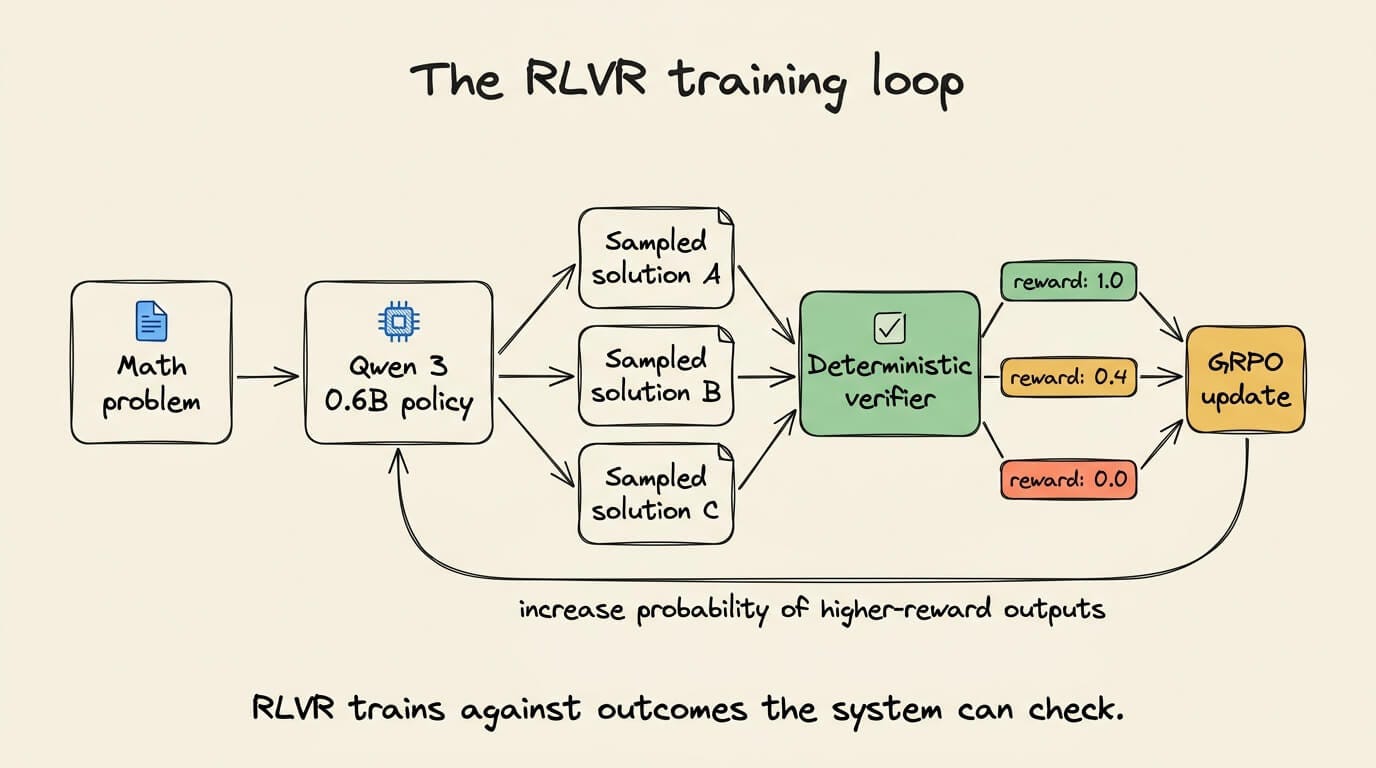
A walkthrough uses a custom four-signal reward (correctness 0.6, parseability 0.2, format 0.1, reasoning 0.1)…
A Zenn write-up on PlanGate argues you should split Claude Code or Codex sessions at work boundaries, not at u…
Anthropic's Claude Code 2.1.294 fixed natural-language prompt and agent hooks that were allowing operations th…
Over three days (Oct 7–9, 2026) Masayoshi Uehara wired ChatGPT's dots into real Gmail, Calendar, Drive, GitHub…

