What happened
A developer using Claude Code and Codex cut Claude's auto-loaded rules from 16,032 bytes to 7,796B, a 51% drop, and Codex's from about 19,491B to 8,900B.
Why it matters
The rules the AI must follow stayed intact and its detours decreased, suggesting a shorter rules file works at least as well as a long one.
WHO IT HITSDevelopers and small teams running coding agents such as Claude Code and Codex, who pay a token cost every time their rules files load, can cut what the AI reads each session while barely changing the rules themselves.
Summaries like this, in your inbox every morning.
The article's starting point was accumulation: the author kept adding observations to the file the AI reads at startup until Claude's auto-loaded documents, together with shared rules, reached 16KB. Codex was even instructed to read two files first, so it read the same content twice.
The counterweight is research. A February 2026 ETH Zürich study (arXiv:2602.11988) measured rules files directly, finding that LLM-generated ones lowered success rates by about 2–3% and raised inference cost by over 20%, while human-written ones raised success slightly but still added up to 19% in cost. Overviews and directory listings were found useless, and the study noted that written instructions are followed so faithfully that unnecessary requests also get obeyed — producing detours rather than speed. OpenAI's official guidance, cited in the article, likewise favors a short, accurate AGENTS.md over a long, vague one.
The fix moved reasoning out of the always-read file: conclusions stayed, the 'why' went to a separate reference file opened only when the rules are being changed, and project-specific facts are now emitted at session start by a hook (SessionStart) showing the current project, first file to read, check commands, and prohibitions. Read-only-when-needed documents are listed with the moment to open them, such as before driving a browser or writing a new script. The author also suggests a small script that reports per-file byte counts and rough token estimates so a rules file that starts growing again is noticed quickly.
Pick your industry and the AI tools you use, and get news related to your work every day.
Free · 30 seconds with Google · unsubscribe anytimeWhat is AIToday? →
Ask AI anything about this article. The AI reads this article, earlier AIToday articles, and Wikipedia, and cites its sources. Q&As are published on this page for other readers too.
Johns Hopkins astrophysicist Brice Ménard used Anthropic's Claude Science to build the first complete ultravio…

Sakana AI said on October 9 that its Japan-tuned LLM, Sakana Namazu, has been adopted by Evidence Finder, the…

Google Cloud announced Gemini エージェント at its Gemini at Work 2026 event on October 8, US time
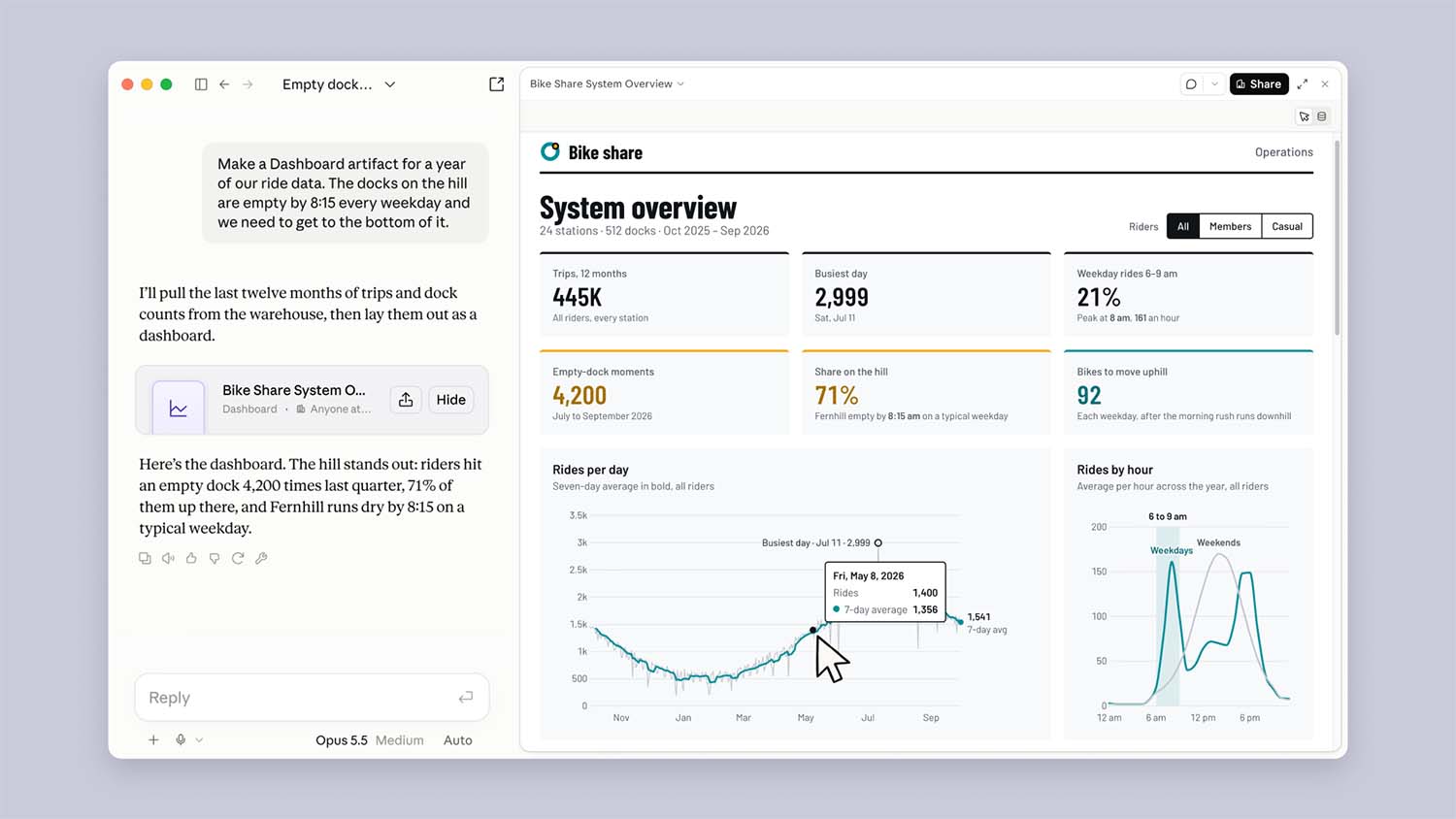
Anthropic added Claude Dashboards, which turns company data into live dashboards, and Claude Motion, which cre…
AI researcher Jannes Elstner told MIT Technology Review that even after identifying every part of a model gove…
Sophos CTO John Peterson says agents built through OpenAI's Daybreak cut average MDR case response time from a…