What happened
Meituan released the weights for LongCat-2.5, a 1.6-trillion-parameter agent model trained on Chinese hardware, under the MIT license. It scored 88.4 points on Terminal Bench v2.1, just behind Claude Opus 5's 89.1.
Why it matters
Meituan's result suggests a model built on Chinese silicon can now land within a fraction of a point of a top Western model on a common agent benchmark, narrowing the gap for open-weight alternatives.
WHO IT HITSEnterprise AI teams evaluating self-hosted or API-based agent models gain an open-weight option that, on Meituan's reported figures, competes closely with Claude Opus 5 on terminal tasks and can plug into harnesses like Claude Code and Codex.
Summaries like this, every morning.
LongCat-2.5 builds on its predecessor LongCat-2.0, which Meituan says it trained in late June entirely on a cluster of more than 50,000 Chinese AI chips. Before that release, LongCat-2.0 ran anonymously as "Owl Alpha" on OpenRouter. The new model adds image understanding by converting images into tokens processed alongside text, drawing on the research model LongCat-Next, rather than bolting on a separate image encoder.
For reinforcement learning, the team used real software tasks from GitHub pull requests and recreated agent failures. To ensure the model actually solved tasks during training, developers blocked internet access, removed Git history and cached files, and had a language model check solutions for shortcuts. They also distilled capabilities from specialized teacher models for agent work, reasoning, and dialog.
The benchmark picture is mixed. On Terminal Bench v2.1, LongCat-2.5's 88.4 sits behind Claude Opus 5 (89.1), GPT-5.6 Sol (88.8), and Deepseek-V4.1-Flash (90.6). On DeepSWE, it jumps from 9.7 to 64.6 points, placing it behind every other model in the table except Claude Opus 4.8. On the harder Terminal Bench v4.0, it scores 38.5, above GPT-5.6 Sol's 37.3 but well below Opus 5's 53.9. It posts 91.9 on BrowseComp, the highest in the table, though Meituan ran that test in its own environment. The release follows other Chinese open-weight models like Kimi K3.1 and GLM-5.3 that have largely caught up with top US models on common benchmarks.
Pick your industry and the AI tools you use, and get news related to your work every day.
Free · 30 seconds with Google · unsubscribe anytimeWhat is AIToday? →
Ask AI anything about this article. The AI reads this article, earlier AIToday articles, and Wikipedia, and cites its sources. Q&As are published on this page for other readers too.
Microsoft hosts Ignite from Nov

Tesla is shifting scarce factory capacity, capital, and engineering resources from the Cybertruck to the simpl…
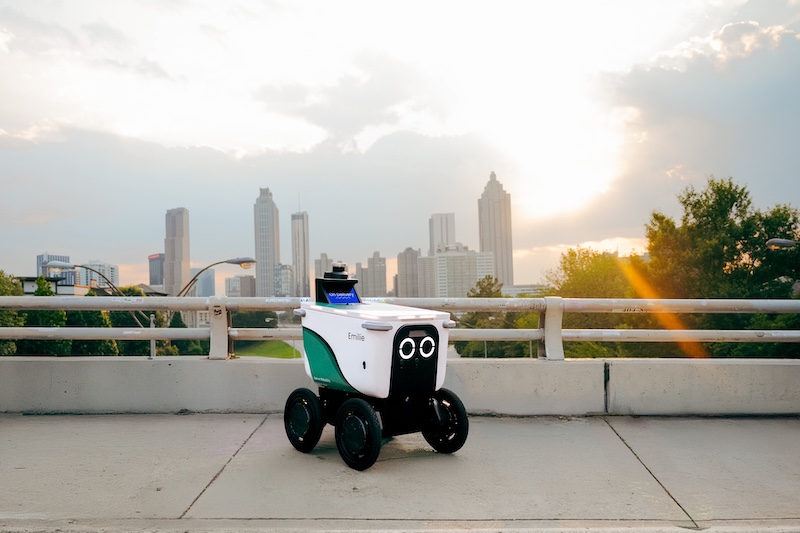
Serve Robotics launched the AV Delivery Developer Portal, including a public API and sandbox, letting anyone d…
Physicl raised $10 million in seed funding led by Inovia Capital, with US Venture Partners participating, and…
Zacua Ventures closed its second fund at $135 million, more than doubling its first $56 million fund, with Fun…

Robbyant released LingBot-Touch, pre-trained on nearly 5,000 hours of real-world tactile data across magnetic…